
WE'RE BACK! And We Have New Watches From Seiko, IWC, kollokium, Benrus And Berneron

Hey friends, welcome back to It’s About Time. It's been incredibly long since I last wrote this and I missed it incredibly. I owe you all a huge apology for not letting you know what was happening, but I had no way of contacting everyone and it was eating me alive.
About a month ago, I woke up to find my account on the service I use to send out the newsletter banned, without much explanation. I lost access to all the subscriber data, all the posts and many thousands of dollars of ad revenue. Don't worry, your data is perfectly safe, and I have it back now (not the money, though, that sucks), finally able to get everything up and running. So now we're back, with a better website and a much more serious approach. For a longer story, you can read it here.
A lot of you reached out with wonderful messages of support and I have to thank every single one of you. Some of you also asked me to give you a way to support the newsletter directly, and you can do so with a (now discounted) annual or monthly paid subscription that will get you my new publication, The Caseback, a weekend long-read email magazine, in return. With the setback, every penny helps keep this thing running.
Also, please do excuse any bugs and weird quirks with the new setup in the first week as I get used to a completely new workflow. If you have any suggestions or wants, please do let me know by replying to this email.
👂What’s new
1/ Seiko Gets The SNZH Dress Ready In White And Green
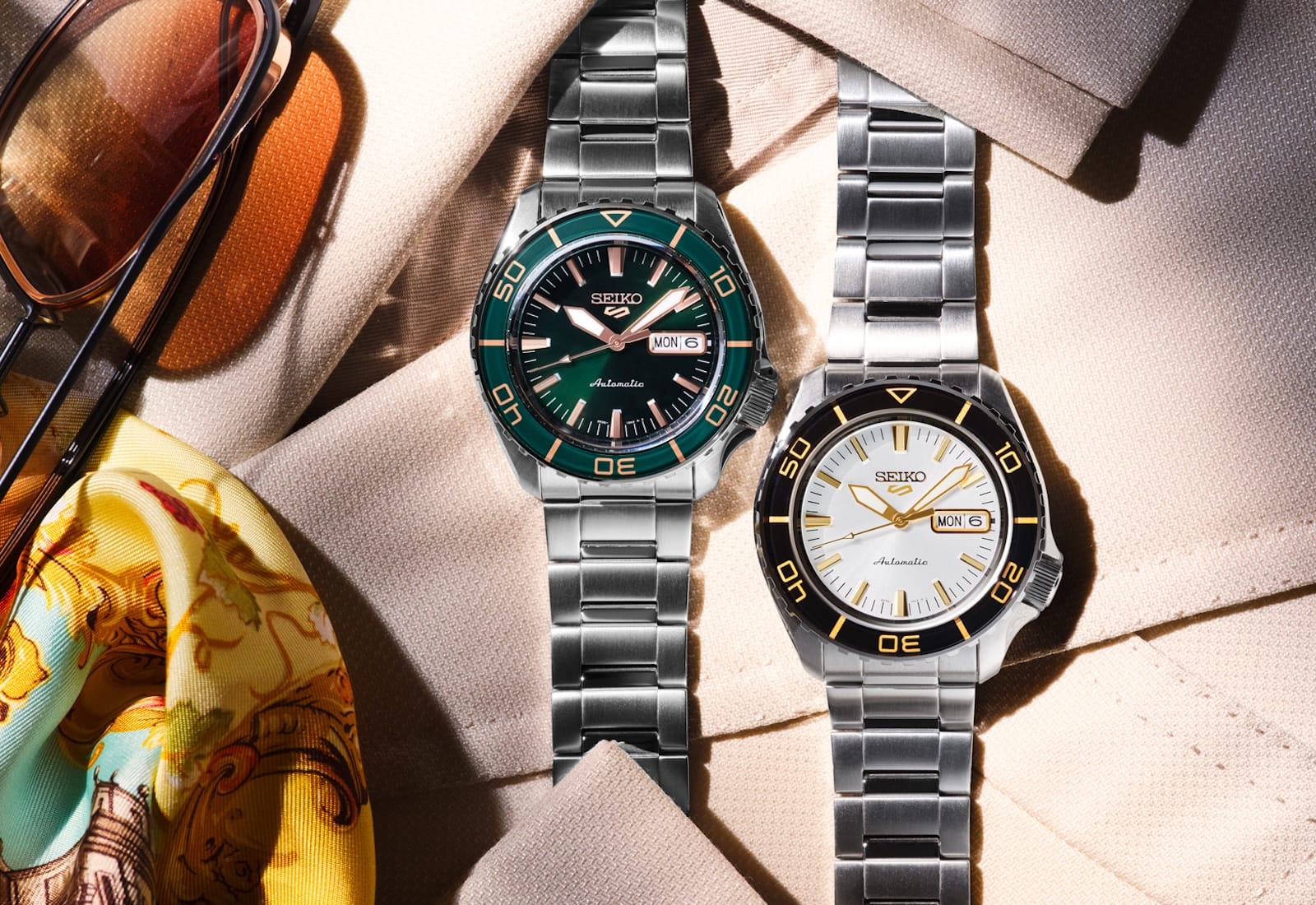
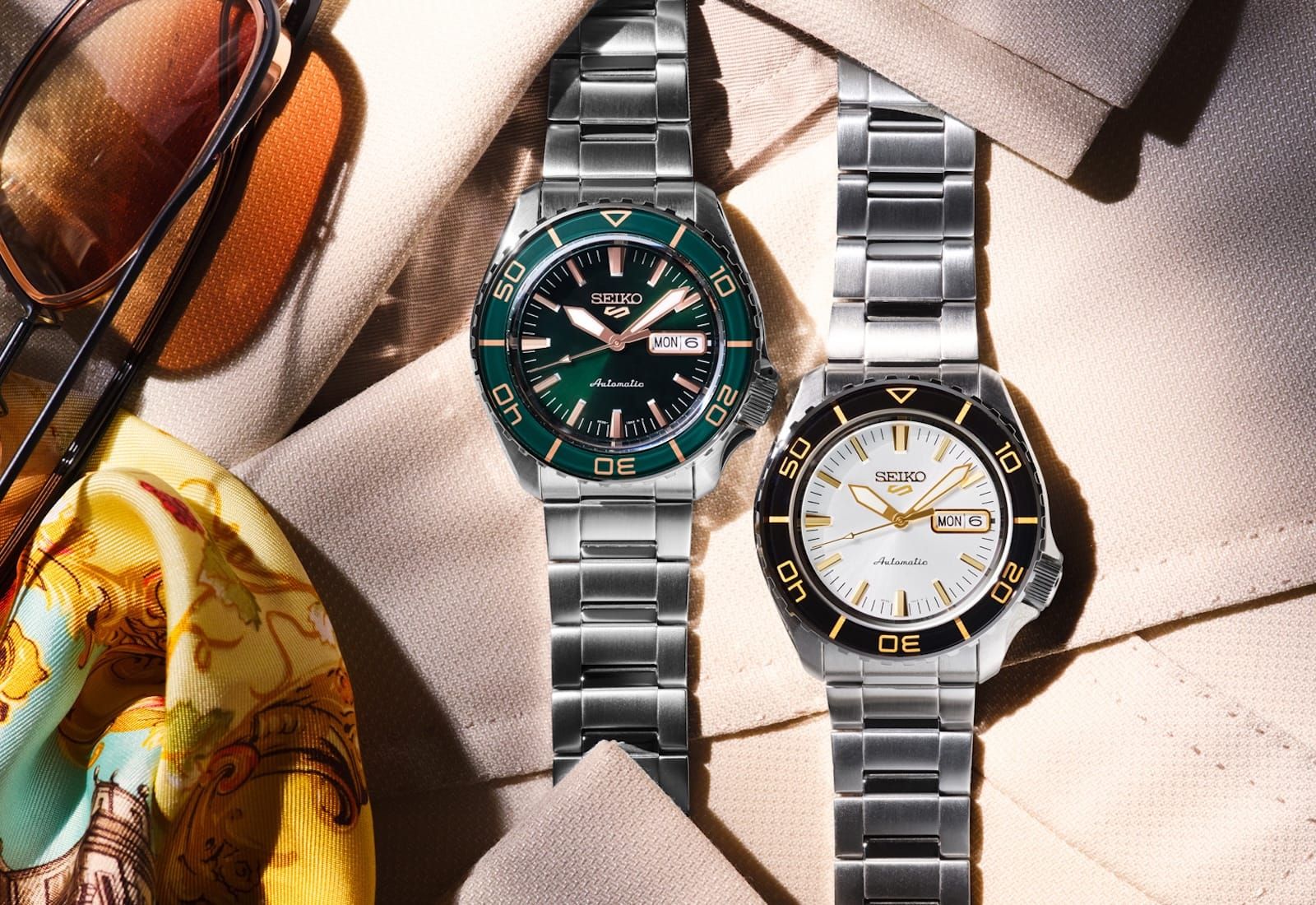
The SNZH has always been the cheap ticket into SKX territory, and Seiko knows exactly what it has. It's a fun and (relatively) affordable sports watch. Not something that you would consider a dress watch. Right? Well, yeah, but Seiko seems to disagree. They keep the tool-watch exterior and give it two new colors: Formal White and Tweed Green. As the names suggest, these are supposed to be dressy watches. They're not, obviously, but they also are, aren't they?
The steel case measures 42.5mm wide and 14.2mm thick, which is a lot of watch, and no amount of colour will change that. The crown sits at four o'clock, which I'm still not a fan of, and the unidirectional bezel has a 60-minute scale. The crystal is Hardlex rather than sapphire, but we kind of have to live with it for now. Water resistance is 100 meters.
Formal White gets a white dial with a black bezel insert and yellow-gold-coloured hands and markers. Tweed Green has a sunray brushed green dial, a matching green bezel insert, rose-gold hands and markers. Both keep the applied markers and fat hands that make the standard 5 Sports layout legible, plus a day and date at three o'clock.
Inside is the Seiko calibre 4R36, beating at 21,600vph with 41 hours of power reserve. It is not a precision instrument and it was never sold as one. You can see it through the display caseback, which you won't be looking much at. Both come on a three-link steel bracelet with a folding clasp.
The price right now is only available in British Pounds, and sits at a not too insulting £340 and the watches go on sale in October. See more images here.
2/ IWC Marks 50 Years of the Genta Ingenieur With Two Limited Editions
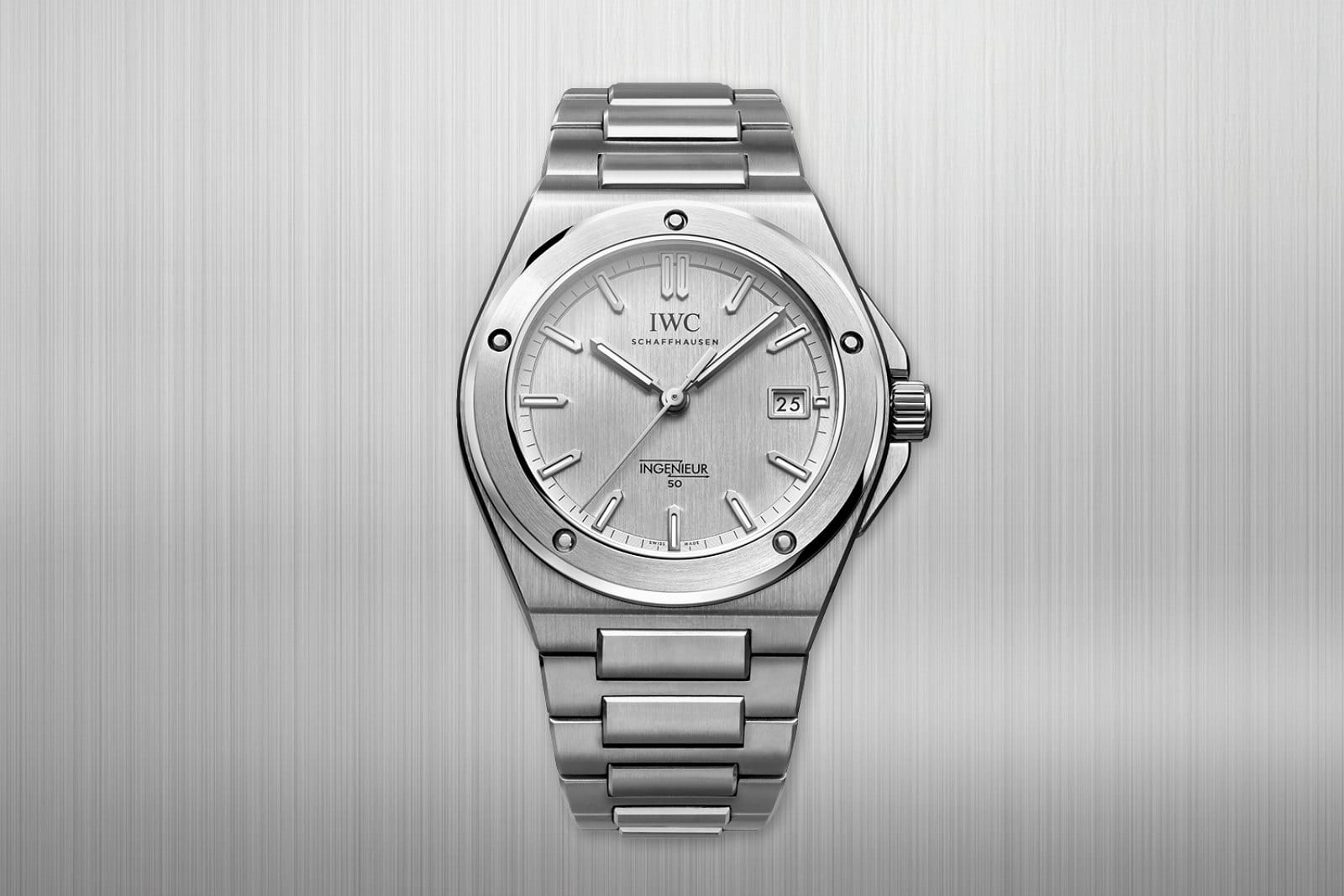
The Ingenieur actually dates to 1955, but the watch most people think of when they say the name is the SL Jumbo of 1976, Gérald Genta's third integrated sports design after the Royal Oak and the Nautilus. And while some might say that those are three quite similar watches, and they are, the RO and Nautilus were a bit more angular than the rounded Ingenieur. And I've always had a soft spot for it. IWC has since killed and revived the line more times than is reasonable, and the variant we have today has been out since 2023. As you might have already gathered, 2026 is the 50th anniversary of Genta's design, and IWC is celebrating with two limited editions: the Ingenieur Automatic 40 IW328910 and the Ingenieur Automatic 35 IW324909.
Both use the current steel case, unchanged, with the screwed bezel and the same tight brushing and polishing we've come to know. The 40mm version, which is 10.8mm thick, adds a soft-iron inner cage for magnetic resistance and a solid caseback, which is a reference to Genta's original Ingenieur, while the 35mm (9.4mm thick) skips the cage and gets a sapphire caseback. Both have 100 meters of water resistance, about what you might expect from a watch like this.
The dial is where these separate from the regular models. IWC drops the grid texture in favour of a vertically brushed silver-plated finish, inspired by a rare late-1970s SL Jumbo variant. I would argue it changes the appearance of the watch a lot, moving from sporty to dressy. The applied markers are rhodium plated, the hands are filled with Super-LumiNova and there's a date aperture at 3 o'clock, clipping the corner of the marker on the 40 and replacing it entirely on the 35.
The 40mm has the calibre 32111, beating at 28,800vph with a 120-hour power reserve and a pawl-winding system. The 35 gets the calibre 47110 which drops down to 42 hours of power reserve. Since you can see it, the rotor is gold colored, and the movement is decorated with circular graining and blued screws. Both come on the familiar integrated three-link steel bracelet.
Each is limited to 1,150 examples, priced at €14,700 for the 40mm and €12,800 for the 35mm. See more images here.
3/ kollokium Closes Projekt 01's First Chapter With Its Coolest Dial To Date
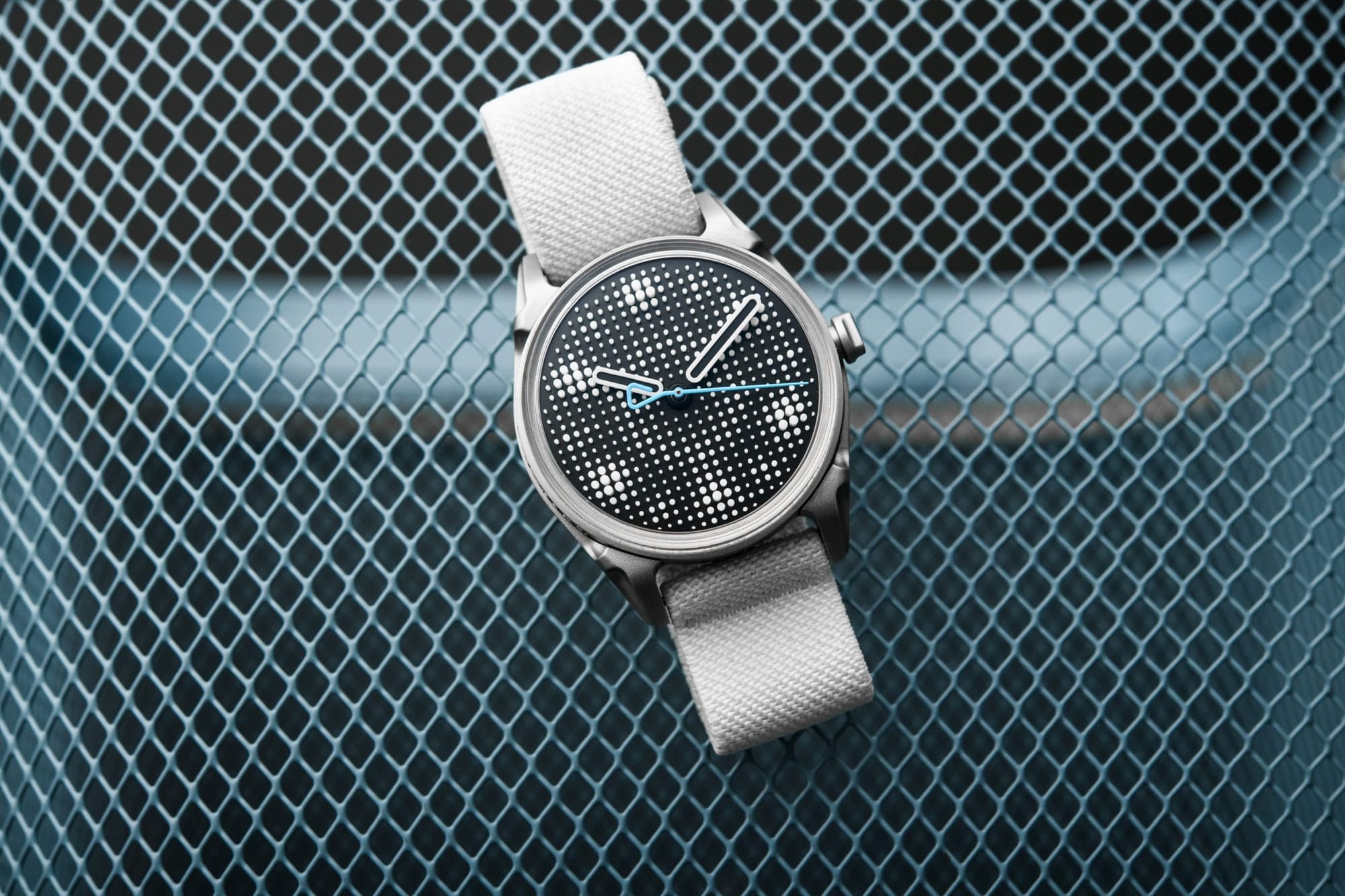
Regular readers know how much I love kollokium. The Projekt 01 blew me away when it launched some three years ago, with its pinned and lumed dial. Then they hammered the admiration in with the sequel, the Projekt 02, with a topological-style dial. While they're releasing a bunch of Projekt 02 variants, they've just also released the Projekt 01 variant H, the supposed last of the Projekt 01 watches. And it's so cool.
The case is completely unchanged, which means it's still 40mm wide and 11.95mm thick with the dramatic sapphire box on top, 7mm without it, which tells you how much of this watch is glass. The steel case is die-cast rather than milled, which means that molten 316L steel is injected into a mould. This gives it an incredibly cool look, with cutouts that couldn't exactly be executed by regular cutting of steel. The surface is somewhere between matte and frosted, a remnant of the die casting. Water resistance is 50 meters, which is enough for a watch like this.
The dial base is textured matte black, carrying the more abstract layout introduced on Variant "F" and 488 cylindrical pins in six diameters and heights, all set by hand. Those pins are made out of Lichtblock, a ceramic-resin lume hybrid, loaded here with BGW9 for a cyan glow. The hands get violet Lichtblock elements and the seconds hand is blue. One gram of Super-LumiNova is usually enough to print markers on 200 to 300 ordinary dials; each of these pins takes two gram. That has to be super cool
Inside is the La Joux-Perret G101, a familiar automatic beating at 4Hz with roughly 68 hours of power reserve. The strap is kollokium's own single-piece elastic textile with stitched adjustment loops and a hook fastener in die-cast steel, and you get both cream-white and black versions.
The new kollokium Projekt 01 Variant "H" is limited to 399 pieces, priced at CHF 3,888.88 excluding tax. See more images here.
4/ Benrus Modernizes the MILSPEC Watch With the Type 3X

Benrus has spent the last two decades reissuing its own history. The Type I and Type II were the watches the brand actually made for the U.S. military in the 1970s, and they went on to see service with CIA paramilitary officers, SEALs and UDT divers. The revisiting of history is a good trend to ride, but it can get a bit stale. Benrus is obviously aware of that, since they just released the Type 3X. According to the brand, the new watch comes from discussions with a group of former special operations veterans asking what the originals would look like if the people who wore them got to design the replacement. And boy, the result is not something I would expect from Benrus, but I like it.
The case measures 42mm wide and 12.5mm thick, built from titanium with a composite carbon mid-case and topped by a unidirectional rotating titanium dive bezel with an aluminum inner ring. Water resistance is 200 meters and there's 250 gauss of antimagnetic shielding. Two finishes are offered, one classically brushed titanium, the other with a darker grey finish.
Dials come in black or turquoise green and both have a square pattern stamped into it. Both get Old Radium Super-LumiNova on the hands and markers which might be a bit of a controversial choice. I would have loved to see a stark white lume instead of all beige. There's an arrow-tipped orange GMT hand that indicates a secdon 24-hour time zone and a date aperture at 6 o'clock.
Inside is the ETA 2893, an automatic with a 24-hour quickset GMT hand and 42 hours of power reserve. The 2893 is the caller style GMT rather than the traveller version, meaning you adjust the 24-hour hand rather than jumping the local hour. Straps are rubber, taupe on the black dial and matching turquoise on the green, with a Velcro option available.
The Type 3X is available now, priced at $2,950. That's not an insignificant amount of money, but the watch looks to be worth the price in close up pictures. See more images here.
5/ Berneron's New Mirage 38 Miroir Is Impressively Mirrored
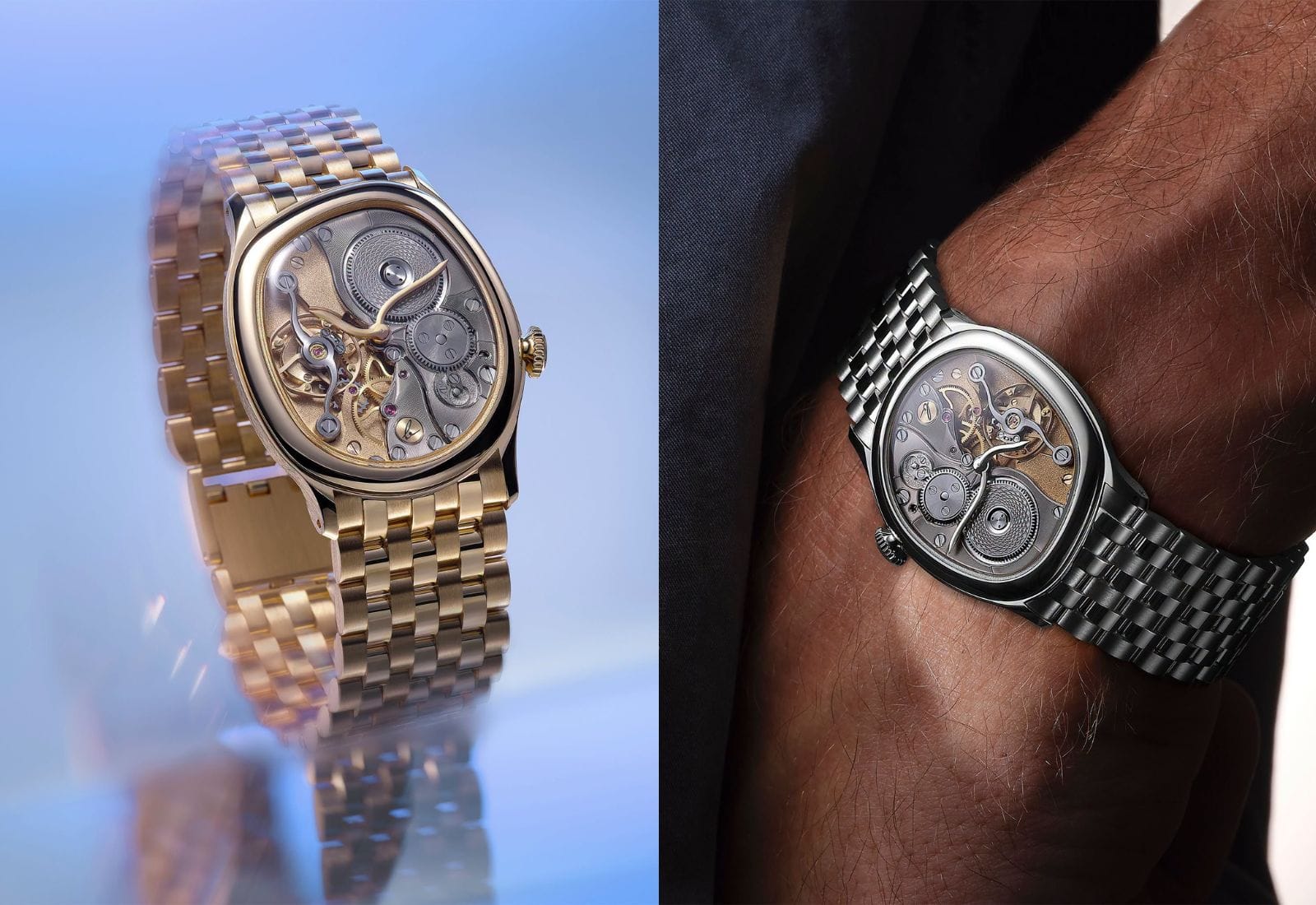
Sylvain Berneron is one of the handful of darlings of the watch world that actually deserve the accolades and adorations that he receives. Having previously designed cars and Breitlings, his eponymous brand is something so impressive, something so unique, that it still kind of stands completely alone in the watch world. His watches are wonderfully shaped, perfectly thin and often breathtakingly beautiful. This latest variant, which was introduced in late August, the Mirage 38 Miroir does something to show off one of the more important parts of the watch – the movement. And it does it by flipping the movement over to show it on the dial. Fantastic stuff.
The case measures 38mm long by 34mm wide, 7mm thick, with a lug-to-lug of 42mm. It's made out of 18k gold, white or yellow, and when Berneron says it's all gold, he means it. The case is gold, the spring bars are gold, the buckle is gold. Even the movement is gold. And in a complete boss move, Berneron uses hesalite with a scratch-resistant treatment on top and bottom, giving the watch a soft vintage look. It still has the irregular in outline of the original and 30 meters of water resistance.
There is no dial. The Calibre 283 is a mirrored interpretation of the 233 that powers the standard Mirage, reworked so much that only about a fifth of the components are carried over, mostly the barrel and the winding assembly. The mainplate and bridges stand in for the dial and they are beautiful, with steps, split lines and level changes. Time is indicated with squigly gold hands and while there's no small seconds display to speak of, it does have a seconds wheel that turns with no markings.
Calibre 283 is manually wound and tiny, 30 x 28mm and 2.83mm thick, with 135 components and 17 jewels. A free-sprung balance beats at 21,600vph and twin barrels give 72 hours. Finishing includes guilloché, anglage, colimaçonnage, cerclage, traits tirés, nuagage and laser engraving. It comes on a 20-16mm Barenia leather strap with a gold buckle, or on a solid gold bracelet Berneron developed in-house.
Price is set at CHF 72,500 excluding VAT on the strap or CHF 130,250 excluding VAT on the gold bracelet, with first deliveries in October 2027 and Series A capped at 36 per colour per year for ten years. Good luck getting this one. See more images here.
⚙️Watch Worthy
- A review of the Nomos Club Campus Full Rose and All Olive
- Hands on with the Frederique Constant Classic Worldtimer
- A review of the Zenith Defy Extreme Ultraviolet
⏲️End links
- Goro Miyazaki’s first feature prompted his father, internationally acclaimed filmmaker Hayao Miyazaki, to leave a premier screening for a smoke. At 85, the elder Miyazaki still works daily at Studio Ghibli, the singular storytelling operation beloved for its hand-drawn animations and explorations of environmentalism and family dynamics, in films such as My Neighbor Totoro and Howl’s Moving Castle. Whether Goro may succeed his father as Studio Ghibli’s leader is a central question of Sohee Kim and Felix Gillette’s feature, but it’s not the only one; Ghibli, now a subsidiary of a Japanese TV network, has long avoided the easy profits of sequels and held artistic vision at the center of its business. “To the outside world, how, exactly, Ghibli operates has always been something of a mystery,” Kim and Gillette write. Their story is a quiet, fascinating succession drama, rich with vulnerable characters and concerned with an old question: How can art best sustain itself?
- If you spend your day in front of a computer, you may ask yourself, at times, why you do it. What’s it all for? Who benefits? For Noēma, Aaron Horwath suggests that the crisis confronting knowledge workers these days isn’t strictly economic, it’s also existential. He explores the pitfalls of work-as-performance and wonders whether the “messy middle,” which embraces human interaction and collaboration over an army of agents, might offer more for workers and employers alike.
- “I don’t understand enjoying something without caring about it,” Andre Agassi tells Lizzy Goodman midway through her thoughtful character study. Goodman shadows the former tennis great as he tries to get comfortable in his pickleball years, detailing the dynamic interplay of Agassi’s moods: Fun Andre, Philosopher Andre, Dark Andre. Many of the best athlete profiles extend the narrative of a legend beyond the court, making more complicated human meaning once a subject has set the game aside. Here, Goodman and Agassi achieve a gratifying volley, the journalist turning over the athlete’s challenging interiority and sending it back to him to consider.
👀Watch this
I've never even imagined that I would want to own a flippable phone. And then I saw that one animation that Apple did and I was sold.
Thanks for reading
Vuk
Subscribe to It's About Time to get daily