The Citizen Is Beautiful Again, Orient Star Tries Something Different And New Watches From Vulcain, GP And Panerai

Hey friends, welcome back to It’s About Time. I'm in Dresden right now, traveling to Glashütte for the Nomos forum, which is why you're getting this issue a bit earlier. There's also a pretty high chance I won't have a second to breathe tomorrow, so there might not be an issue tomorrow. But I'll make up for that on Wednesday.
In case you just got one of these emails and don't know where I've been for the past month, you can read the whole story here.
I write this newsletter on my own, and paid subscribers are what keep it running. If you'd like to support it, you'll also get The Caseback, a weekend magazine with longer writing, every Sunday.
The paid subscription is discounted for just a few more days, so get it now.
👂What’s new
1/ The Citizen Adds Two Tosa Washi LEs, One Dyed Crimson And One Threaded With Gold
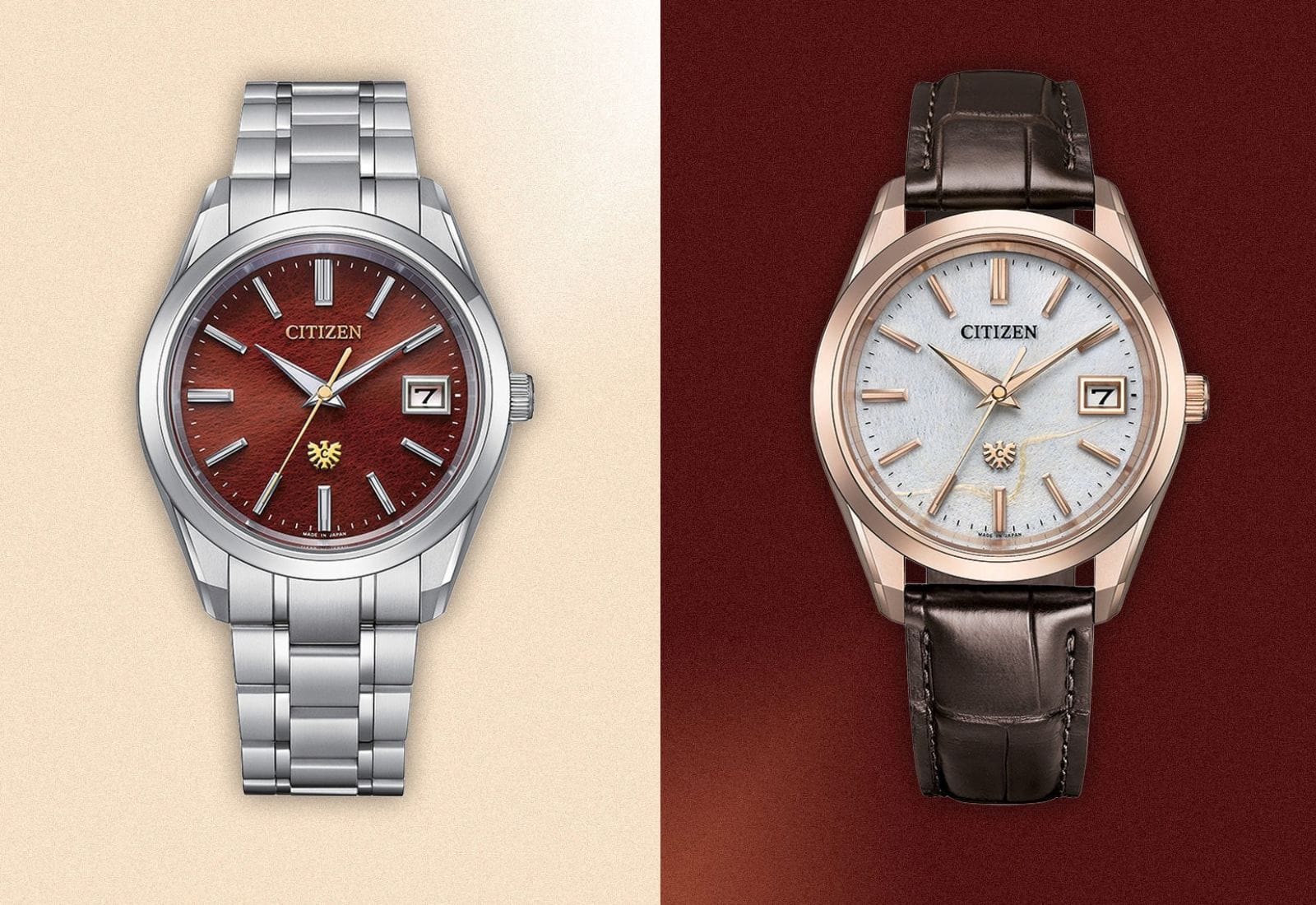
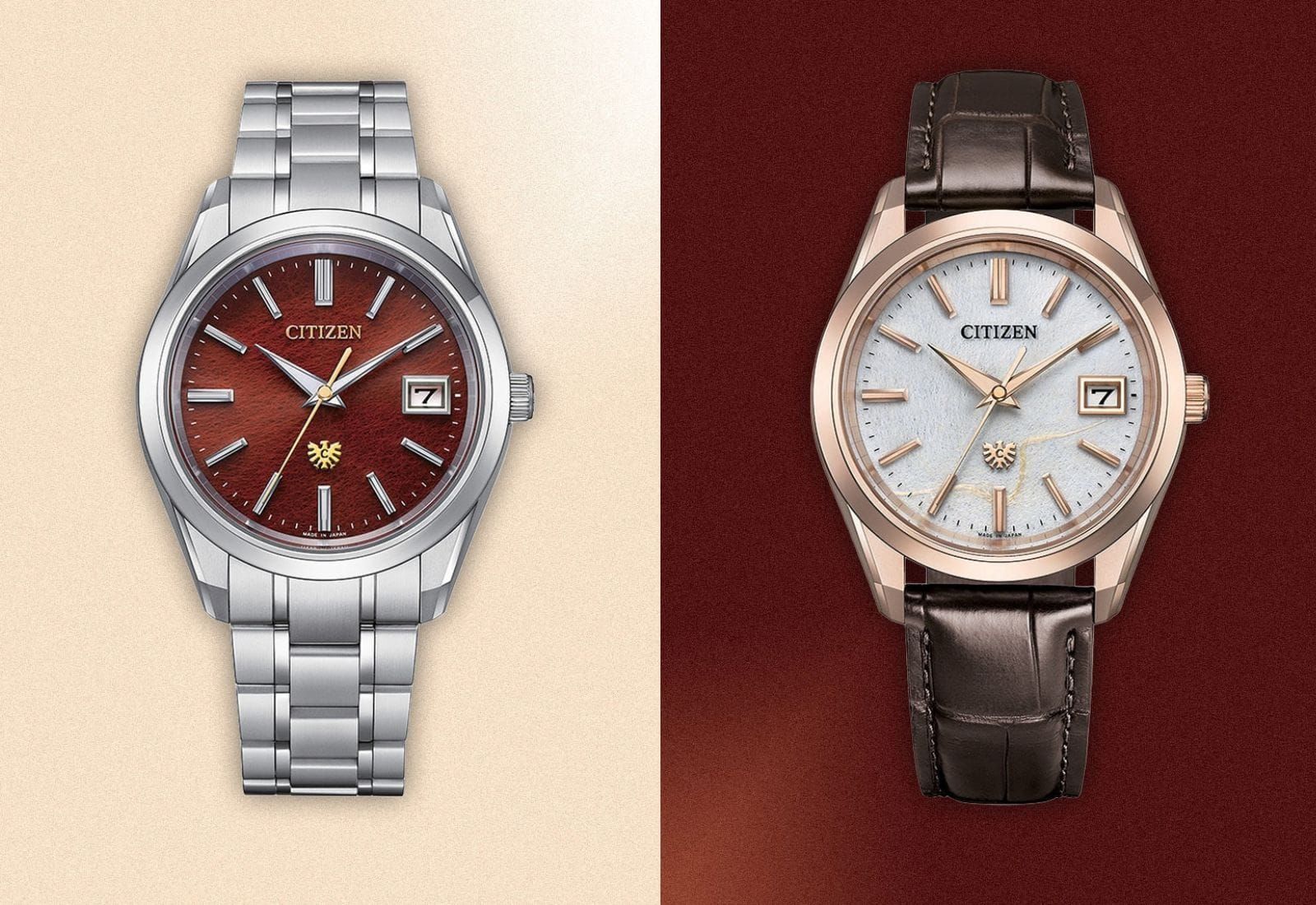
Citizen calling its top collection The Citizen is still one of the more confusing naming decisions in the industry. Just to illustrate the level that we're talking about, it's as if Seiko named their higher tier The Seiko instead of Grand Seiko. But regardless of the name, they make brilliant watches. Their latest releases are the also unfortunately named AQ4100-65X and the AQ4106-00B. Again, regardless of the names, look at how pretty these two things are.
Both cases measure 38.3mm wide and 12.2mm thick, and are made out of Super Titanium, Citizen's hardened titanium alloy. The difference is the Duratect coating. The AQ4100-65X gets Duratect Platinum, a cool silver color, while the AQ4106-00B gets Duratect Sakura Pink, which is a sort of soft gold. Water resistance is 100 meters.
But the case is secondary. The dials are why you'd buy either. The AQ4100-65X uses Tengujoshi, the thinnest and most fragile grade of washi. Rather than dyeing the fibres, Citizen lays a translucent crimson layer over the paper, so the texture stays visible and light still reaches the solar cell underneath. The AQ4106-00B uses Unryushi paper, where extra-long fibres swirl through the sheet like frost on glass. Citizen tints those fibres pale gold, then adds a broad gold sweep across the lower dial that recalls kintsugi repair. On both, the hands and baton markers match the case color.
Inside both is the Citizen calibre A060 Eco-Drive, showing hours, minutes, seconds and date. It charges from any light source, runs for 18 months on a full charge in power-saving mode, and is accurate to ±5 seconds per year. The AQ4100-65X comes on a Super Titanium bracelet; the AQ4106-00B on a crocodile leather strap.
The Citizen AQ4100-65X is priced at $3,000, limited to 350 pieces. The Citizen AQ4106-00B is priced at $3,100, limited to 300 pieces. Both are available now. See more photos here and the watches on the Citizen website.
2/ Orient Star Strips the Sakigake Three Hand Down to the Essentials

For years, the easiest way to spot an Orient Star was the power-reserve gauge on the dial. And there were a lot of people that weren't exactly enthusiastic about them. Well, now Orient Star is launching the new Sakigake Design Project, which the brand is pitching as a new direction. The first watches to come out of that project are the new Sakigake Three Hand collection. Gone is the power-reserve indicator and the date, and the dial text is down to the logo and a small "Automatic" above six. I'm intrigued.
The stainless-steel case is 38.7mm wide and 11.8mm thick, with a lug-to-lug of 47mm. Decent numbers, but it could be slimmed down a bit and that lug-to-lug would benefit from a bit of a shape. The lugs are polished on their outer flanks and brushed on the inner surfaces. You get a dual-curved sapphire crystal with anti-reflective coating on top, a sapphire display back, and 100 meters of water resistance.
With the clutter gone, the hour markers finally get room, and they're pretty classy. They're applied and faceted with ribbed tops. Orient Star says they were inspired by flower petals. Please don't go there. The dials are finished with a radial brushing and concentric grooves run around the raised rehaut. Neither the hands nor the markers have lume which is a bit of a shame. Four colors are available: yellow-gold, blue, silver and copper, which gets black-plated hands and markers.
Inside is the new Orient Star calibre F7542 automatic, with more than 50 hours of power reserve and a stated accuracy of +15/-5 seconds per day. The bracelet matches the finish of the case and it has a very interesting look.
The yellow-gold, blue, and silver dial references are priced at €880. The copper dial is priced at €960, and is limited to 900 pieces. Sales begin this month. See more photos here and the watches on the Orient Star website.
3/ Vulcain Teams Up With CronotempVs Collectors For A Beautiful Monopusher Chrono
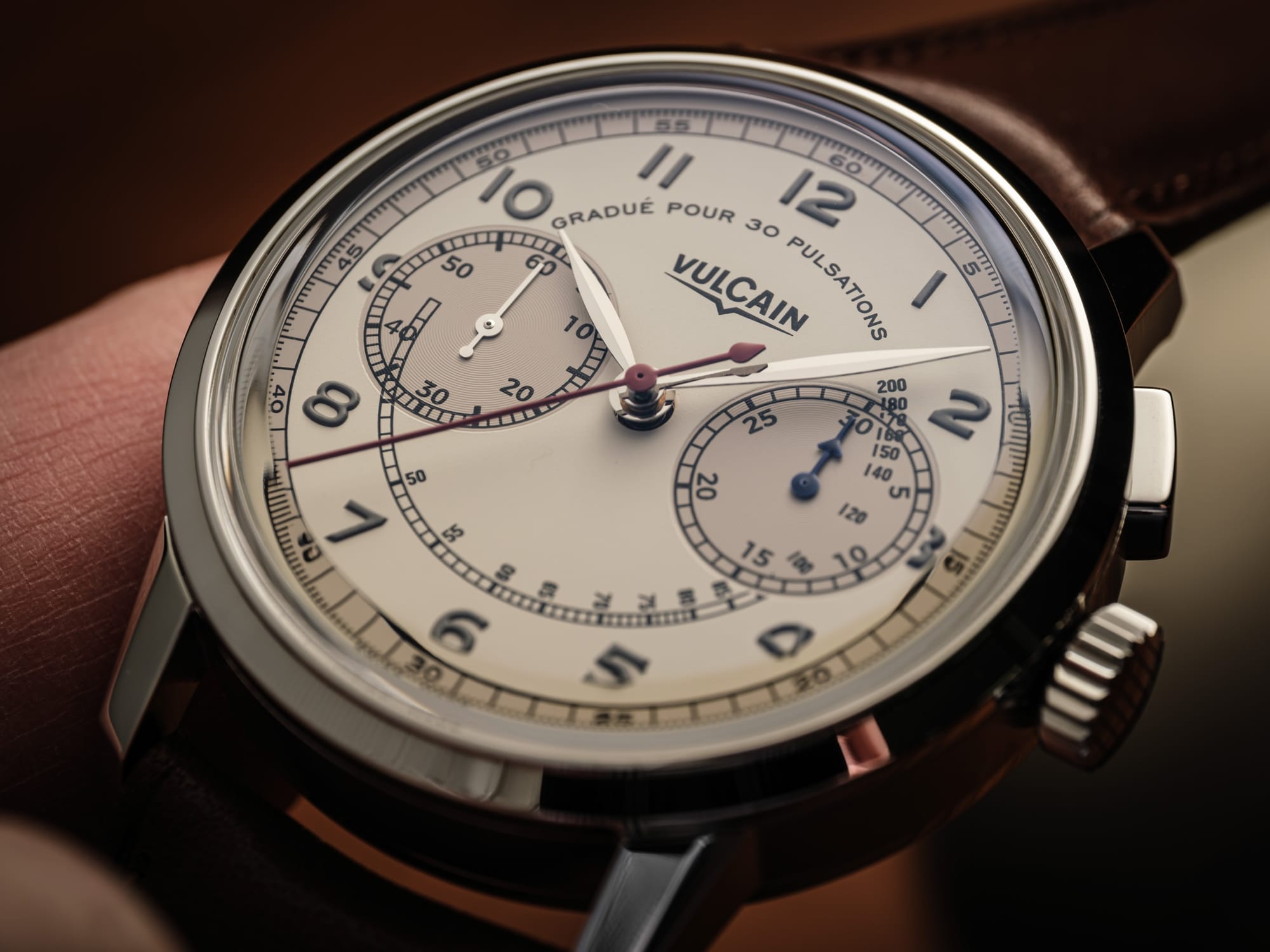
Vulcain is best known for the Cricket alarm, one of my all time favorite watches. However, over the past few years, after their soft relaunch, they have been working on building out a vintage chronograph line with a monopusher setup. And we're kind of reaching the peak of that effort now. Sure, we've seen a bunch of really great Vulcain Monopushers, but this one has my heart fluttering a bit. This is the new CronotempVs x Vulcain Heritage 50's Monopusher Chronograph, commissioned by the Spanish collector group CronotempVs and it's absolutely gorgeous.
The steel case remains unchanged and is 42mm wide, which is large for a watch dressed this firmly in 1950s style. Vulcain hasn't given a thickness or lug-to-lug yet, and I haven't had a chance to try their regular Monopusher, but I'll say this is still a very nice watch, despite its size. The case is polished, with a domed sapphire crystal on top and a sapphire caseback. Water resistance is 50 meters.
The dial is beige with Arabic numerals and two chronograph counters, and it gets the period typography right. A pulsometer scale runs around the center of the dial, calibrated for 30 beats, and it cuts in dramatically into the 30 minute totalizer and small seconds. Despite all that drama with the pulsometer, nothing on the dial is trying too hard.
Inside is the Vulcain calibre V57, which is essentially a modified La Joux-Perret chronograph with a palladium finish and Côtes de Genève striping, visible through the back. It beats at 4Hz with a 42-hour power reserve, which is ok. The column wheel and vertical clutch will give you a crisp push and no stutter when the seconds hand starts. It comes on a brown calf leather strap with a steel pin buckle.
The CronotempVs x Vulcain Heritage 50's Monopusher Chronograph will be a limited production, but no exact numbers have been revealed. Price is set at €3,600 before tax, and first deliveries are expected in spring 2027. See way more photos here and the watch on the CronotempVs Collectors website.
4/ Girard-Perregaux Paints The Laureato In Williams Blue To Mark Its New F1 Deal
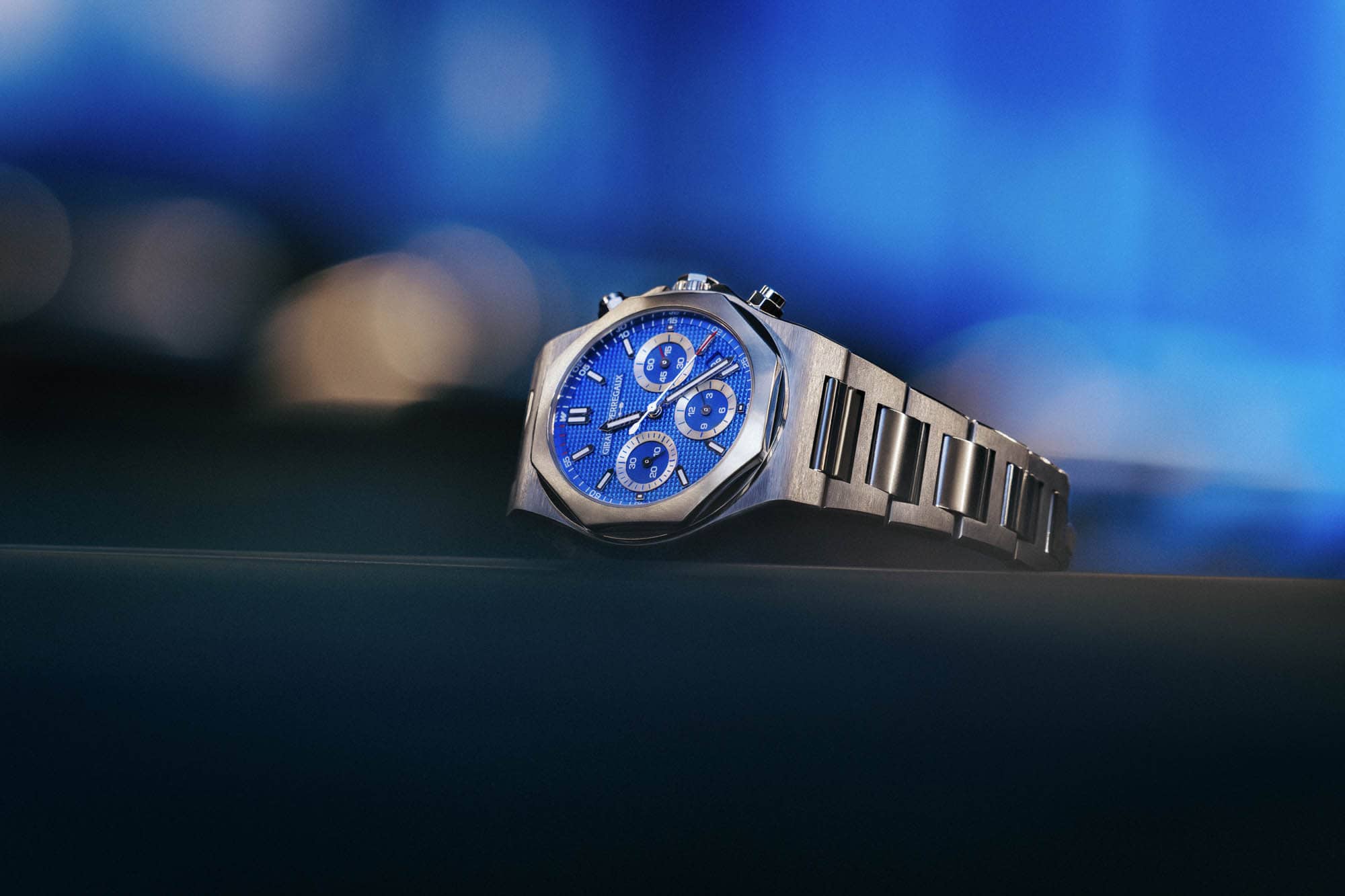
Girard-Perregaux announced its partnership with the Atlassian Williams F1 Team last month, and the first watches have followed quickly: a Laureato 42mm and a Laureato Chronograph 42mm, both in Williams Edition trim. And of course it's the Laureato that's used for the collaboration. Not just because the Laureato is GP's sporty watch, but also because it was released in the mid 1970s, just as Williams was starting to enter Formula 1.
Both cases are 42mm wide, with the octagonal bezel and integrated bracelet the Laureato has worn since 1975. The time-and-date is 10.68mm thick. The chronograph moves to 904L steel, adds screw-down pushers and a crown guard, and still keeps to 12.16mm thick, which is reasonable for an integrated chronograph. Sapphire front and back on both, and 100 meters of water resistance.
The dials are Williams blue with embossed Clous de Paris, matched to the team's FW48 car. Hands and applied markers are rhodium-plated, red accents follow the car's highlight color, and a small Williams W sits above 12. On the chronograph the red is limited to the central seconds hand, which is exactly enough. The 42mm gets a blue date disc instead of a white one. A metallised Williams emblem goes on each caseback.
The 42mm uses the automatic calibre GP1800 beating at 4Hz with 54 hours of power reserve. The chronograph uses the calibre GP03300-2451, an automatic modular chronograph beating at 4Hz with 46 hours of reserve. At this price, a modular chronograph with under two days of reserve is a bit underwhelming. Both come on integrated steel bracelets with a triple folding clasp.
The Laureato Williams Edition 42mm (ref. 81010-11-3680-1GM) is priced at €15,900. The Laureato Chronograph Williams Edition (ref. 81020-11-3681-1GM) is €20,500. Neither is limited. See more photos here and the watches on the Girard-Perregaux website.
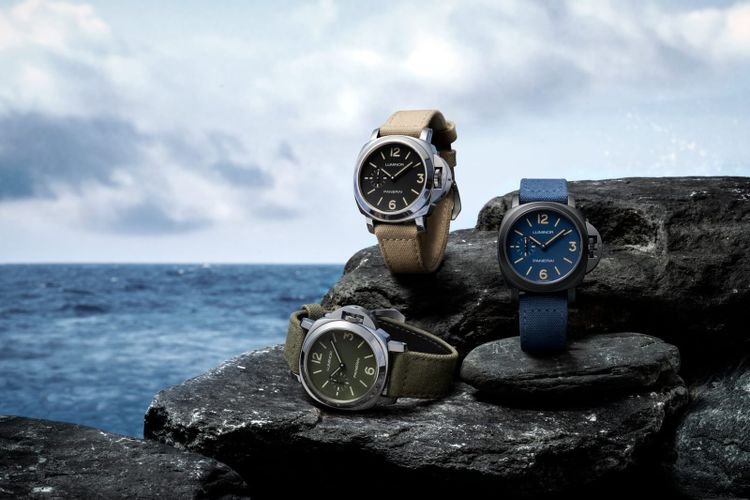
5/ Panerai Embraces Maximalism With A Horizontal Tourbillon In A 47mm Titanium Luminor

Panerai's in-house movement era has a pretty complicated past. Scandalous, even, as they were caught passing off outside movements as their own, just dressed up. But even despite that, at the higher end, they've made some pretty impressive stuff. Their in-house movement era began in 2005 with the hand-wound P.2002, and two years later the brand gave the tourbillon its own interpretation: the P.2005, with the cage turning on an axis perpendicular to the balance, once every 30 seconds. That was followed up with the skeletonised P.2005/T in 2016. It's that movement that now shows up in the new Luminor Tourbillon PAM01784. The PAM01784 joins the very similar Goldtech PAM01060 already in the catalogue, only this one is made out of Grade 5 titanium.
The case is 47mm wide which is absolutely massive. But the cool thing about Panerai Luminors is that they wear much smaller than you would expect. It won't fit on the vast majority of wrists, still, but it's a fun wear. It's made out of Grade 5 titanium which makes it light, but it's actually shockingly light. The watch weighs just 105 grams. The finish is brushed, with a polished titanium bezel, and on the right is the familiar crown-protecting bridge. A domed sapphire sits on top, a sapphire display window is placed into in the titanium caseback, and water resistance is 100 meters.
Since this is a skeletonized watch, the blue-treated movement plate stands in for the dial. Numerals and indices are fixed straight onto it, and you look past them into the barrels, the gear train and the rotating cage. Hours, minutes and GMT are indicated with centrally mounted hands, with small seconds at 9 o'clock and an AM/PM indicator at 3. The power reserve sits just left of 6 o'clock. The GMT, AM/PM and power reserve hands get orange tips, and the lume is color-coded: white for numerals, indices and the main hands, blue for GMT and AM/PM, green for the power reserve. It's busy, as openworked watches always are, but very cool.
Inside is the hand-wound calibre P.2005/T, 10.05mm thick, with 277 components and 31 jewels, running at 4Hz. Three barrels in series hold 1.36 meters of mainspring between them, which get you 144 hours of power reserve, or six days. The GMT is a traveler setup: the local hour hand jumps forward or back in one-hour steps. It comes on a blue alligator strap with a titanium folding clasp, plus a blue rubber strap with a pin buckle.
The Panerai Luminor Tourbillon PAM01784 is not a cheap watch. Not at all. It's priced at €160,000. It goes on sale in December. See more photos here and the watch on the Panerai website.
I write this newsletter on my own, and paid subscribers are what keep it running. If you'd like to support it, you'll also get The Caseback, a weekend magazine with longer writing, every Sunday.
The paid subscription is discounted for just a few more days, so get it now.
⚙️Watch Worthy
⏲️End links
- Duncan is a longtime friend of Max Daly, and a drug addict caught up in “cuckooing,” where dealers take over people’s homes as drug bases in exchange for product. Daly offers a sympathetic portrait of Duncan’s spiralling life, while opening a window onto a bizarre world where the most vulnerable exploit each other—and sometimes even form bonds.
- Audiophiles are sometimes described in terms reserved for cults; a 1956 New Yorker story, referenced in Colin Vanderburg’s exceptional tour of extreme listening, refers to “a remarkably articulate group of zealots” and “an almost mystical reverence for sound.” Vanderburg travels among the believers, tracing the decades-long promise of “consumer audio innovations” to their technological apex: the New York International Audio Show, where audiophiles sample six-figure sound systems in pursuit of a signal as pure as the world they already inhabit.
- A shattered grin, a wornout crown, a discolored incisor. How do our broken pieces define us? For The American Scholar, Joshua Bodwell offers a brief autobiography in dental work, examining the ways in which a broken tooth and a handful of interventions shaped his self-perception over decades. He also chews over (sorry) a select literary history of teeth, from Chaucer to Raymond Carver, and seems to ask virtually everyone in his life about their own smiles. His essay is an engaging study of imperfection, of a type many folks live with but might easily hide.
👀Watch this
Nazi Town, USA tells the story of the German American Bund, a pro-Nazi group which in the 1930s had scores of chapters across the country, representing what many believe was a real threat of fascist subversion in the United States. They held joint rallies with the KKK and ran summer camps for children centered around Nazi ideology and imagery, melding patriotic values with virulent anti-Semitism. Fantastic documentary.
Thanks for reading
Vuk
P.S. If you have any questions, suggestions, gripes or anything else, just reply to this email. It comes straight to me and I try responding to everyone.
Subscribe to It's About Time to get daily