
WATCH SCHOOL: How a Watch Keeps the Sea Out

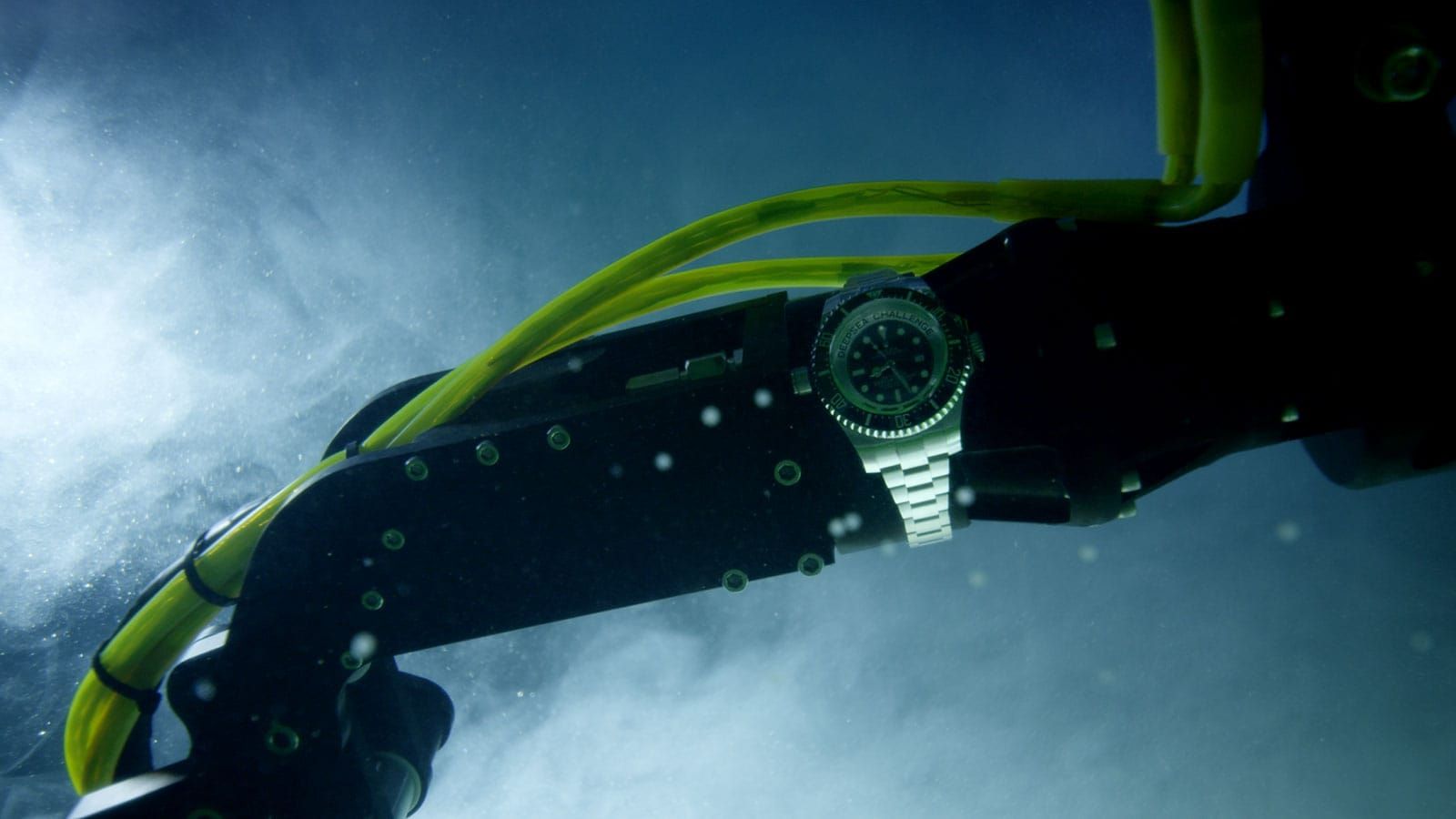
Start with a warm watch. It has been on your wrist all afternoon, and the air sealed inside the case has settled near the temperature of your skin, around 32°C. Then you walk into a sea at 18°C. The steel loves to shed its heat, and the air inside cools with it. The case cannot shrink, so the pressure inside falls instead, by a little under five percent. In water terms, you have dragged the watch half a meter deeper without moving. Every path into the case, along the stem, under the rim of the crystal, past a gasket that dried out three summers ago, is now being tested from outside.
Most watches that drown die like this, in the shallows. A hot shower, a cold pool, an old seal and the materials just let go and you're met with the dreaded fogged up crystal.
But, if it doesn't, it faces a new danger – the depth. Every 10 meters of seawater adds about one bar of pressure, the weight of the whole atmosphere at surface level. At 100 meters a watch has to endure 10 bar more than it did on the beach. A crystal 30mm across has an area of about seven square centimeters, and at that depth the water presses on it with roughly 700 newtons, the weight of a 72-kilogram man standing on the glass. But the pressure doesn't come just from the top, it comes from every side at once. So a better comparison would be a fist closing evenly around the whole watch and staying closed. Every joint, every place where one part meets another, is somewhere the fist is trying to get a finger in. And the fingers are tiny and can push through the smallest of gaps.
A case has three openings it cannot do without. The front, where the crystal sits under the bezel. The back, which has to come off for service. And the crown, the worst of the three: a hole in the side with a shaft running through it that the owner turns every day. The history of the waterproof watch is the history of closing those openings.
The first serious attempts leaned on double bagging. The hermetic case of the early 1920s water resistant watches hinged a small ordinary watch inside a heavier outer shell whose bezel and crystal screwed down over it. Hans Wilsdorf registered the name "The Submarine" in March 1922 for watches of this kind, built to a patent held by the Geneva casemaker Jean Finger. It was very effective at keeping water out, but made it impossible to wind a watch. That meant that every time you wanted to interact with your watch, you would have to unscrew the shell, wearing down the threads.
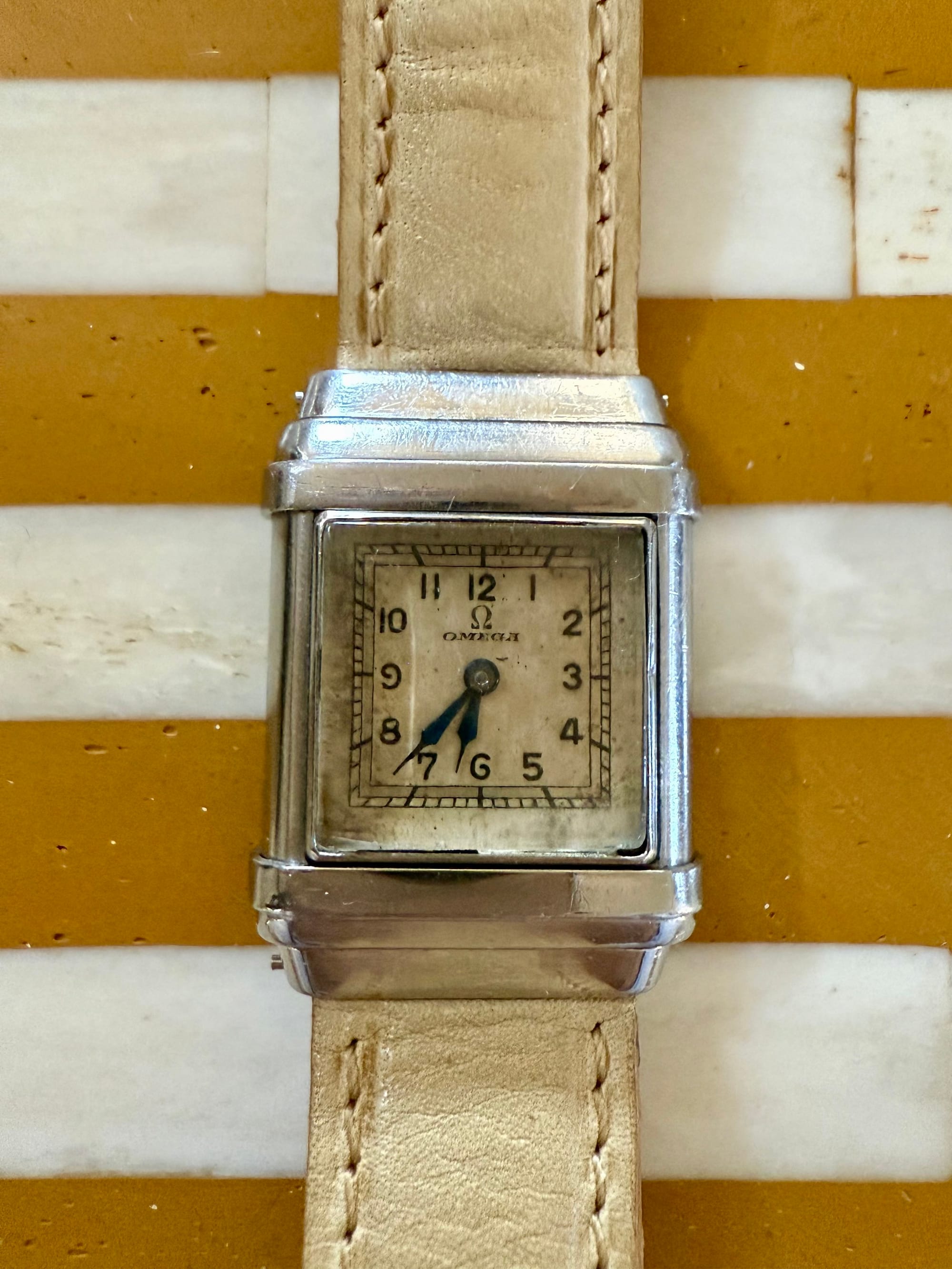
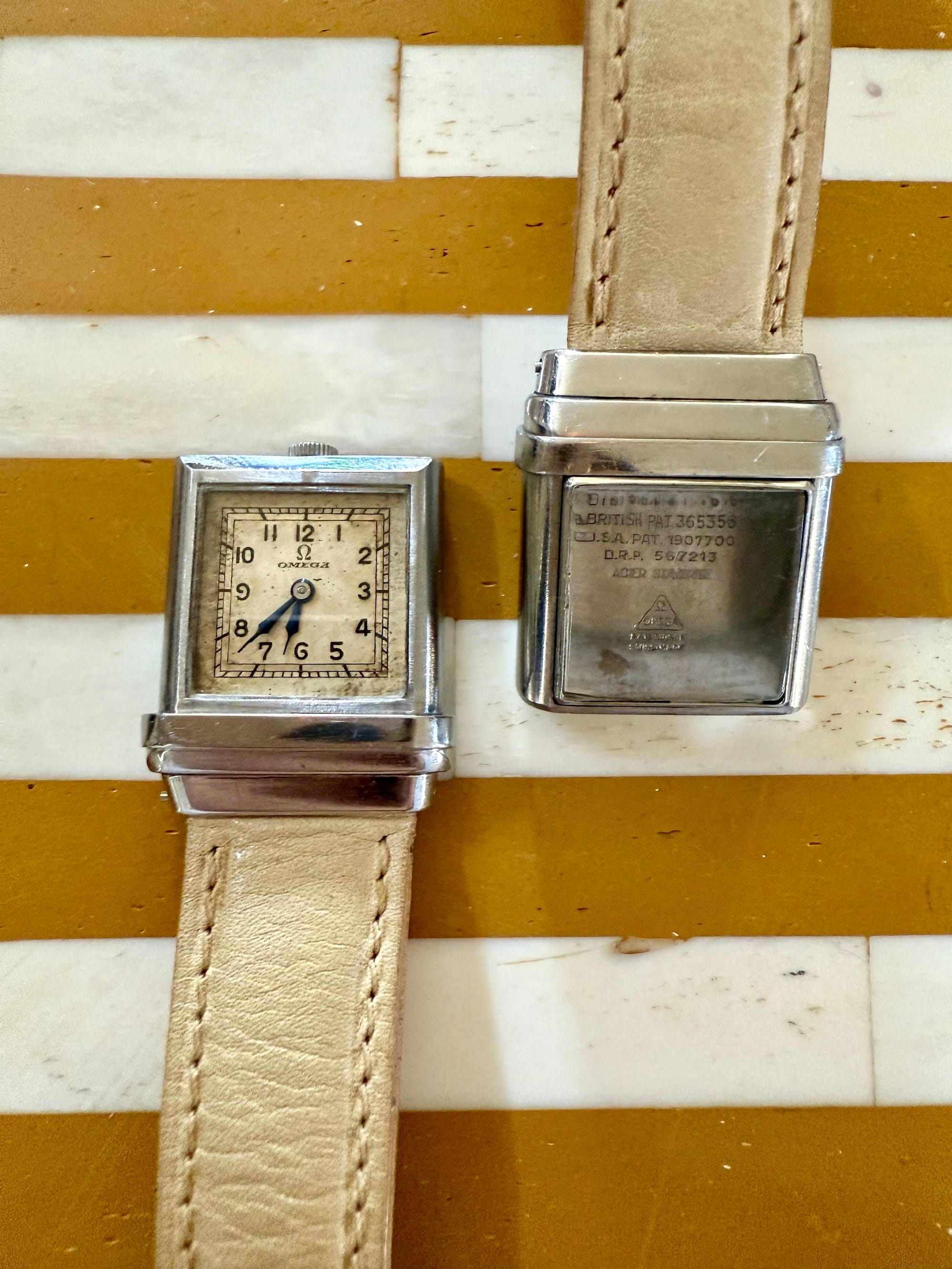
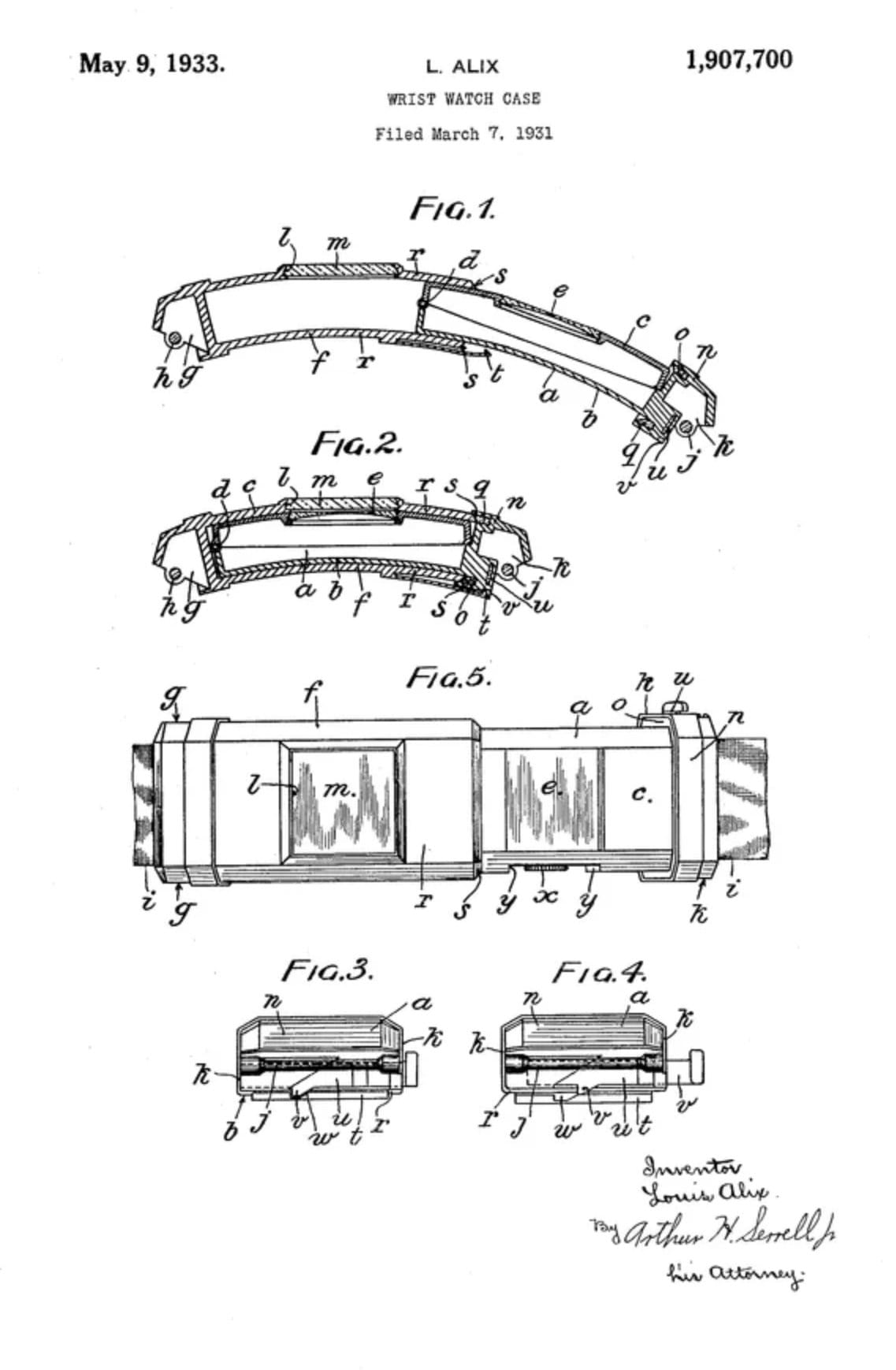
Omega's Marine of 1932 refined the package: a rectangular inner case slid into an outer shell and was clamped against a gasket, crown and all. In 1936 Marines were shocked in hot water and then sunk to 73 meters in Lake Geneva for half an hour. In May 1937 the Swiss laboratory in Neuchâtel certified the design to 13.5 atmospheres.
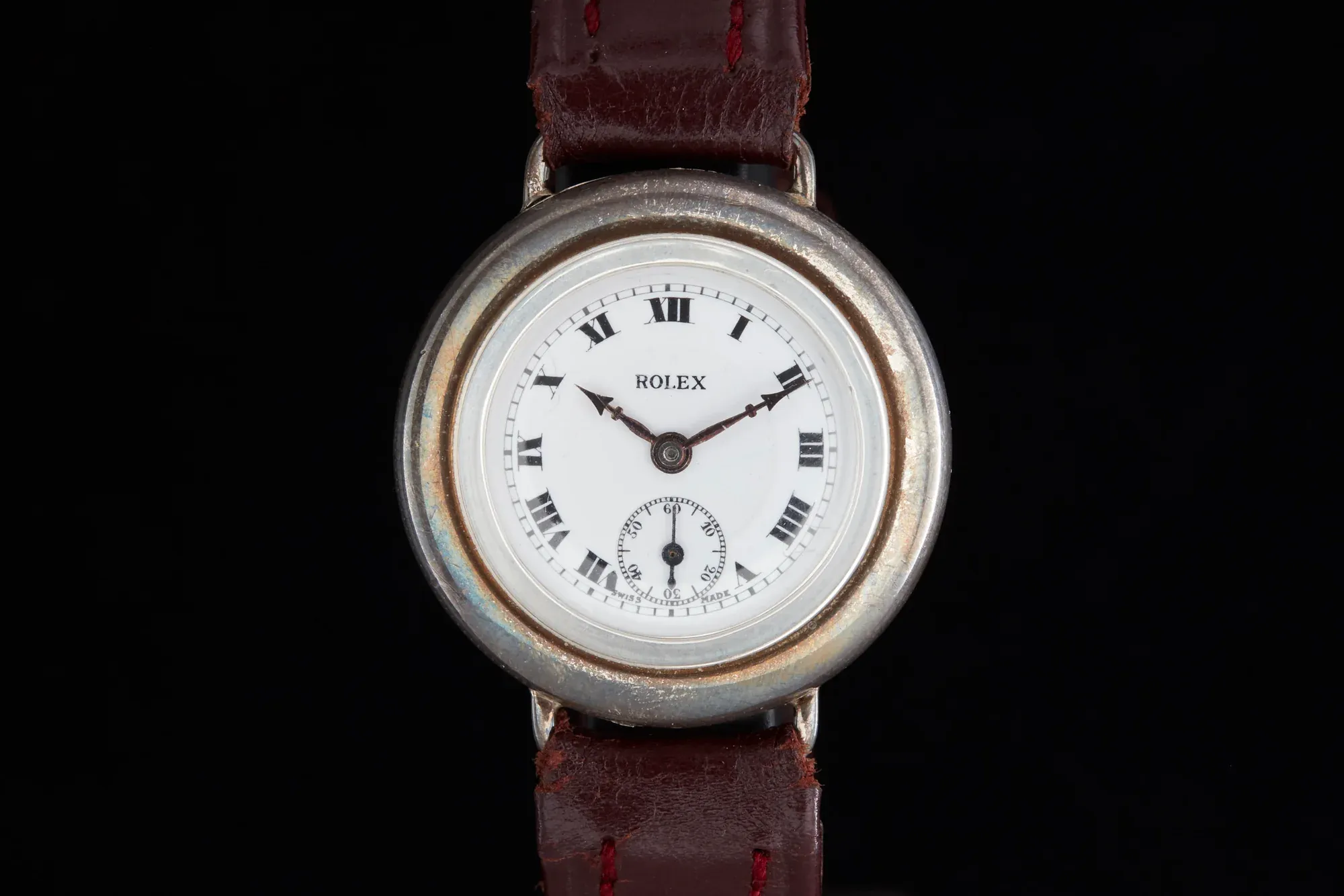
But the answer was theoretically much simpler, just more difficult to produce. Instead of wrapping up the watch, Rolex set about sealing the case itself. It wasn't a novel concept, as the Geneva casemaker François Borgel had been patenting screw-together cases since 1891, and Rolex had sold Borgel-cased watches since about 1910. Threads are good at holding a seal shut, because a fine thread turns a small twist into a great deal of clamping force, and Rolex cut flutes around its caseback so a specialized tool could turn it tighter than fingers could.
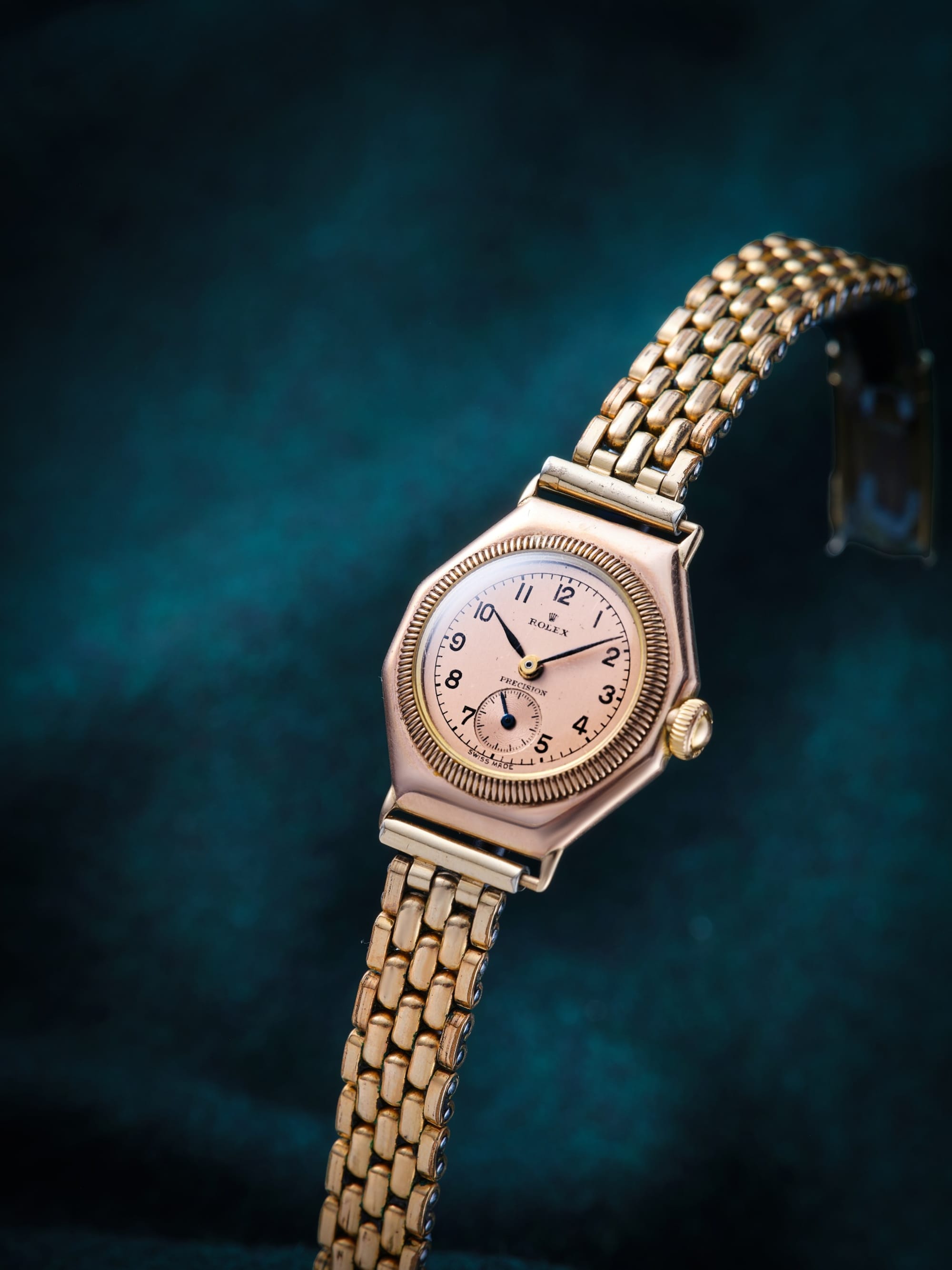
The crown was the part that caused headaches. On 30 October 1925, Paul Perregaux and Georges Perret of La Chaux-de-Fonds filed a Swiss patent for a crown that screwed down over a threaded tube and sealed against the case. Wilsdorf bought the rights in July 1926 and improved a glaring error with the original. The crown was locked to the winding stem, so screwing it down also tried to wind the watch, and on a fully wound watch it would not close. Rolex added a clutch that let the crown spin free of the stem while being screwed down. Fixing that, they had created the Oyester, a solid middle case that had its bezel, caseback and crown all screw against it tightly.
Here is what a screw-down crown does. A short metal tube is fixed into the side of the case, threaded on its outer end. The crown is hollow, threaded inside, and carries a gasket. Screw it down and it travels along the tube like a nut on a bolt until the gasket is squeezed flat between crown and case. Now the seal is static. On an ordinary push-in crown the gasket has to seal around a stem that slides and turns through it every day, and any seal that must allow motion is a compromise. The screw-down crown removes the motion whenever the watch is worn.
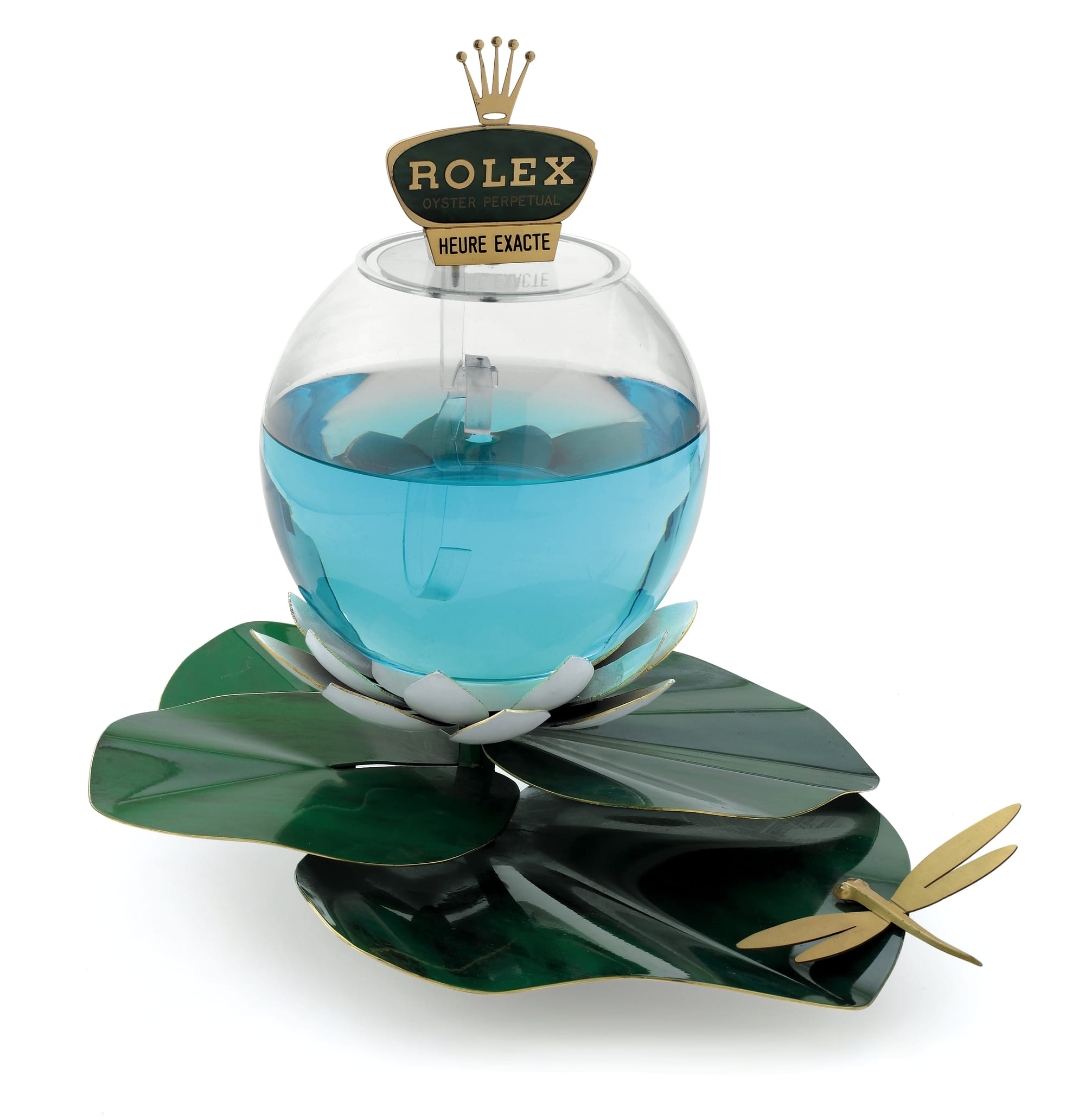
Wilsdorf needed a public test, and in October 1927 he found one. On 7 October Mercedes Gleitze, a 26-year-old London typist, became the first British woman to swim the English Channel. When another swimmer's false claim cast doubt over the season, Gleitze agreed to do it again, and on 21 October she went into the water before dawn with a gold Oyster hanging around her neck. She was pulled out after 10 hours and 24 minutes, reportedly eight miles short of England and too cold to go on. On 24 November Rolex bought the front page of the Daily Mail to point out that their Oyster was still running. Dealers were asked to put goldfish bowls in their windows with an Oyster among the plants and fish.
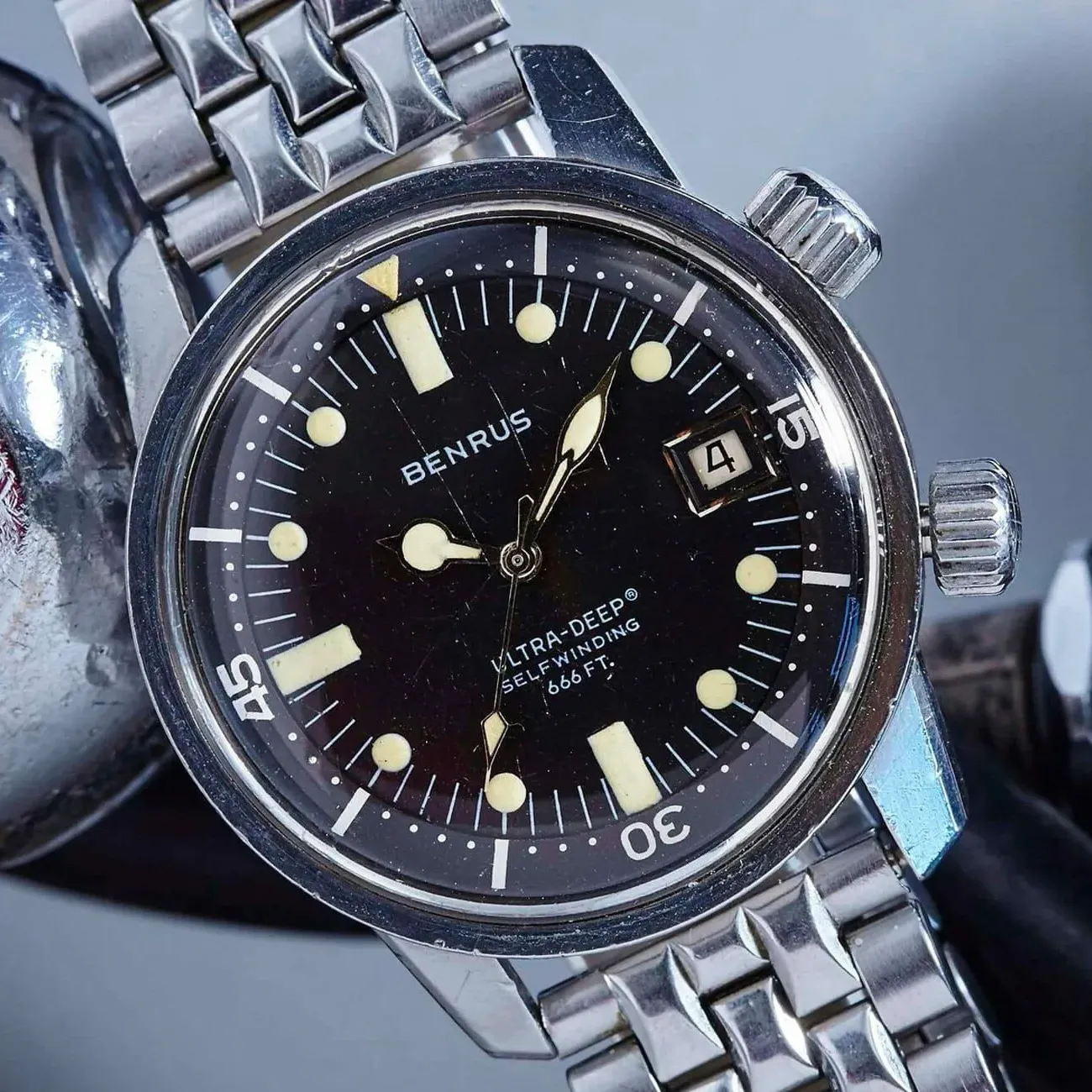
Every one of these designs depends on whatever is squeezed in the joints, and for years that was of dubious quality. Gaskets before the Second World War were made out of lead, shellac, leather, cork. Each had a downside. Lead doesn't spring back. Shellac cracks. Cork and leather dry out, and the natural rubber of the period perished in heat and sunlight.
The fix came from a most unusual place. In the 1930s Niels Christensen, a Danish-born machinist working on hydraulic cylinders, one that would be used on hydraulic breaks, found that a plain rubber ring with a round cross-section, seated in a rectangular groove slightly too shallow for it, sealed better than anything else he tried. He filed the patent in 1937, at 72, and it was granted in 1939 and its use skyrocketed with the huge industrial production increase demanded by World War II. That made the O-ring standard in aircraft hydraulics, and watchmaking took a while to perfect the technology. It was in 1948 that Omega used O-rings to seal the first Seamaster, which gave it a 50 meter water resistance.
Installed, the groove squeezes the ring from round toward oval, and that squeeze makes the first seal. When pressure pushes from one side, it shoves the ring against the far wall of the groove and flattens it further, so the harder the water pushes, the harder the ring bears on the surfaces that keep it out. The seal draws strength from the force it resists. Modern gaskets are synthetic, usually nitrile or fluorocarbon rubber with a film of silicone grease, but despite all the technological advancements, the seals still age. So without proper service and ring replacement, you can still get water leakage.
In 1956 the Swiss casemaker Ervin Piquerez SA, known as EPSA, patented a case that explored the idea of pressure pushing rings together, while potentially giving the rings a longer life with less torture. A conventional caseback is screwed down hard, crushing its gasket all day whether the watch is in the sea or on a desk. EPSA's Compressor held the caseback against the gasket with a light spring, enough for daily wear and a swim. Go deeper and the water pushes the back inward, so the seal tightens in step with depth. The later Super Compressor added a screwed back and, on most models, a second crown for an internal timing ring, which is where the twin-crown look comes from. Jaeger-LeCoultre, Longines and dozens of others bought EPSA cases until the company folded in the 1970s, making the twin-crown diver an absolutely cult look these days that's often imitated without the springed caseback.
Since there are so many ways to seal a case from water, it only makes sense that there are many ways to instruct people on how deep they can go. Ordinary "water resistant" watches fall under ISO 22810, which replaced ISO 2281 in 2010; under the older standard only a sample from each batch had to be tested. A watch marked 30 meters passed a static test equal to 30 meters of still water, once, in a lab. In real life that means rain and washing your hands, not much more.
Diver's watches have their own standard, ISO 6425, first published in 1982 and last revised in 2018. To meet it, a watch must be rated to at least 100 meters, and the test applies to every watch, not a sample bats. It goes into a water-filled pressure vessel, is brought to 125 percent of its rating within a minute, held there for two hours, then dropped to 0.3 bar for an hour. A watch marked 200 meters has been to the equivalent of 250 meters. Before and after, it is heated to 40–45°C and a drop of cool water is placed on the crystal. If the inside of the glass fogs, there is moisture in the case and the watch fails.
Open a modern dive case and you can now name every part of the water protection. A solid middle case with as few holes as possible. A crystal seated on a gasket under a bezel. A back screwed against an O-ring. A crown screwed over a threaded tube, with more O-rings around the stem inside it. Each part is either a thread, or a ring of rubber.
All of this assumes the threat is outside the case. Go deep enough, for long enough, and it moves inside. But that's a longer story.
Subscribe to It's About Time to get daily