UNUSAL WATCHES: This Weird Seiko Is Powered By Your Body Heat

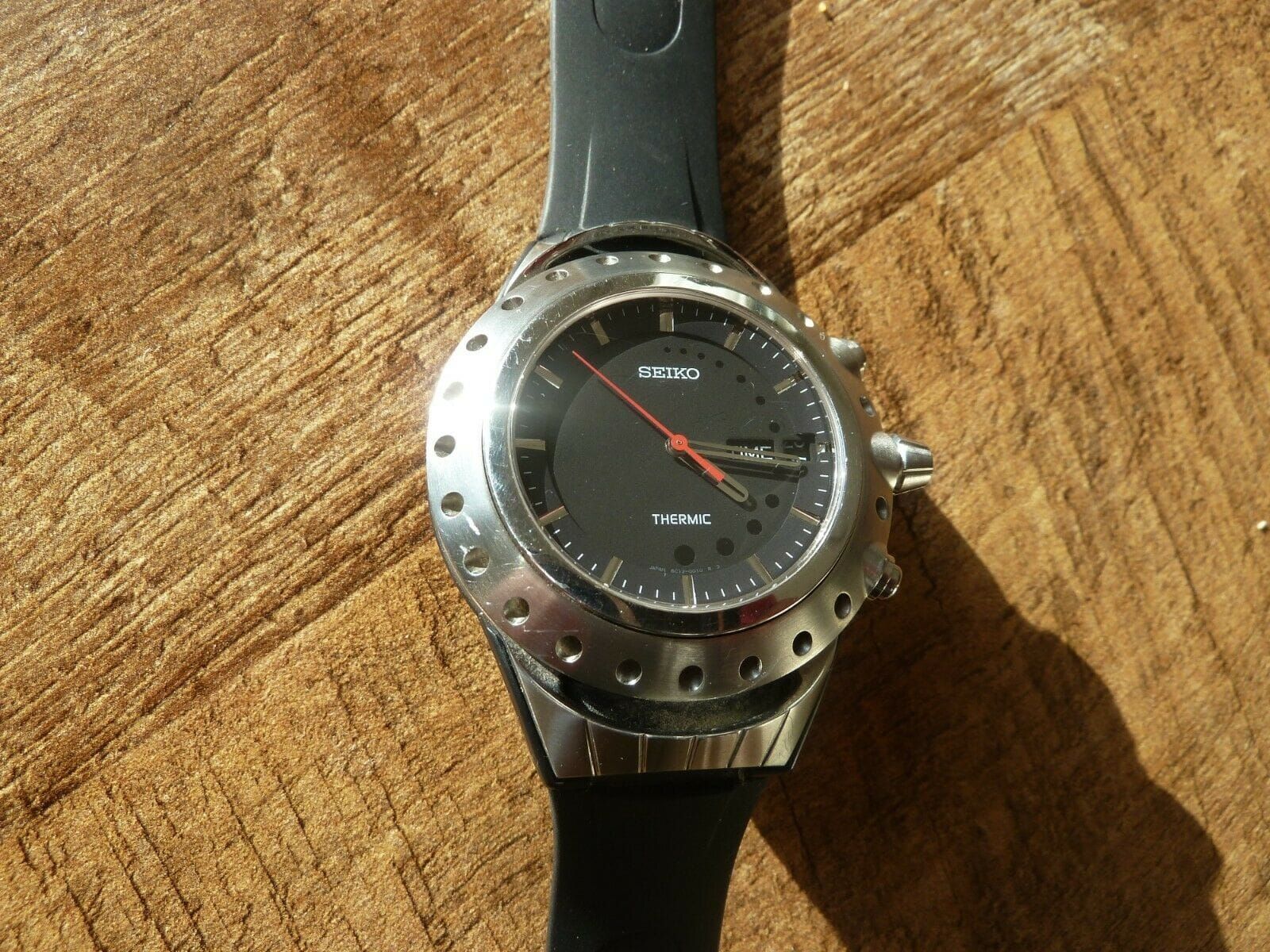
In December 1998, Seiko started selling a watch that charged itself from the difference in temperature between your skin and the air around it. The Seiko Thermic needed no light and no arm movement. You put it on and it made electricity. Seiko sold it only in Japan, limited it to 500 examples, priced at ¥300,000 before tax, and, quite predictably, never tried to do something more with this movement. It is one of the most likeable failures the company has produced.
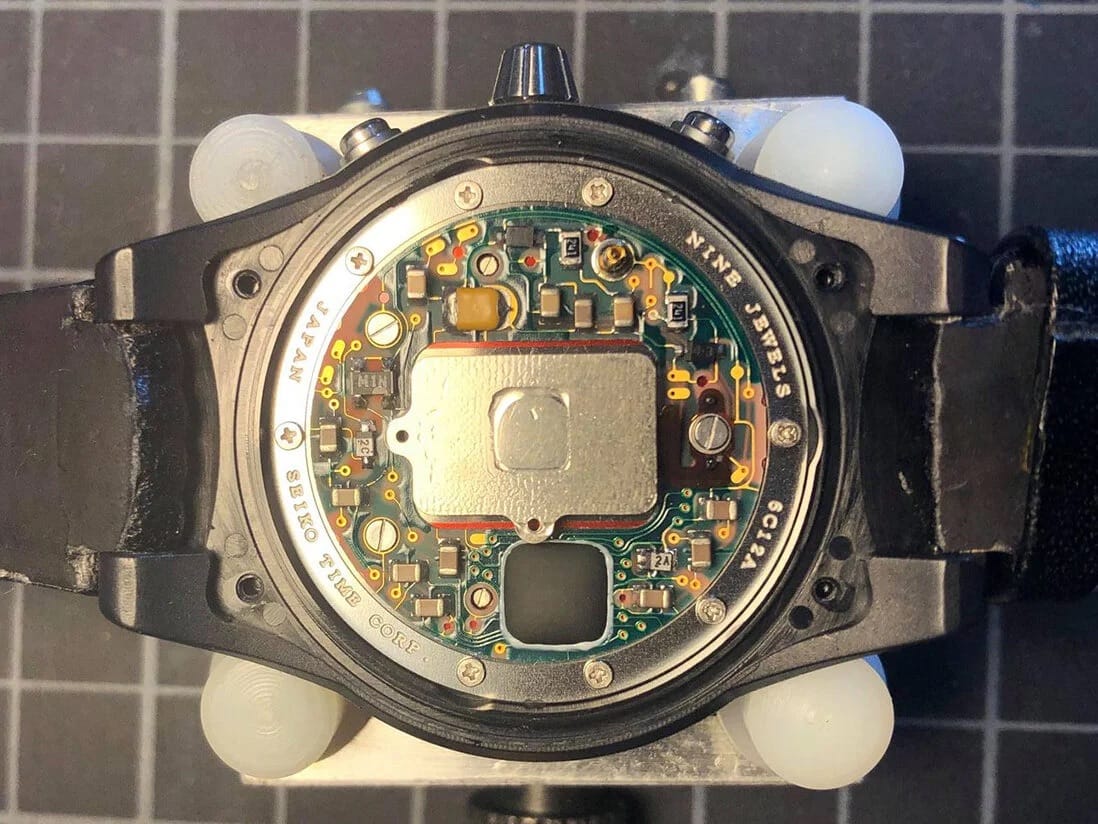
The physics dates to the 1820s, when Thomas Seebeck found that a circuit of two different conductors produces a voltage when its junctions sit at different temperatures. Seiko Instruments built the Thermic’s generator from bismuth-telluride semiconductors, 52 pairs of p-type and n-type elements per module. Each element was 80 microns square and 600 microns tall. A module measured 2.36mm by 2.14mm, and ten of them were wired together in a single unit 15.2mm long and 2.7mm thick.
That unit produced 0.2 to 0.3 volts, which isn’t enough to drive a quartz movement. SII designed a booster circuit that multiplied the voltage 16 times, plus a second low-voltage oscillator so the watch could wake itself from a completely flat battery. Bulova got to body heat first with the Thermatron in 1982, but it couldn’t restart once its cell ran down, and owners had to send it back to be recharged.
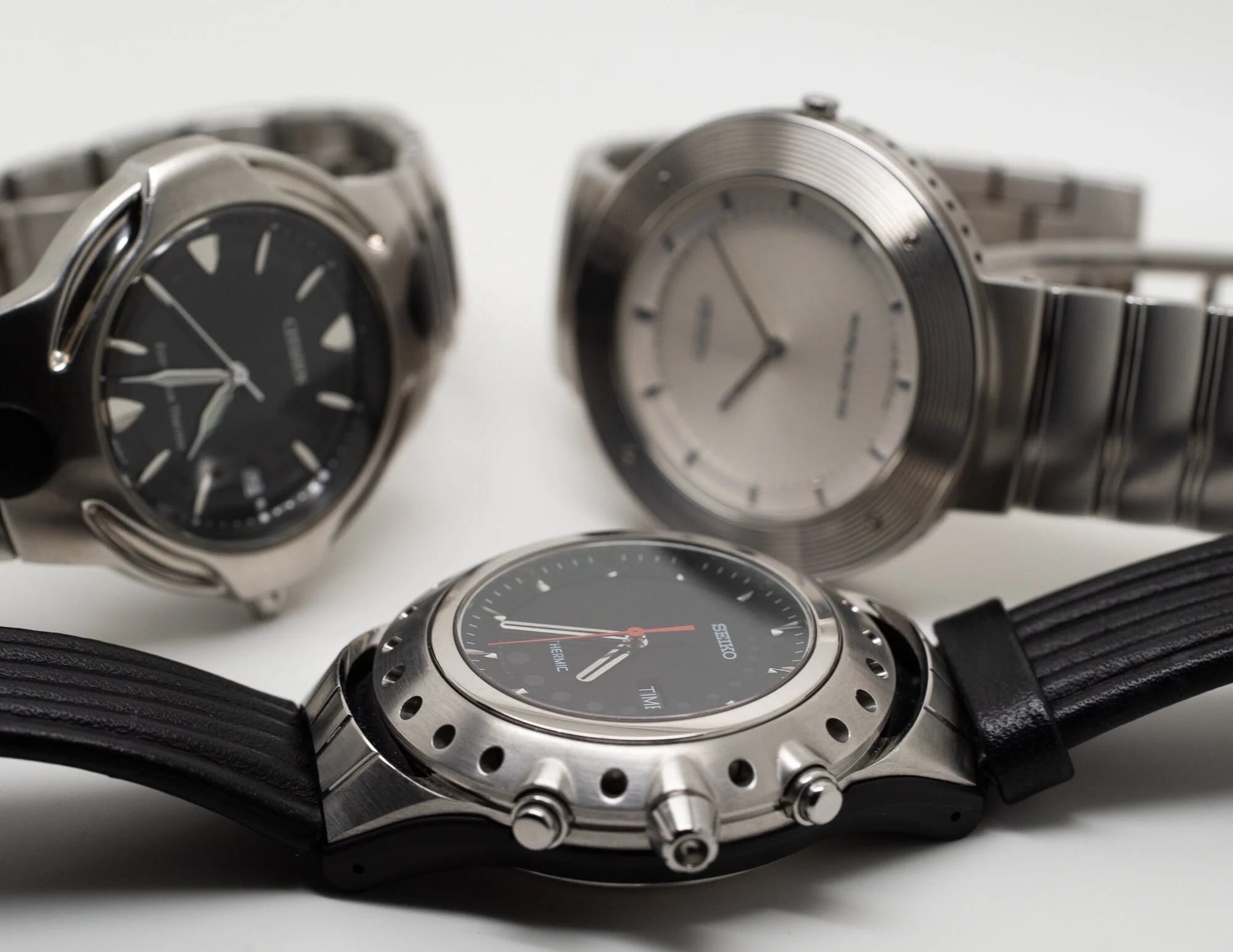
The case is vital for how the charging works, and it explains the strange look. Heat enters through the steel caseback against your wrist. A low-conductivity polymer midcase keeps it from creeping into the top half, which is covered in holes and grooves to shed warmth into the air. The generator is positioned between the two. The same pattern repeats on the dial and buckle, so the whole watch is either built or designed as a radiator.
The rest of the spec sheet is generous. A 4.5mAh lithium-ion cell ran the watch for about 10 months on a full charge. Take it off and the hands stop after about two minutes, with the seconds hand parked to show remaining power. It has a perpetual calendar good until February 28, 2100, and you can move the hour hand up to 23 hours either way without stopping the movement.
But there was a pretty big problem with the physics of this design. It needed a difference in temperature to work. With the air at 26°C or below, the watch made more than three times the power it used. As the air warms toward skin temperature, the difference shrinks and output falls with it. On a hot day outdoors the Thermic stops generating and drops into power-save mode until you get back to air conditioning. A shirt cuff does the same thing by trapping warm air over the case.
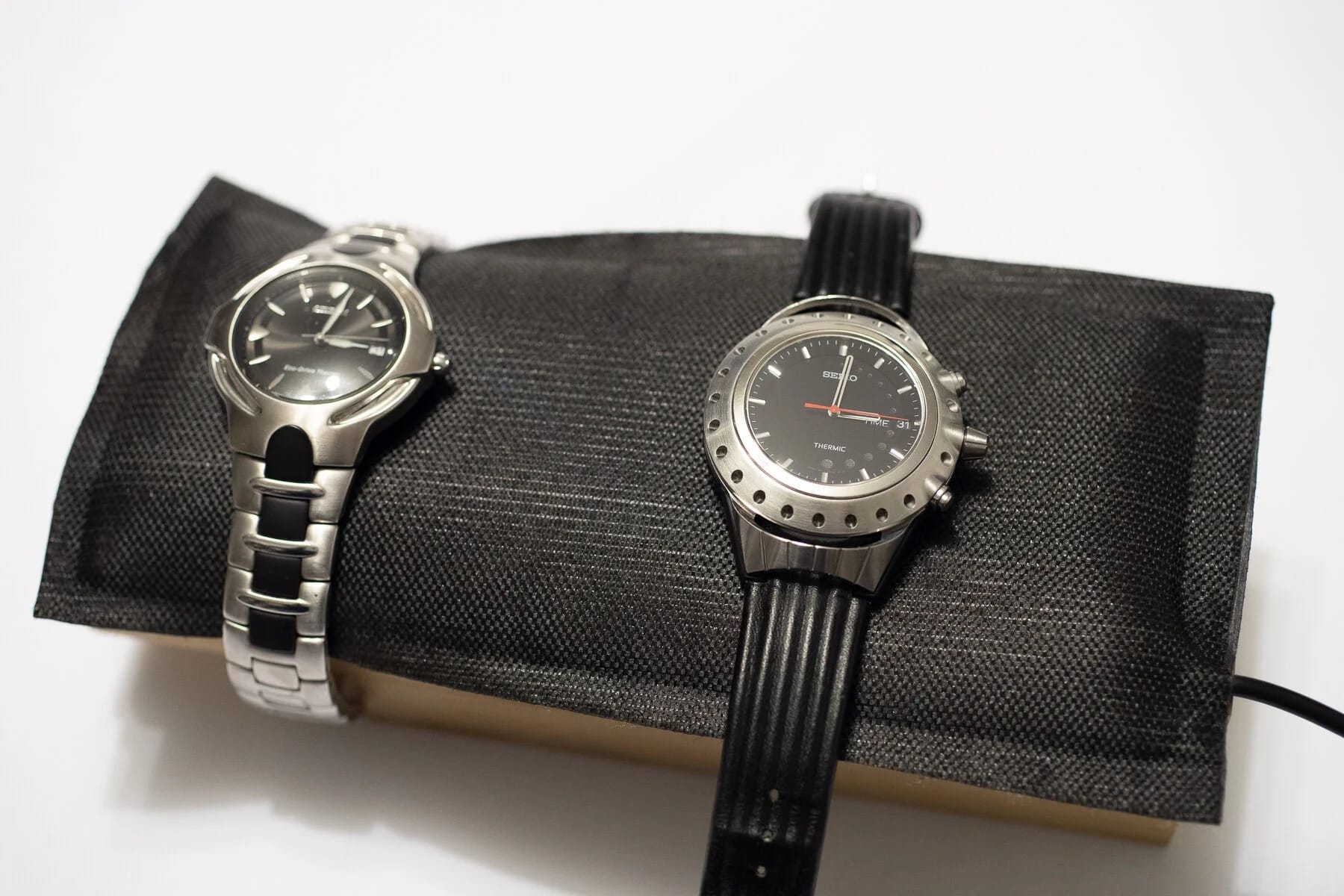
Citizen thought the idea deserved a second try. The Eco-Drive Thermo was released in November 1999 as the white-dial BQ0000-56A and black-dial BQ0000-56E, each limited to 1,000. Both used calibre E930 in a steel case 40mm wide and 8mm thick, with six generators around the movement holding 2,268 semiconductor pairs between them. They cost ¥100,000. Citizen then showed calibre F910 at Baselworld 2001 and put it on sale that August in the unlimited CTY66-0341 and CTY66-0342, adding a date and cutting the price to ¥40,000. A full charge took 50 days of eight-hour wear. Citizen’s own solar Eco-Drive watches did the same job at the same money with less fuss, and no further thermoelectric models followed.
Seiko never said publicly why the Thermic was limited to 500. The likely answer is that Kinetic and solar charged more reliably for far less money. The hand-stopping trick carried on in Kinetic Auto Relay, and Seiko still shows the Thermic in its museum and included it in its 140th-anniversary design retrospective.
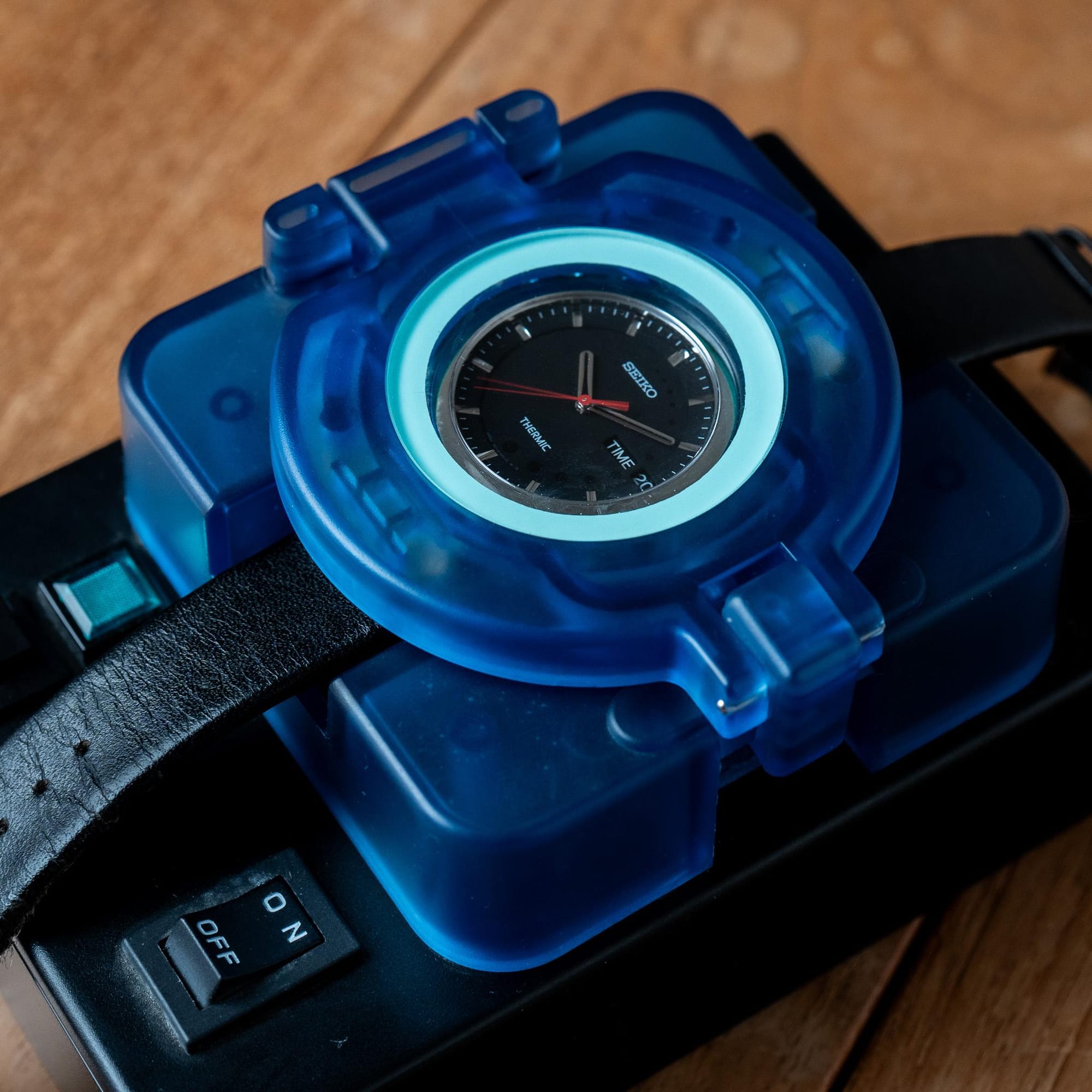
Buying one now takes patience. Most examples for sale aren’t running, usually because the lithium-ion cell has died. Collector Plus9Time offers a useful check: if a stopped Thermic has its hour and minute hands parked at 12, it probably shut down normally. Hands frozen at random point to a deeper fault. US dealer Provenance Watches listed a serviced example with its original thermal charger at $2,876. The same collector keeps his charged on a USB reptile heating pad. As a daily watch the Thermic was flawed. As engineering it was excellent, and nothing else looks like it.
Subscribe to It's About Time to get daily