
UNUSAL WATCHES: 60mm Of Steel Is Certainly One Way To Go Diving

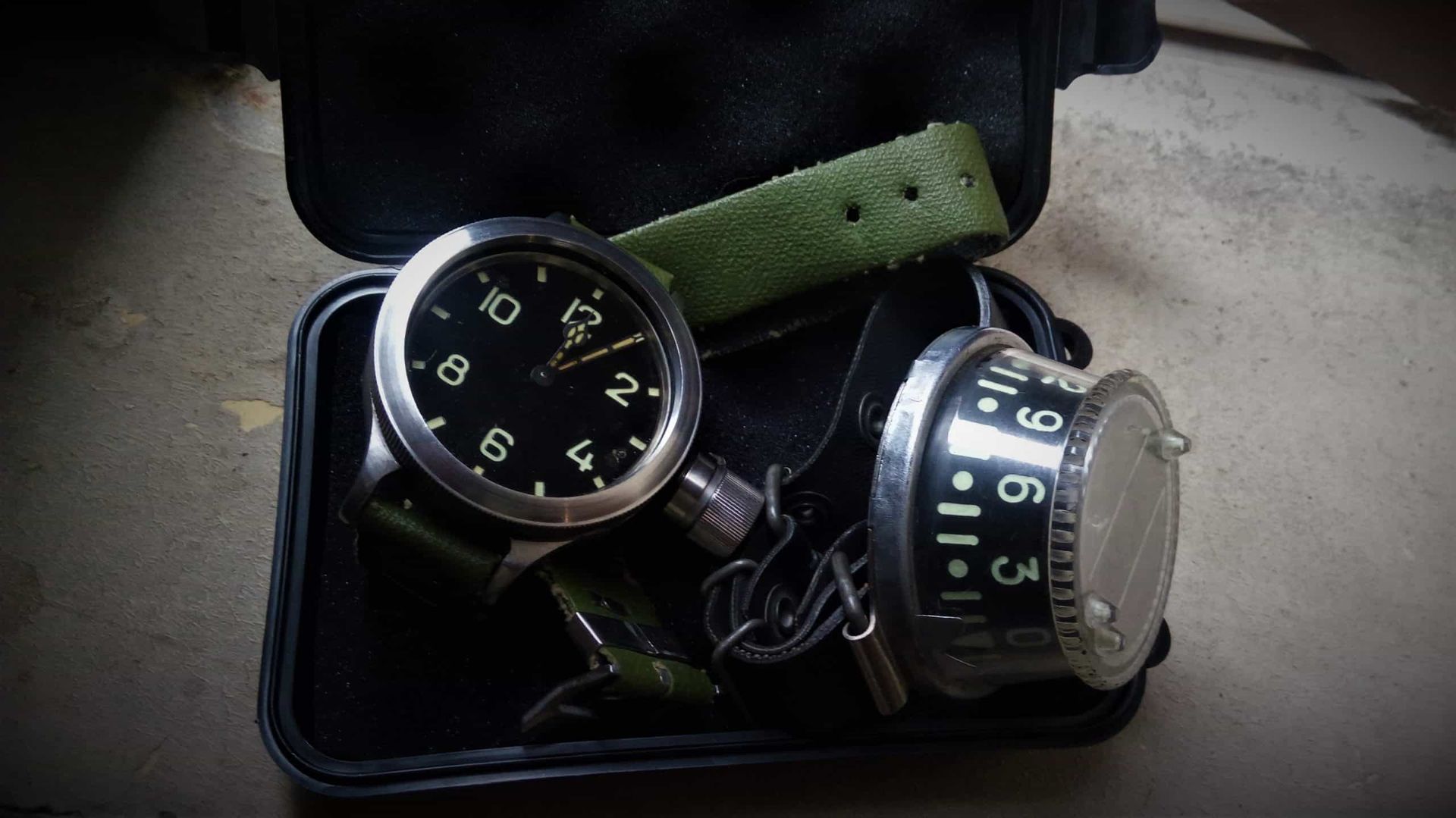
Put a Zlatoust 191ChS on a table and it sits there like a hockey puck that has done military service. It's more a chunk of steel than it is a watch. It is 60mm wide, and that's before you account for that massive crown, about 18mm thick, and weighs about a quarter of a kilo. The strap is long enough to circle a forearm plus a layer of rubberized canvas.
The Zlatoust factory sits in the southern Urals, where Moscow’s First State Watch Factory was evacuated in 1941. After the war it built this watch for Soviet Navy hard-hat divers, men who walked the seabed in copper helmets with air pumped down a hose.
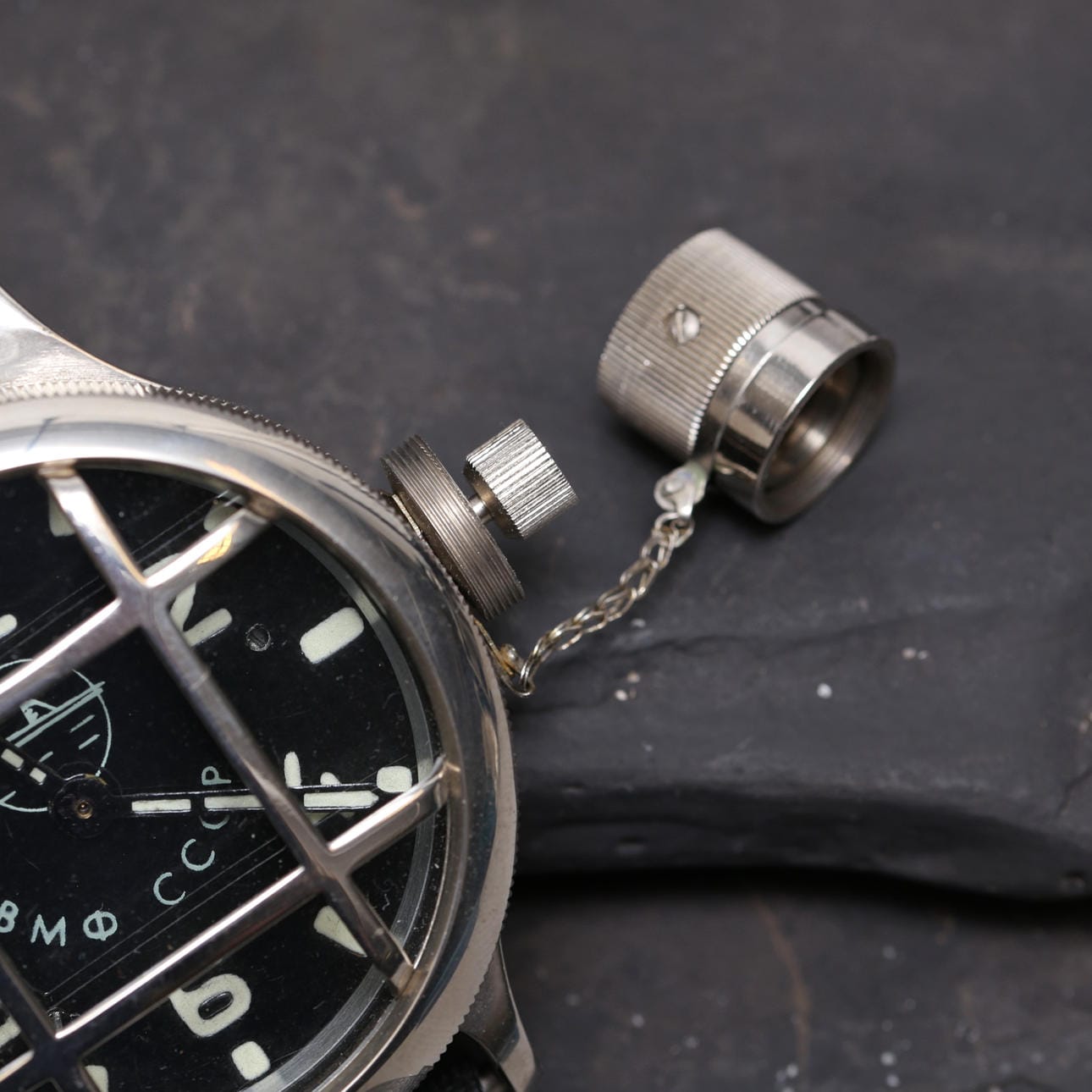
To a Soviet engineer, pressure was a problem of holes. Every opening in a case is a place where water can win, so the 191ChS has almost none. The case is milled from a single block of stainless steel, shaped like a pot. The movement drops in from the front, the crystal rests on a thick rubber gasket, and a heavy coin-edged bezel screws down over everything and clamps it shut. The crown is hidden under a screw-on canteen cap, chained to the lug so it can’t end up in the Baltic accidentally. There are no clever workarounds here, just brute force. In the same decade, Swiss makers attacked the same problem with screw-down casebacks and better gaskets, allowing them to move from tool to fashion statement. The Zlatoust had no such ambitions.
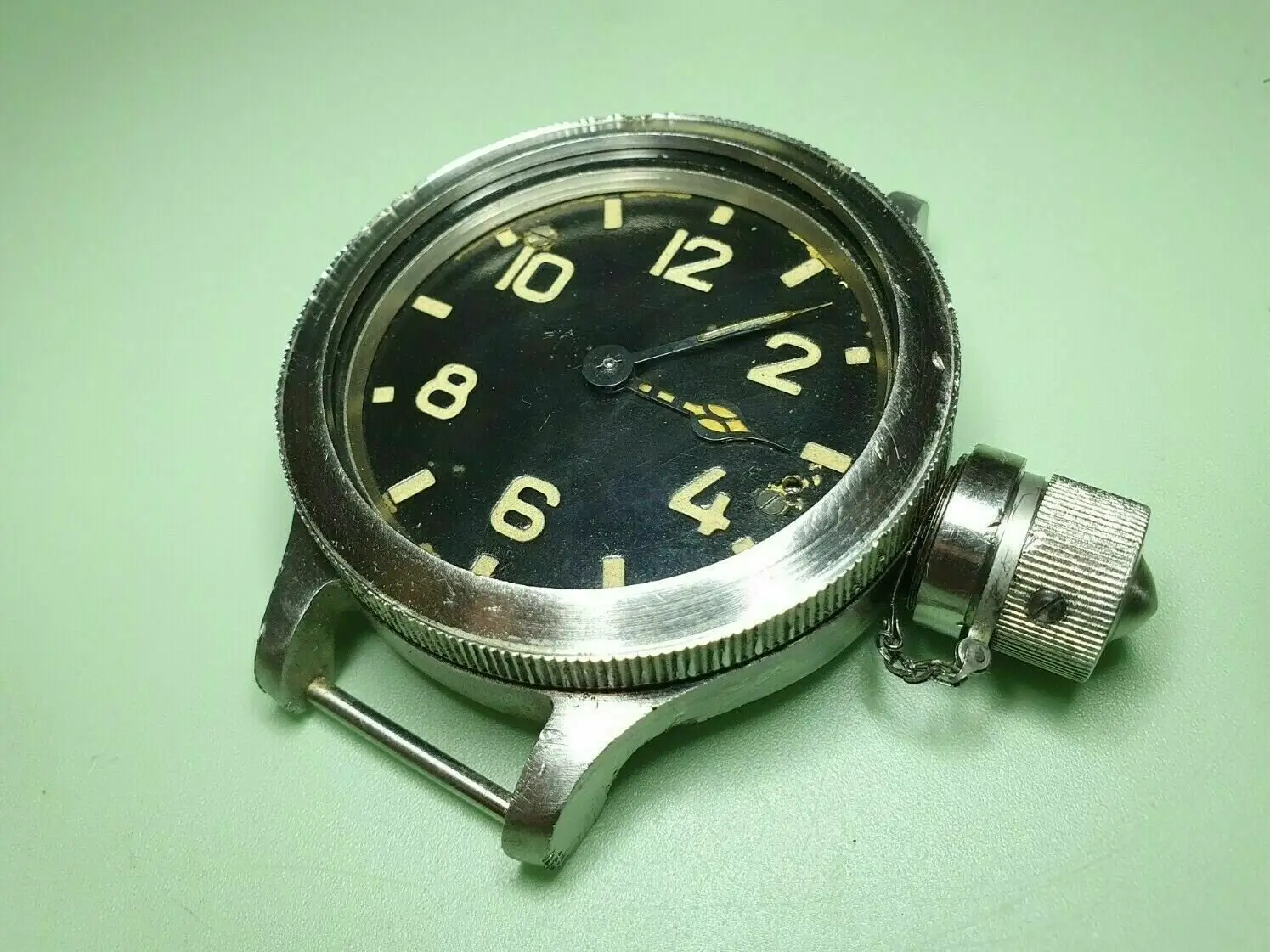
Interestingly, the size of the watch isn't a product of striving for water resistance. Instead, it's so huge to house the movement. Inside is a modified Type-1, the pocket watch calibre the USSR built after buying the tooling of Ohio’s Dueber-Hampden company in 1930. It has 15 jewels, a screwed balance and a Breguet hairspring, and it beats at 2.5Hz (18,000vph). The dial is black, with big Arabic numerals, radium on early examples and you can still see examples online that have their dials burned from the radioactivity, and cathedral hands. There’s no seconds hand. Early dials had a minute track that was later dropped, which is an interesting move, to make a watch less legible under water.
From here the record gets a bit murky. Start dates run from 1952, and the navy contract reportedly ended in 1974, Wikipedia puts the end of production at 1970, and East German navy batches are reported into the early 1980s. Estimates put total output at 5,000 to 6,000. The depth rating is worse. The factory’s own copy says 200 to 250 meters, some sellers say 700, and the most careful collector history says about 30, noting that helmet divers couldn’t go deep anyway.
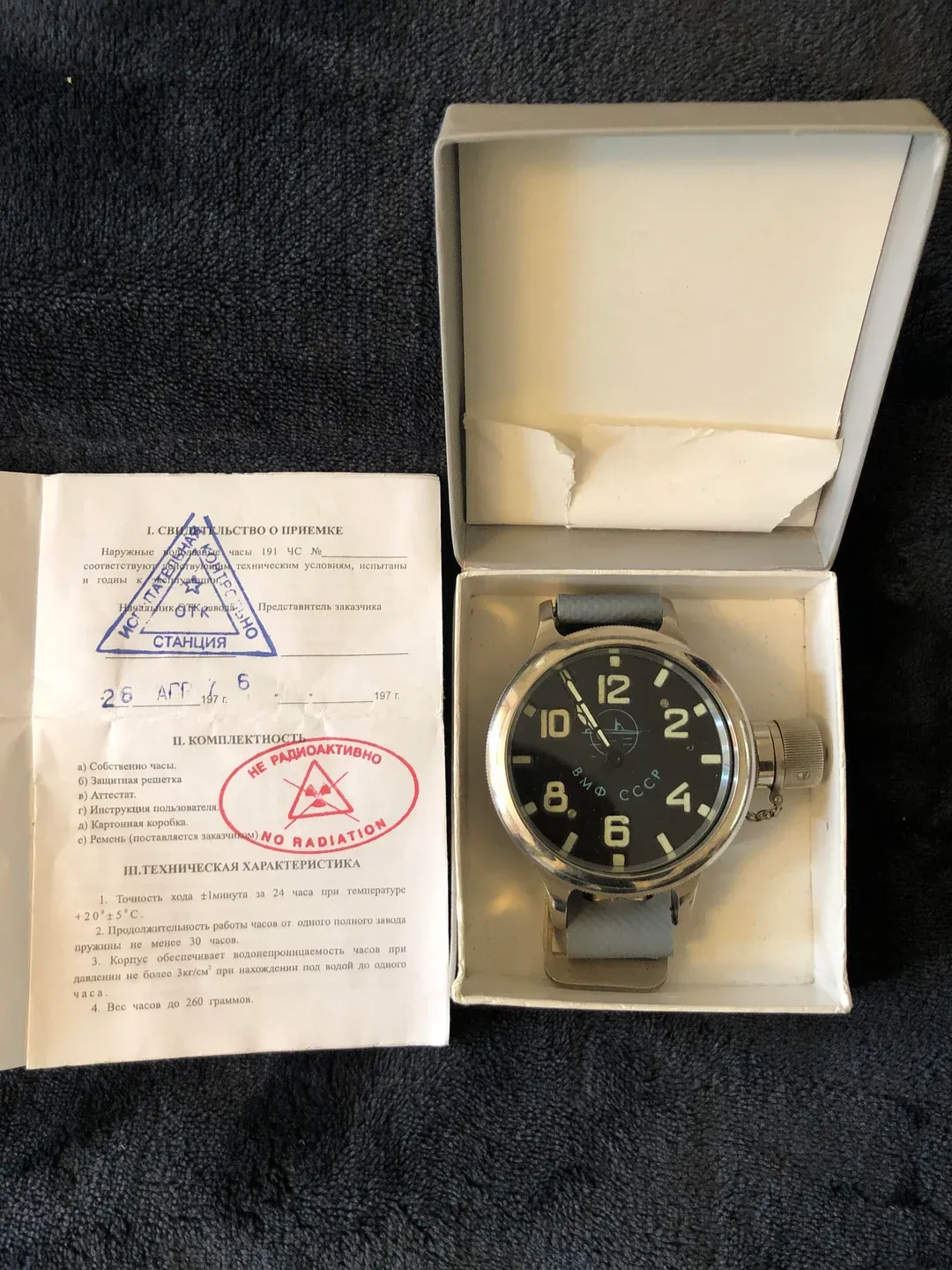
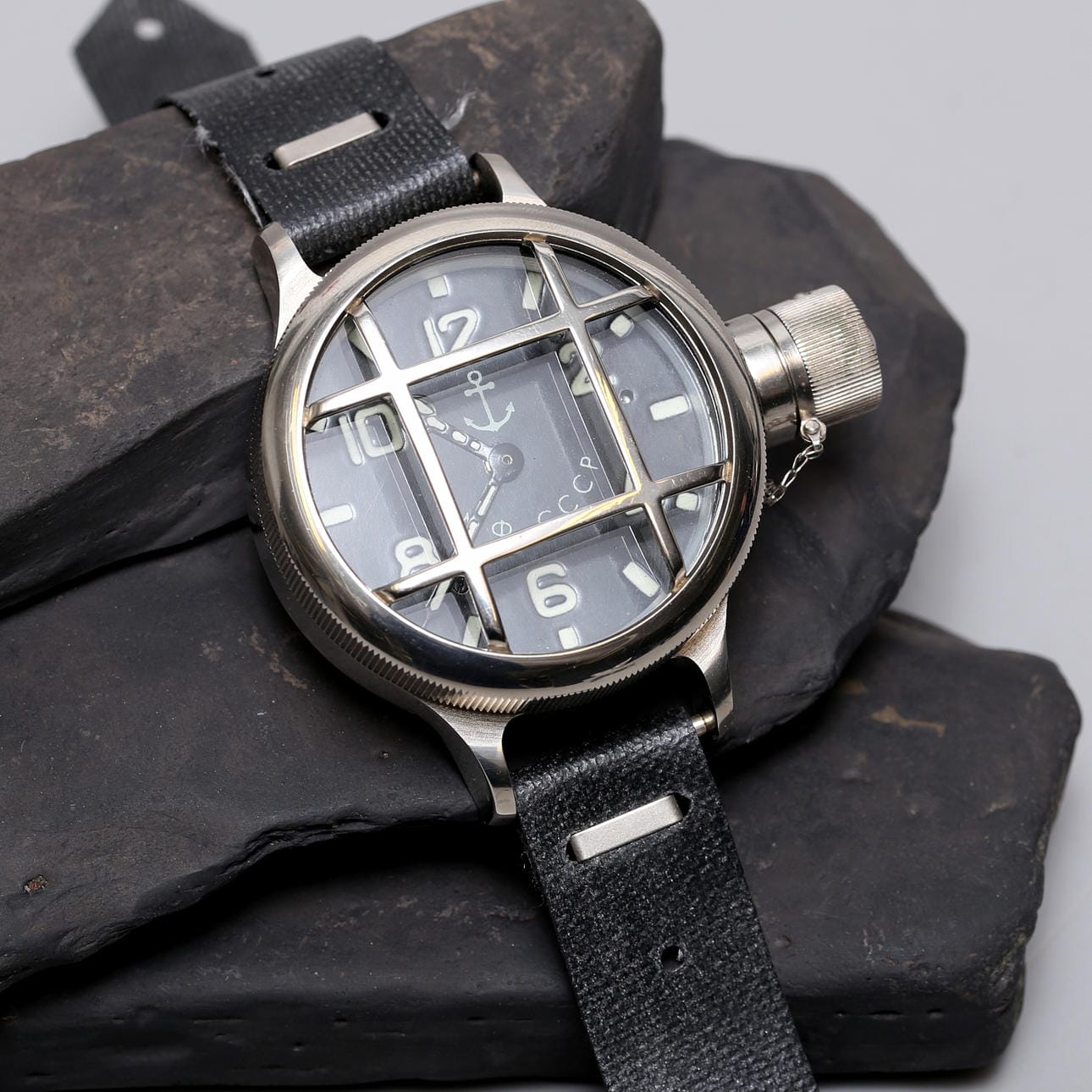
Finding one today is easy. Finding a real one takes patience. UK auction estimates in 2024 vary from about $500 to $1,300, and dealers ask up to $1,400. A genuine case is matte, with concentric rings from the milling, and both dial and back are plain. Be suspicious of shiny cases, which are usually chrome-plated brass from St. Petersburg workshops, often with ВМФ СССР on the dial, a diving helmet or propeller on the back, and papers stamped “No Radiation.” Frankenwatches turn up with pre-war Moscow Type-1 parts inside. The movement should have the triangular ЗЧЗ mark, so ask for a photo, which on this watch means asking the seller to unscrew the entire front
If you’d rather skip the forensics, the factory, renamed Agat in 1962, revived the watch in 2010 as the 192-ChS, with a Vostok calibre 2409 and 100 meters of water resistance. Russian dealers list it at ₽79,900, and a Munich dealer asks €968. There are smaller 53mm and 46mm versions too.
Subscribe to It's About Time to get daily