THE CARRY: The (NOMOS) Fisher Space Pen

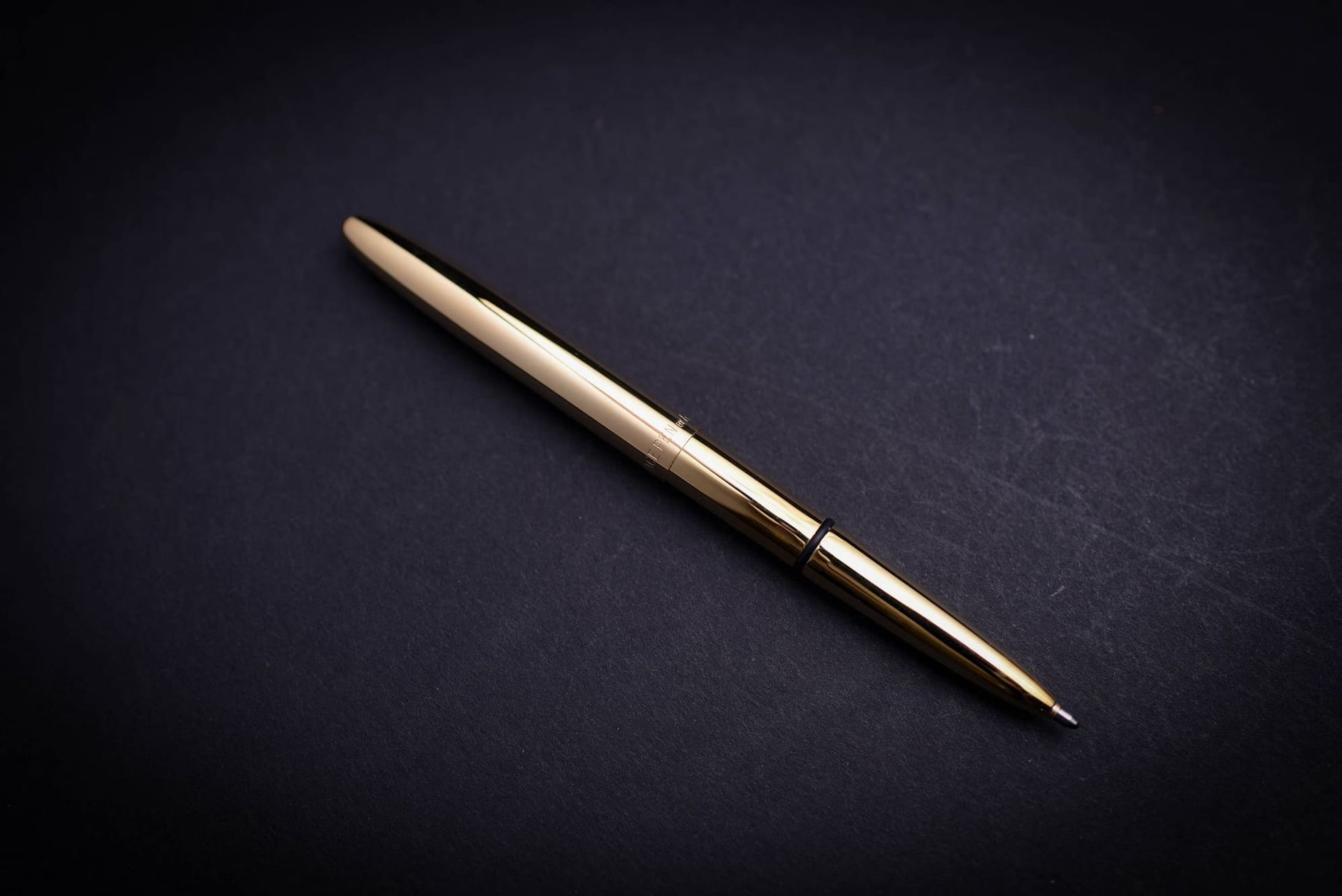
The Fisher Space Pen comes in about 80 versions, but the one most people want and love is the Bullet: a stubby, capped ballpoint that’s been Fisher’s bestseller for decades. Pick one up and the first thing you notice is that it’s too heavy for its size. Closed, it’s 96mm of chromed brass with rounded ends, the shape of something that ought to hold a rolled-up message in a spy movie. Pull the cap off, push it onto the back, and it becomes a 136mm pen with the balance of a much more serious object. Nothing rattles. Nothing seems to move at all, which makes it one of the more perfect mass produced pens in history.
But it's not a cult pen because of its solid build. The magic of Fisher happens on the inside, with their sealed brass cartridge. Behind the ink sits a small floating plug, and behind the plug, nitrogen at about 35 psi, pushing forward all the time. Pressure on ordinary ink would give you a leaking pen, so Fisher’s ink is thixotropic: nearly solid at rest, liquid only when the tungsten carbide ball turns against paper. Lift the pen and the ink stops flowing instantly. Initially, this was a solution to that nagging problem of your pen seemingly running out of ink and you having to shake it around and scribble on a piece of paper to get the ink to flow again, while also risking a leak. The unintended consequence of the tech was the fact that the pressure ensured that gravity had no effect on the ink. Hold a regular pen upside down for a while and it will take some time for the ink to start flowing. On a Fisher, it's constantly being pushed out. This means you can write upside down, if you want. Due to the makeup of the ink, you can also write underwater. On greasy paper. And in temperatures ranging from -34°C to 121°C.
These quite impressive stats made it very attractive for an agency that needed their pens to work upside down and in extreme temperatures – NASA. AT that point, Paul Fisher has already made millions with his universal refill so the NASA contract became a bit of a prestige play for the company. The AG7, for “anti-gravity,” was granted a patent in November 1966. NASA’s Manned Spacecraft Center in Houston put it through pure oxygen, vacuum, heat and cold, and approved it in 1967 for space flight. It first flew on Apollo 7 in October 1968, when Wally Schirra steered one around the cabin on live television by blowing on it. In February 1969 the Soviet program ordered 100 pens and 1,000 refills for Soyuz, retiring the grease pencils its cosmonauts had been using, making the Fisher AG 7 a true space pen, used by everyone operating in this extreme environment.
Speaking of the Soviet space program, I'm sure you've heard the urban myth: NASA spends millions on a pen, the Russians shrug and use a pencil. Well, as it turns out, both parts of that story are wrong. Not only did the USSR jump on the opportunity to buy a pen that worked for their space mission, NASA didn't fund the development of their pen, it was all privately funded. After testing, NASA bought 400 pieces priced at only $2.39 a piece. And it's not like NASA didn't use pencils. In fact, 1965 NASA paid Tycam Engineering $4,382.50 for 34 mechanical pencils for Gemini, $128.89 apiece. So much for that. Pencils were a bad idea in orbit anyway. Snapped tips and graphite dust drift into eyes and electronics, and after the Apollo 1 fire in January 1967, nobody wanted wood shavings in a pure-oxygen cabin.
So the Fisher Space Pen has a bit of an Omega Speedmaster-like story behind it. Which means that it is necessarily linked to often obnoxious people who are just waiting for you to ask about their pen so they can tell you the whole story. Kind of like what I did, while wearing my Speedy. But you know what, who cares. It's still a very cool pen
Is it worth carrying now? Yes, if you know what you’re buying. It writes like a good ballpoint, which means it will never glide like a gel pen. What you’re paying for is that it works the every time it has to, in a freezing car or on a rain-soaked notebook, and that a refill lasts years.
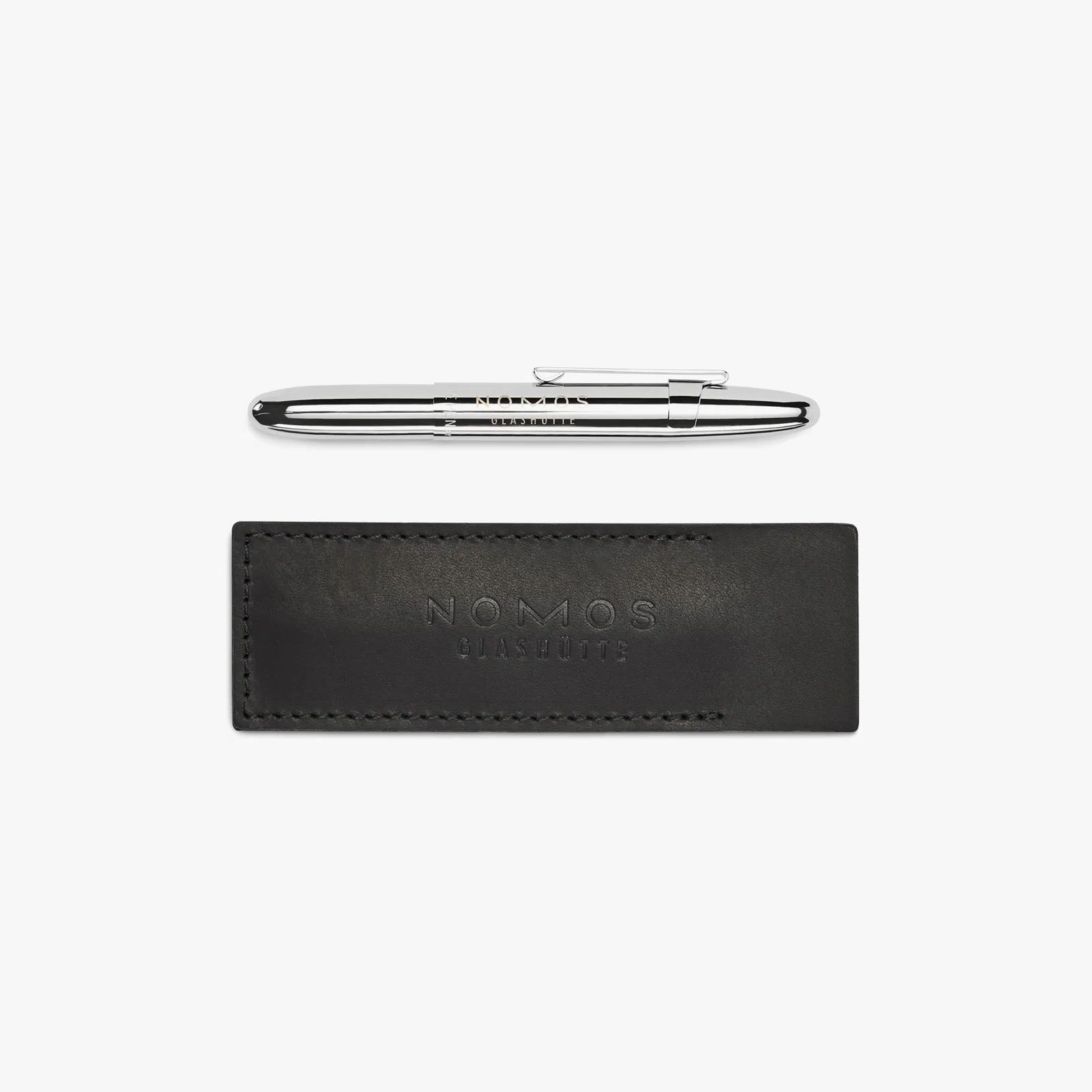
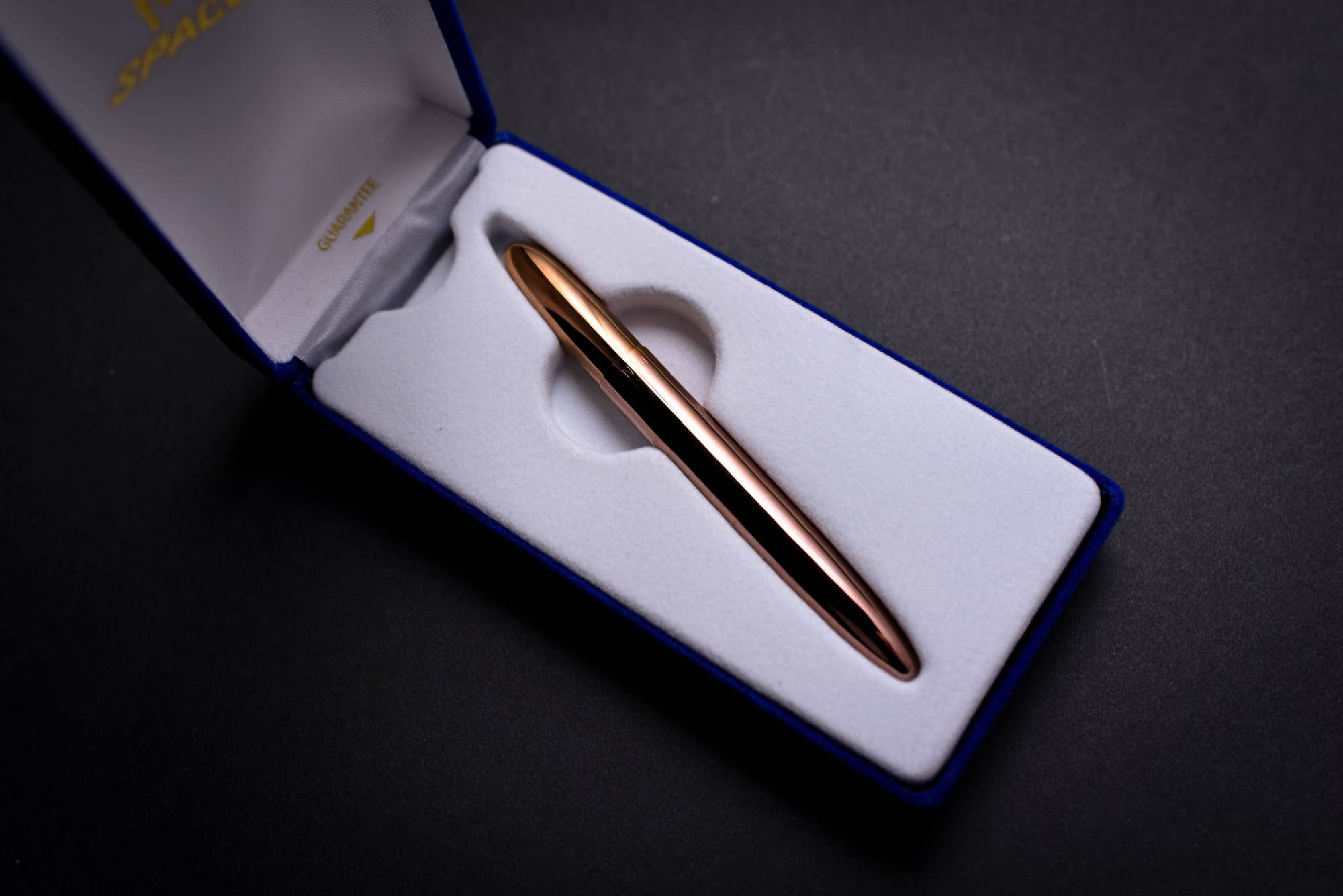
You want to buy the Bullet. The AG7 is the one that flew, and it’s a lovely thing, with its firm click plunger and the odd little side button that retracts the point. But at 127mm of solid brass it’s a desk pen with a clip. The chrome Bullet costs $39 if you find a good deal, vanishes into a coin pocket, and predates the space program entirely: Fisher drew it up in 1948. MoMA keeps one in its collection. It is a perfect piece of design and, shockingly, I just got my first Bullet. I had a selection of Space Pens and I loved all of them. But I recently got the NOMOS Space Pen and fell for the incredible form factor and build quality. This is just incredible.
Subscribe to It's About Time to get daily