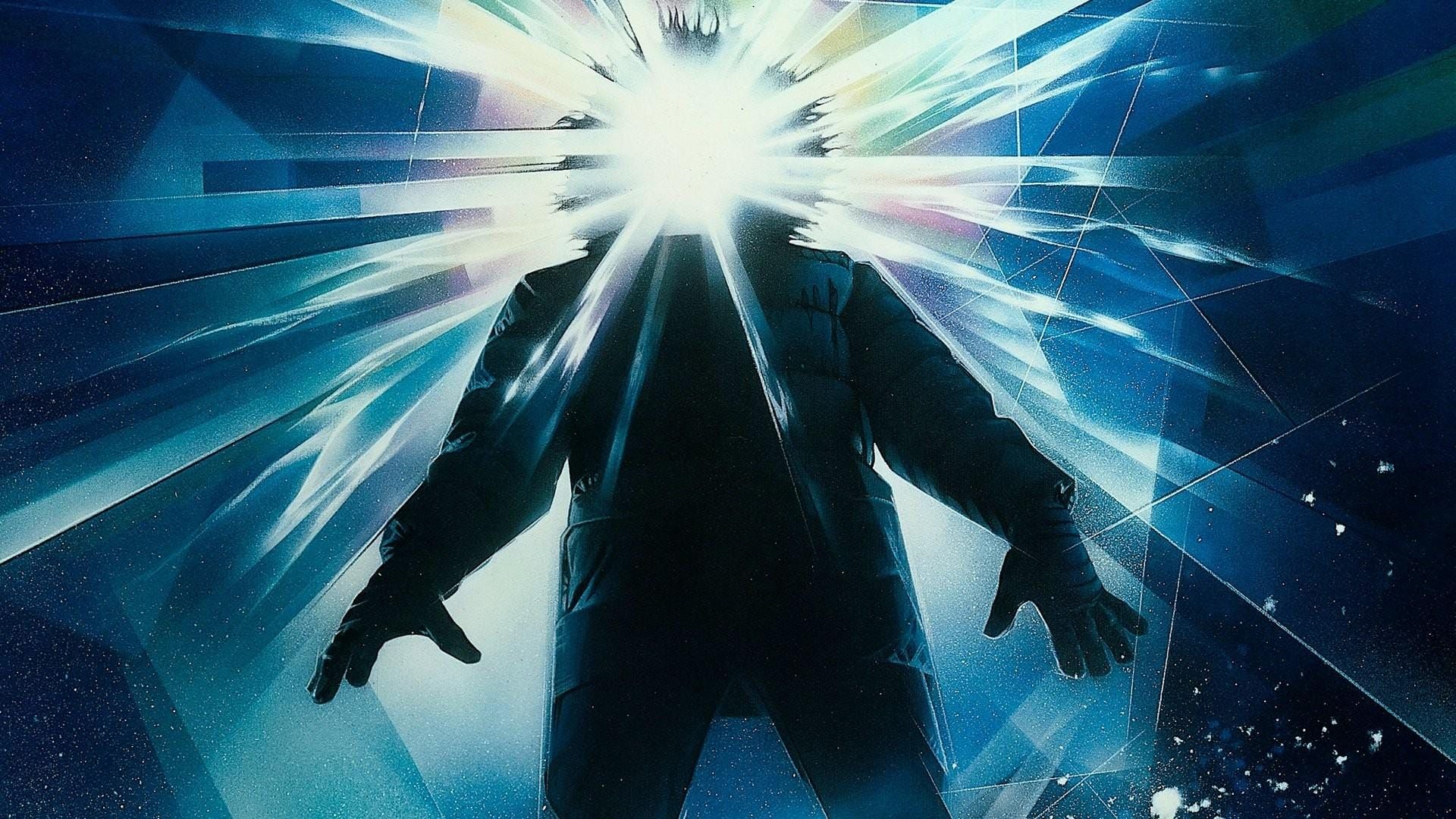
The Blood Test: What John Carpenter’s The Thing Teaches Us About Superfakes
In 1982 John Carpenter made a film about a copy so good that nobody could tell it from the original, and almost nobody liked it. How The Thing was made, why it failed, how it came back, and what it has to say to anyone who has ever doubted a watch.

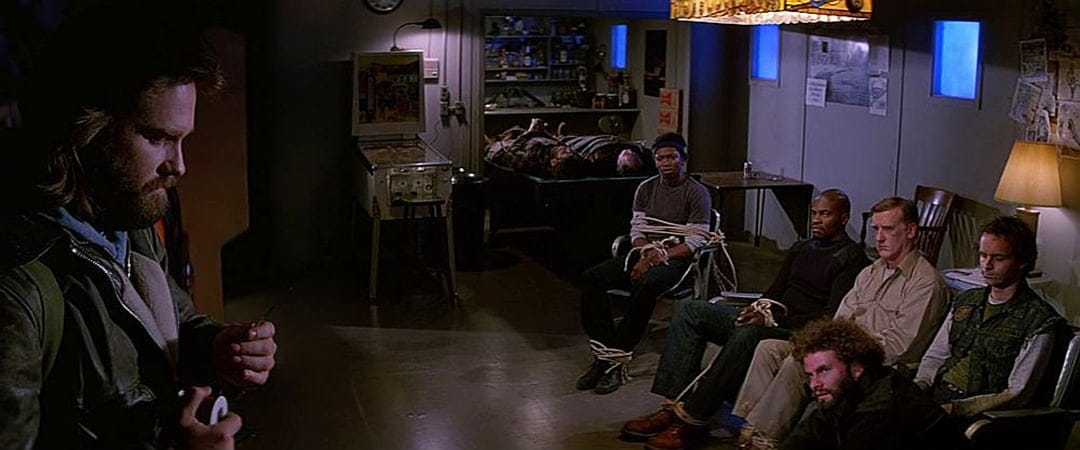
About an hour and twenty minutes into The Thing, four men are tied to a couch in the rec room of an American research station in Antarctica: Garry, the station commander; Palmer, the assistant mechanic; Childs, the chief mechanic; and Nauls, the cook. The bodies of the doctor, Copper, and the dog handler, Clark, are laid out on the pool table behind them. Copper lost both arms when he tried to restart Norris's heart and Norris's chest opened up and bit them off. Clark went for MacReady with a scalpel when MacReady announced what he was about to do, and MacReady shot him in the head.
What MacReady is about to do comes out of what happened to Norris. When he set the body on fire, the head pulled itself loose, grew legs and tried to walk out of the room. If a severed piece of the creature will fight for its own life, he reasons, then so will a drop of its blood. He has Windows, the radio operator, take samples from everyone, living and dead, into petri dishes, and he heats a length of copper wire in the flame. Human blood should just scorch. Blood belonging to the Thing should try to get away from the heat.
Windows goes first and passes. MacReady tests his own blood, which reassures nobody, and then Copper's and Clark's. Both dead men were human, and Childs is quick to say what that makes MacReady. Carpenter films every test the same way, with the dish low in the frame, the wire going in and a thin line of smoke coming up, and he holds each one long enough that you stop expecting anything to happen. When MacReady picks up Palmer's dish there is no reason to think this one will be any different.
I have seen the scene more times than I could tell you, and every so often, I just rewatch it for fun on YouTube. I love it that much. And recently, the more I write about watches, the more it's relevant to what we do around these parts. MacReady has stopped trusting his eyes, so he is testing the material itself and waiting for it to give something away. It's the exact same procedure and doubt that we've come to known online when people handle unknown watches. We are looking for a give, a flaw that might hint that the watch is not genuine. You see, fakes of popular watches have gotten so good it's becoming really, really difficult to tell them apart. Bringing up the question what does real even mean. Kind of the same question that The Thing asks as well. I rewatched the movie the other day, and the overlap between fake people and fake watches has gotten me thinking enough to go on this exploration. Let's do it together.
The Big Magnet
The story is older than the film by forty-four years. John W. Campbell Jr. published "Who Goes There?" in the August 1938 issue of Astounding Science Fiction under Don A. Stuart, the pen name he kept for his more literary work. He had recently become the magazine's editor, a job he would hold for more than three decades. The story was published as a novella close to the end of his career as a fiction writer, cementing it as his most memorable work.
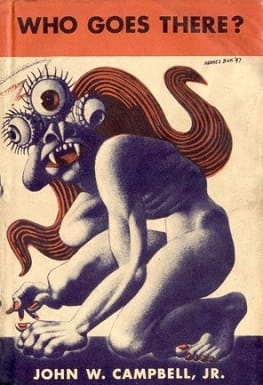
Campbell's expedition is stationed at a base called Big Magnet, thirty-seven men strong. They find a ship that crashed into the ice twenty million years earlier, try to thaw their way into it with thermite, and set fire to its magnesium hull, which leaves them with nothing but the pilot, frozen in a block of ice. When they thaw that too, it turns out the creature can absorb any living thing and become it, memories and personality included, and in Campbell's version it can read minds as well. It takes a physicist named Connant first. A serum test using a sled dog fails because the dog's blood has been contaminated, which means that one of the two men who gave blood for it is already a copy. The second-in-command, a meteorologist named McReady, works out that every fragment of the creature is a whole organism and comes up with the hot wire. Fourteen men fail the test, the expedition commander among them. On their way to test the biologist Blair, who has been locked in a cabin for a week, the survivors shoot down the first albatross of spring in case it is carrying something. Blair has been replaced too, and has nearly finished an atomic-powered antigravity device that would have flown him off the ice.
That was the text everyone knew until 2018, when Alec Nevala-Lee, researching a biography of Campbell, followed a passing mention in an old letter to a box of manuscripts Campbell had given to Harvard. Inside was a folder marked "Frozen Hell," Campbell's original title, holding a much longer draft that opens with forty-five pages on the discovery of the ship. The magazine story had been cut down from it. A Kickstarter to publish the full version set a goal of $1,000 and raised more than $155,000, and Frozen Hell came out in 2019.
Howard Hawks bought the film rights in 1950 for $1,250, and The Thing from Another World opened the following April. Charles Lederer wrote the script with uncredited help from Ben Hecht and Hawks himself, and the directing credit went to Christian Nyby, who had edited, and won the Academy Award for, Red River for Hawks. Who really directed it is still argued over; some of the cast said Hawks ran the set, others that he only advised. Either way it plays like a Hawks picture, quick and funny and full of capable people talking over one another. It moves the story to the Arctic, puts an Air Force crew at the center and makes the head scientist the fool. The creature, played by James Arness, is a tall humanoid made of vegetable matter, which one character calls an intellectual carrot. It imitates nobody. The men electrocute it, and a newspaperman ends the film by telling the world over the radio to keep watching the skies.
Carpenter grew up on that film. He loved it so much that the children in Halloween watch it on television, and he screened it several more times before starting his own. He was also reluctant to remake it, partly because he thought it would be hard to beat and partly because he didn't think much of its monster. Stuart Cohen, one of the producers of the remake, told him to read the novella, and there Carpenter found the idea Hawks had not used, a creature that imitates. He thought of it in terms of Agatha Christie's And Then There Were None: a group cut off from the world and a shrinking list of suspects.
From Campbell he took Antarctica, the dogs, most of the surnames (Blair, Garry, Copper, Clark, Norris, Bennings and, with an extra letter, MacReady), the total copy, Blair's breakdown and his secret machine, and the blood test. He left out the telepathy, the thirty-seven men, the flashback structure and the albatross, along with Campbell's confidence that a clear-headed man can reason his way out. From Hawks he took less. The title burns through a black screen the way the 1951 title did, recreated by the effects artist Peter Kuran. It's one of the more famous openings in film history, and Kuran often tells the story of how they did it. They used a smoke-filled fish tank and a plastic bag set alight behind a title card.
Twelve Men
The 1982 film took the better part of a decade to happen. In the mid-1970s the producers David Foster and Lawrence Turman pitched Universal a faithful adaptation of the novella, and the studio bought the rights from the screenwriters Hal Barwood and Matthew Robbins, who held them and had passed. There was also Wilbur Stark, who in 1976 had bought the remake rights to twenty-three old RKO titles from three Wall Street financiers with no use for them. He came away with an executive producer credit and later sued Universal for $43 million over the credit.
Cohen first approached Carpenter in 1976, but Carpenter was still an independent director and Universal had Tobe Hooper under contract. Hooper and Kim Henkel, his co-writer on The Texas Chain Saw Massacre, came up with a version partly set underwater, which Cohen later compared to Moby-Dick. The producers turned it down, but it would have been a very interesting thing to see. William F. Nolan and the novelist David Wiltse tried drafts, John Landis's name came up, and the project went quiet until Alien made money in 1979 and Carpenter, with Halloween behind him, became a director a studio would hire.
The writer they settled on was Bill Lancaster, Burt Lancaster's son and the writer of The Bad News Bears, a film Carpenter admired. Lancaster had met the producers in 1977 and walked away because he thought they wanted a remake of the Hawks film. By the time they came back to him in August 1979 he had read the novella, and he got the job by pitching something close to it. Carpenter later said that Lancaster's handling of the blood test was what made him want to direct the picture. The attack on the doctor was Lancaster's idea as well.
Lancaster cut the base down from thirty-seven men to twelve, which he thought was about as many as an audience could keep track of and still care about. He got rid of Campbell's flashback and opened in the middle of things, with a Norwegian helicopter chasing a dog across the snow, still one of the best opening scenes in movie history. And he turned McReady from a meteorologist into a helicopter pilot who drinks. The character's entry in the script reads, in full: "35. Helicopter pilot. Likes chess. Hates the cold. The pay is good." Yeah, that makes sense. He wanted an ensemble out of which one man would gradually emerge as the hero.
The ending gave him trouble, and he went through four drafts in all. In his first ending MacReady and Childs had both been taken over, and when a rescue helicopter landed in the spring they greeted it by asking where they could get a hot meal. Carpenter thought that was too shallow. The ending that was finally shot, with the two men by the fire and neither able to know about the other, was Lancaster's as well. He wanted to avoid both a twist and a dead monster and leave the two men somewhere between trust and suspicion.
Universal began with a budget of $10 million, including $200,000 for creature effects, already more than the studio had ever spent on a monster. Once the storyboards were finished the effects estimate went to $750,000, and the budget stood at $11.4 million when shooting started. By the end the effects alone had cost $1.5 million. Scenes were cut to pay for them, and Carpenter had to go personally to the Universal executive Ned Tanen for another $100,000 to finish a scaled-down version of the final creature. The film cost $12.4 million to make.
Kurt Russell was the last actor cast, in June 1981, when the second unit was already shooting in Alaska. He had made two films with Carpenter and had been helping him work through the material before he had the part. The studio had talked about Christopher Walken, Jeff Bridges and Nick Nolte, and Tom Atkins and the Australian actor Jack Thompson were both close at different points, but Carpenter wanted someone he knew would put up with the conditions.
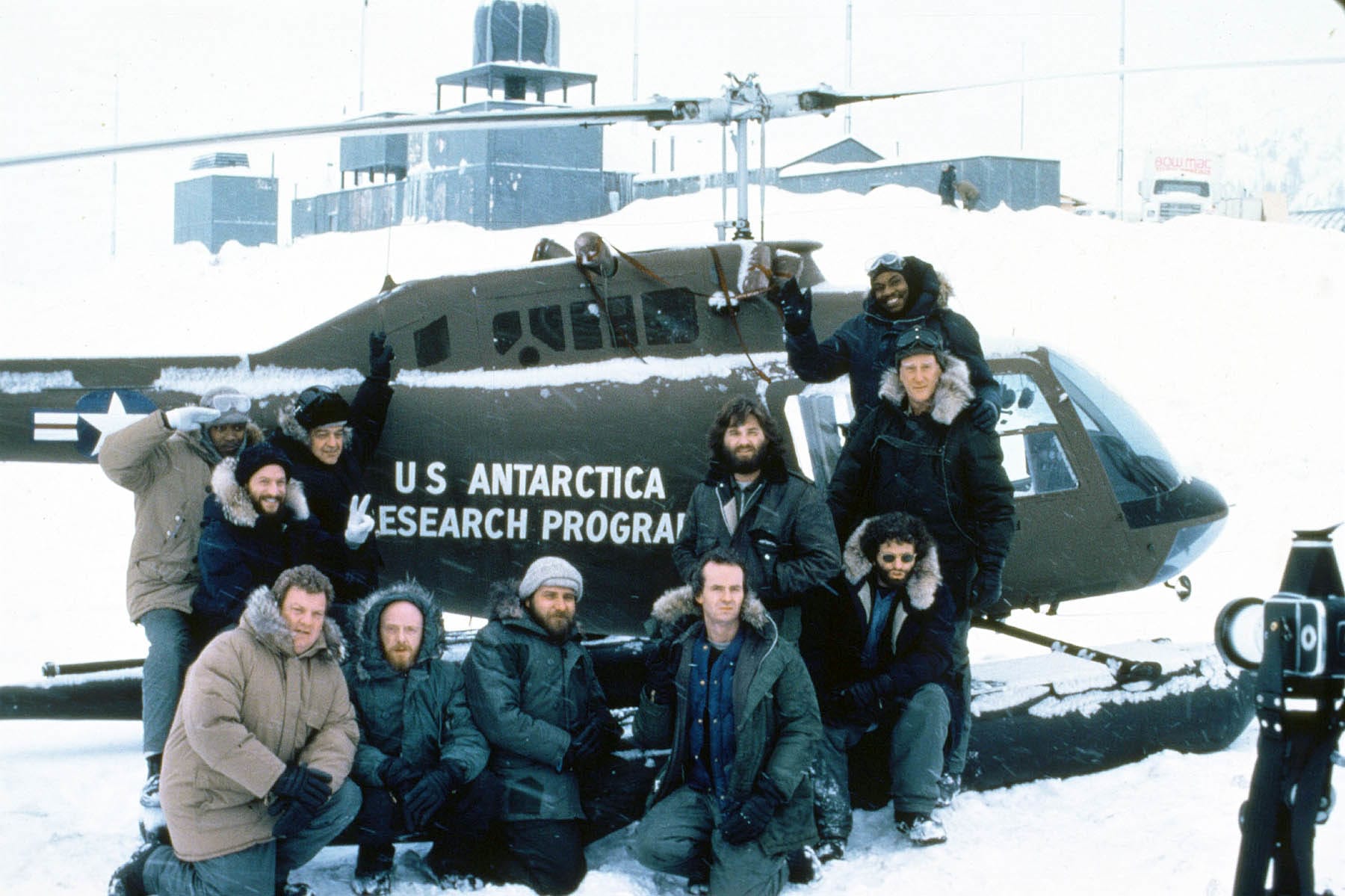
Around him Carpenter cast faces that audiences mostly did not know. Wilford Brimley, billed as A. Wilford Brimley, got the part of Blair because the producers wanted an everyman whose absence from the frame wouldn't be noticed too quickly; Blair is taken early and offscreen. Carpenter had wanted Donald Pleasence, but he was too famous to be overlooked. Richard Masur read for the commander and asked to play Clark instead, because he liked the dialogue and liked dogs, and he spent every day of rehearsals with the wolfdog Jed and its trainer so that the animal would stay at his side without looking for its handler. He turned down a part in E.T. to do it. Keith David, in his first big film role, broke his hand in a car accident the day before he was due on set. He turned up anyway, Carpenter sent him to the hospital to have two pins put in, and he played the first half of the film wearing a surgical glove painted to match his skin. He and Masur agreed in rehearsal that Childs and Clark would dislike each other, and it shows. David Clennon had read for Bennings and asked to play Palmer, the stoner mechanic. Thomas Waites became Windows after trying on a pair of big dark glasses at a costume fitting.
There are no women in the film. The only female voice belongs to MacReady's chess computer and was recorded by Adrienne Barbeau, then Carpenter's wife. Russell later said the absence was interesting because it left the men with nobody to show off for.
The Shop
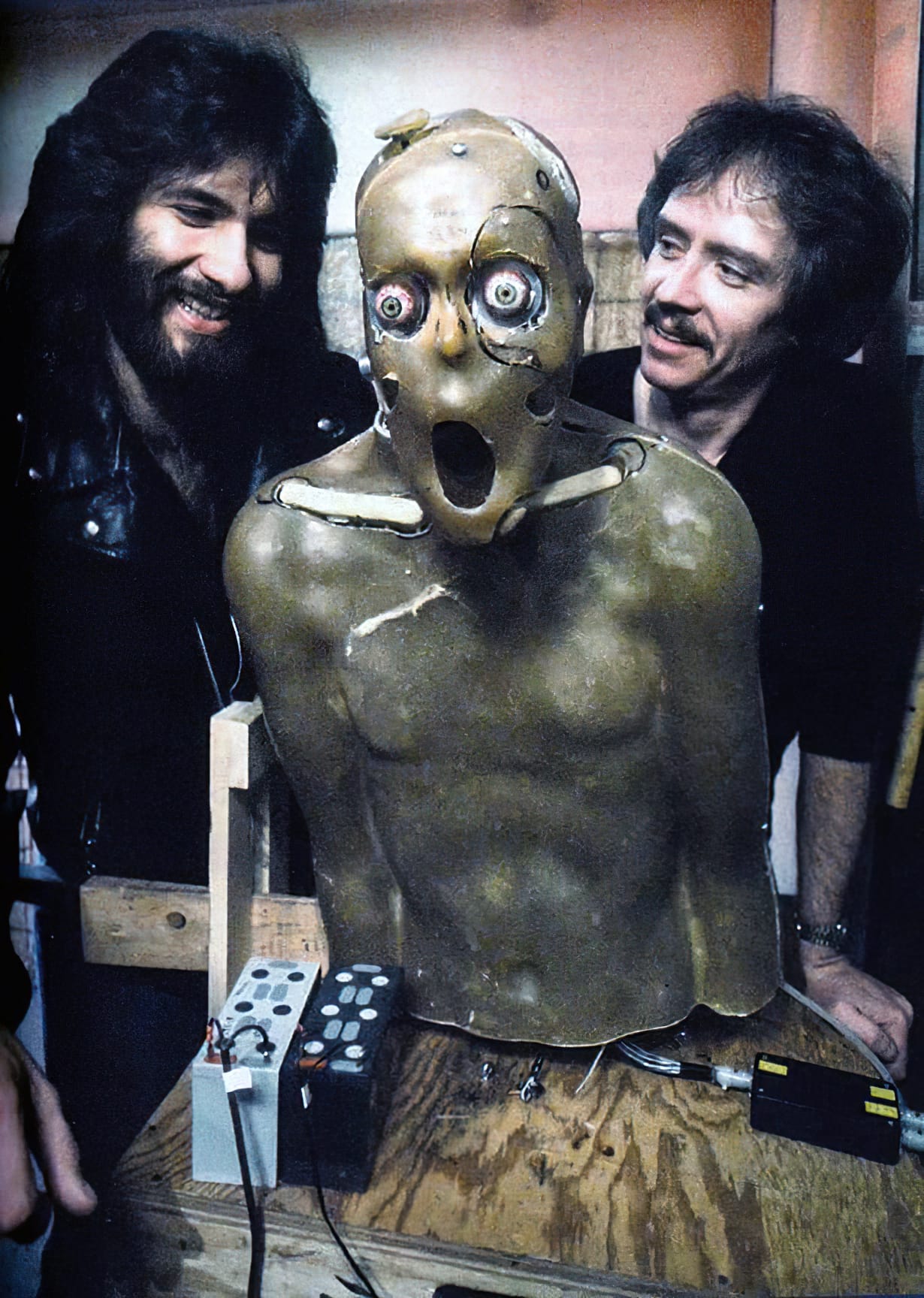
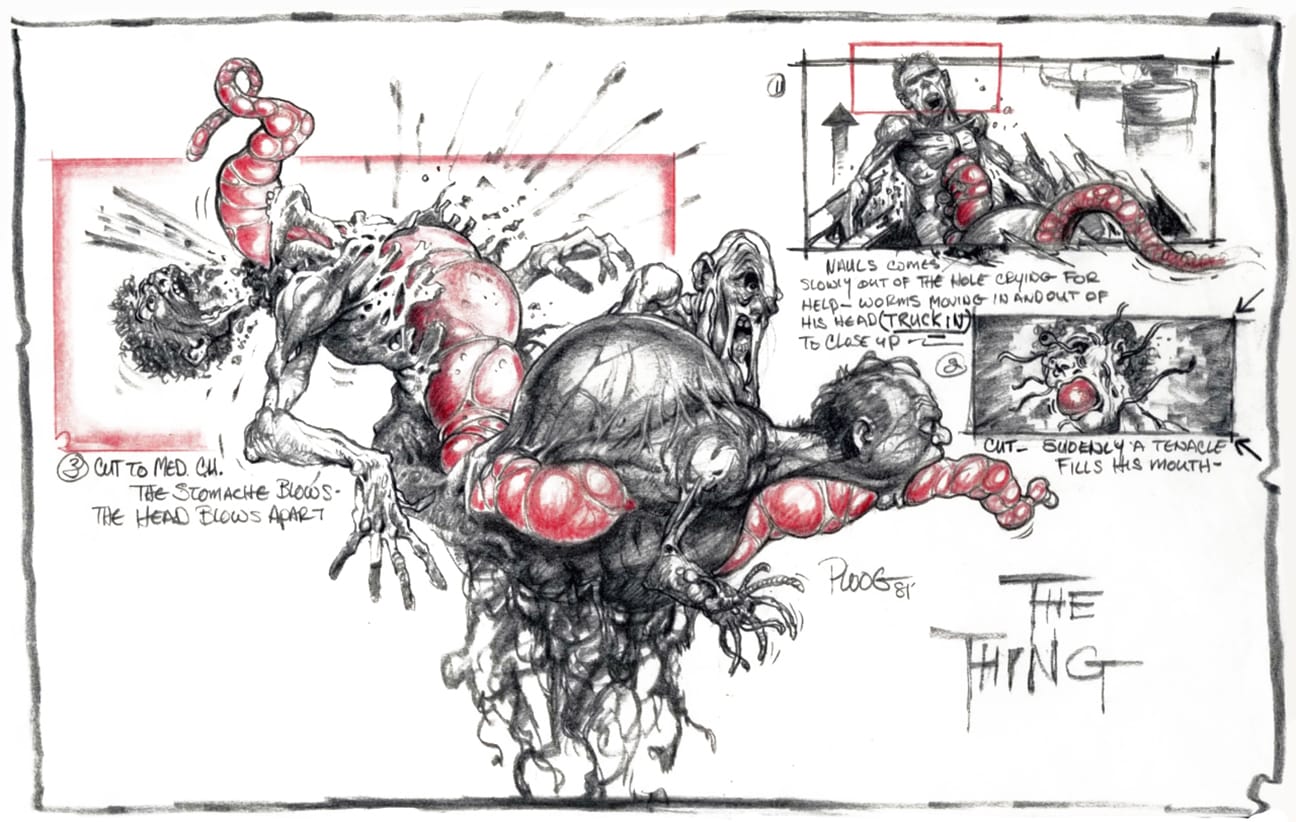
Rob Bottin was twenty-two when he started on The Thing. He got into the business at fourteen by mailing Rick Baker a drawing with a request for an autograph; Baker gave him a job. By 1981 he had done the werewolf transformations for The Howling and worked with Carpenter on The Fog, and when he arrived on The Thing nobody had decided what the creature should look like. Carpenter pictured a single monster. Bottin argued that something that had spent ages crossing the galaxy and copying whatever it met could look like any of it, in any combination, as the situation required. Carpenter thought the idea sounded too weird and sent him off to draw it with the storyboard artist Mike Ploog, and the drawings won him over.
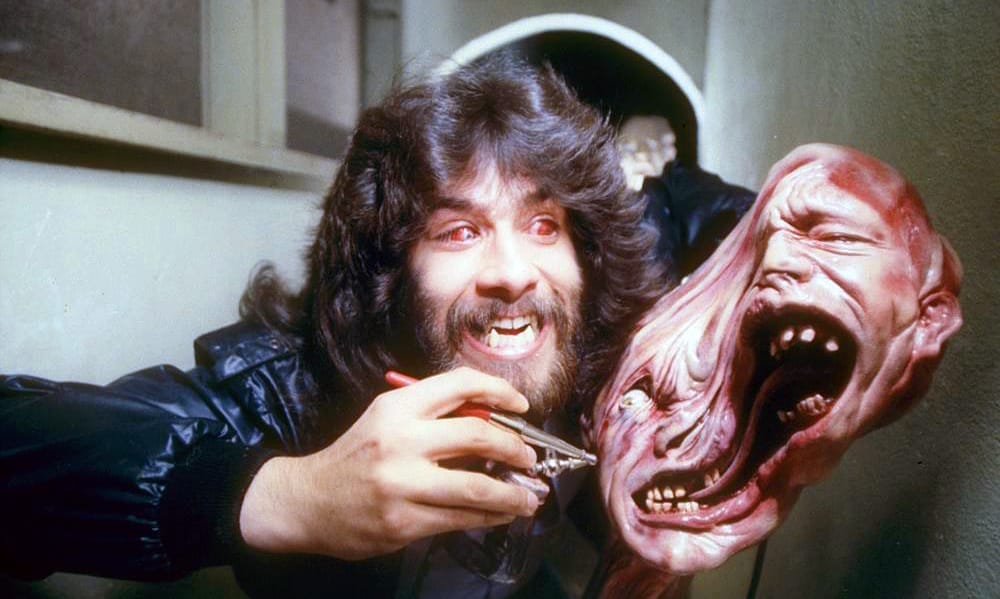
Carpenter had grown up on monster movies, and he wanted to avoid what he called "a guy in a suit." Bottin gave him stomachs that turn into mouths, a head that grows spider legs and a dog that splits open like a flower. He said the pressure followed him into his sleep, and he would wake up and write down designs he had dreamed. A series of dead baby monsters was judged too much even for this film. On set the creature was made of foam latex, hydraulics and cable, along with mayonnaise, creamed corn, microwaved bubble gum and K-Y Jelly. Partway through, with the censors in mind, Bottin and Carpenter toned down the color of the blood and viscera, though a lot of it had already been shot.
At its largest Bottin's crew was about thirty-five people, and he still kept as much of the hard work for himself as he could, a habit he later described as hoarding the work. He lived on the Universal lot for more than a year, slept on the sets or in the locker rooms and has said he never took a day off. The figure usually given is fifty-seven weeks straight. He ended the job in the hospital with exhaustion, double pneumonia and a bleeding ulcer.
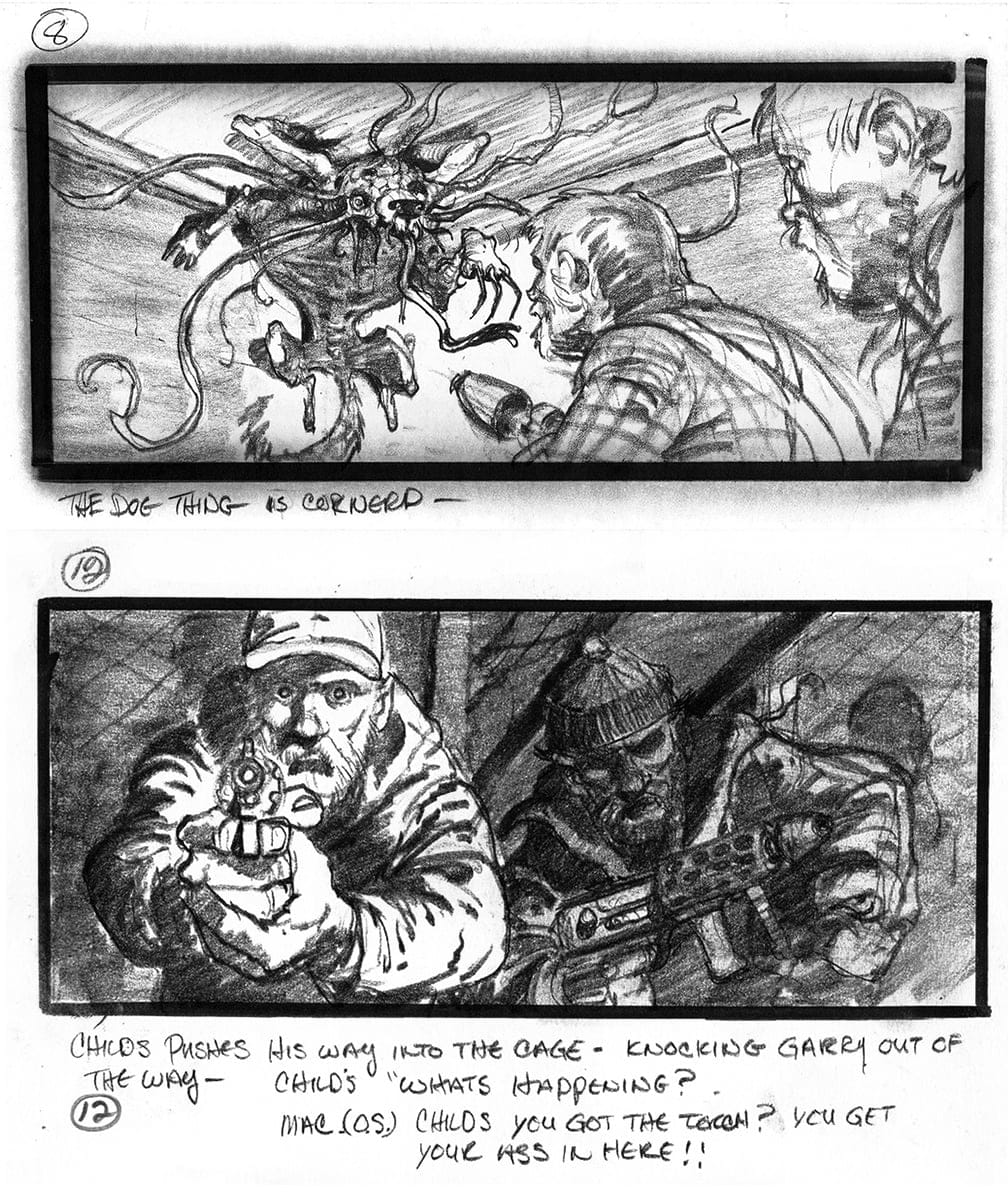
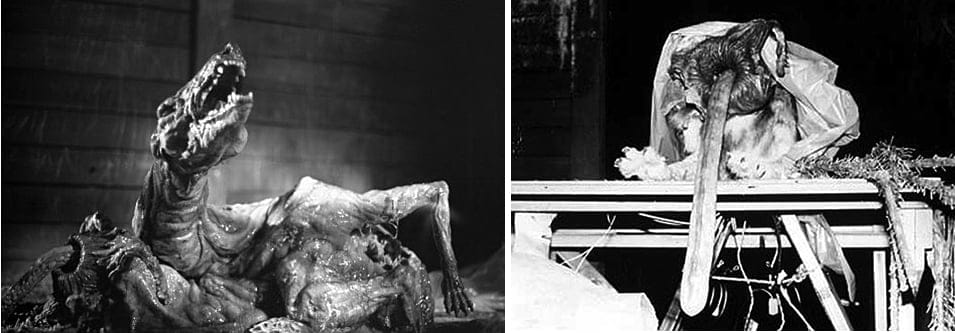
To take some of the load off his crew he brought in Stan Winston, who built the Dog-Thing for the kennel scene. There wasn't time for a full mechanical figure, so Winston made a hand puppet sculpted around a cast of the makeup artist Lance Anderson's arm and head. Anderson worked it from underneath a raised kennel set for the two days it took to shoot the scene, with slime leaking onto him and a helmet on against the squibs. The tentacles that seem to slither out of the creature were pulled in by Anderson and the film was run backwards. Winston declined a screen credit because he considered the picture Bottin's, and is thanked in the end titles instead.
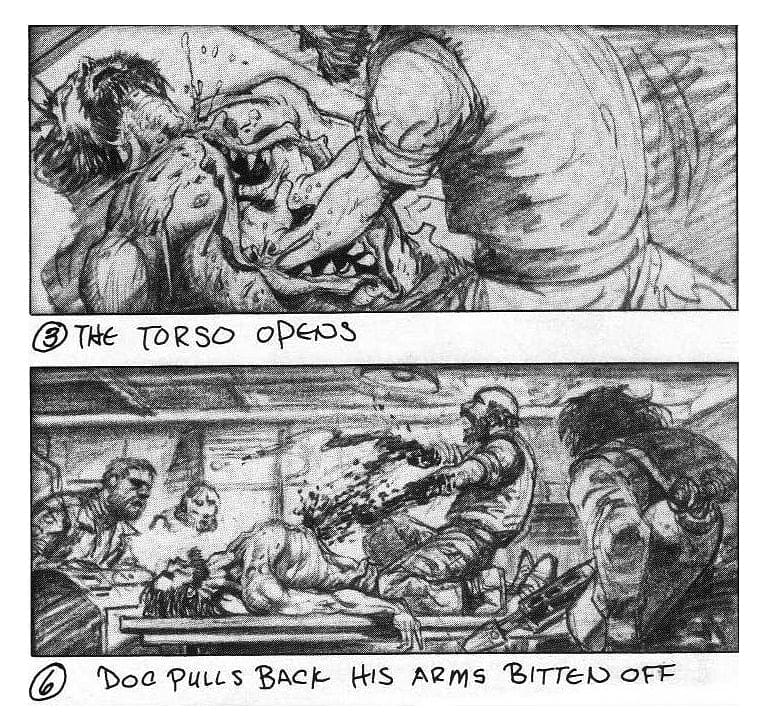
The defibrillator scene is all Bottin. To show Copper losing his arms, he hired a double amputee and fitted him with false forearms made of wax bones, rubber veins and gelatin, which came away when the mechanical jaws closed and the actor pulled back. The head that tears itself loose from the burning body took months of testing. Nobody knew that the rubber foam inside the puppet gave off flammable fumes, and when the fire effect went off the whole thing vanished into a fireball. It came out with minor damage, and they got the shot.
The final creature, the enormous thing that used to be Blair, took about fifty people to operate. The stop-motion animator Randall William Cook built a miniature of the set and animated wide shots of it, and Carpenter, unconvinced, kept only a few seconds.
Stewart, B.C.
The interiors were shot first, on the Universal lot in the summer of 1981, when it was over 100 degrees outside. The production couldn't find a refrigerated building big enough to hold the sets, so they sealed off a stage, packed it with as many portable air conditioners as they could find and used humidifiers and misters to put moisture back into the air. Accounts of how cold it got vary, and at least one puts it below freezing.
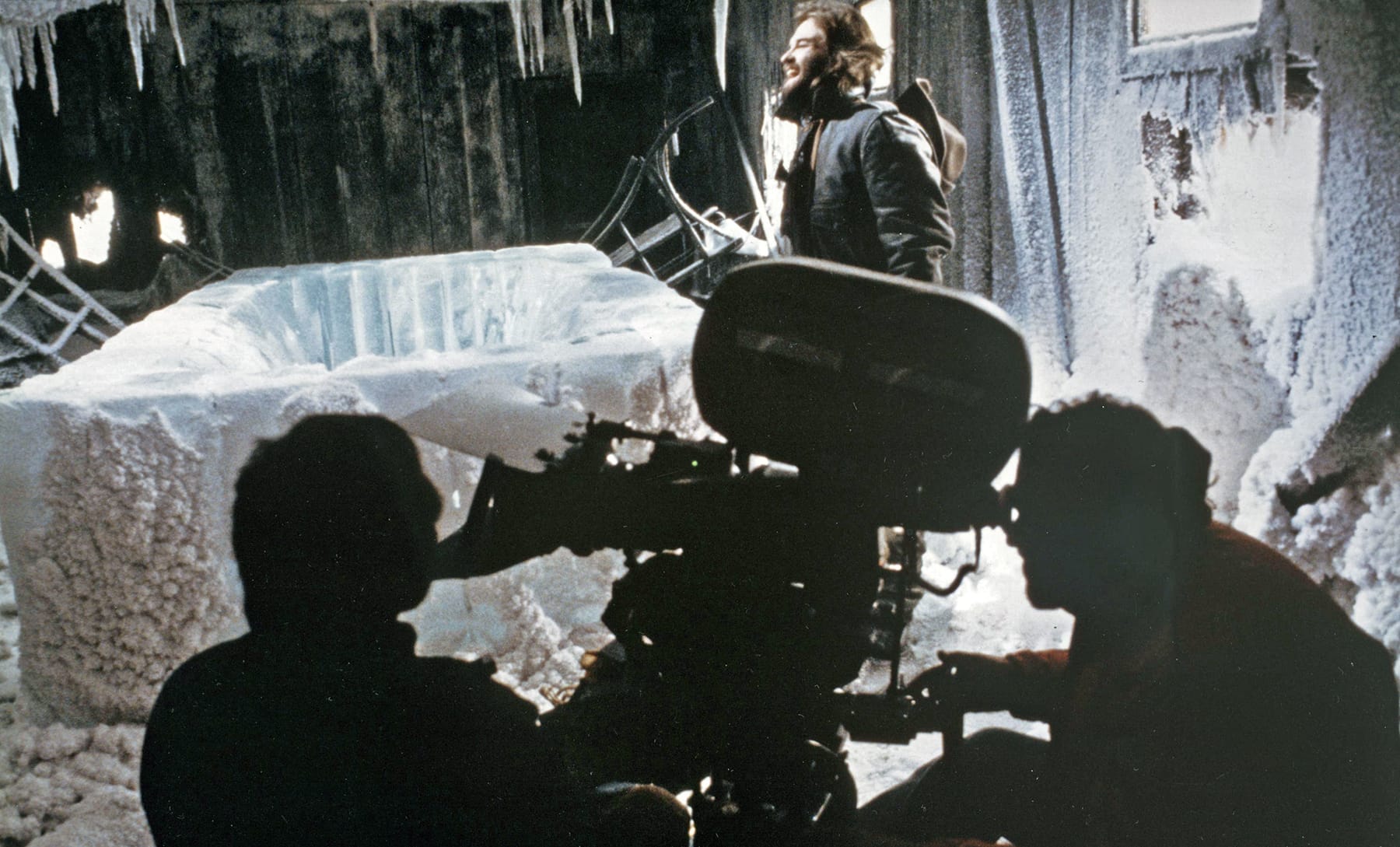
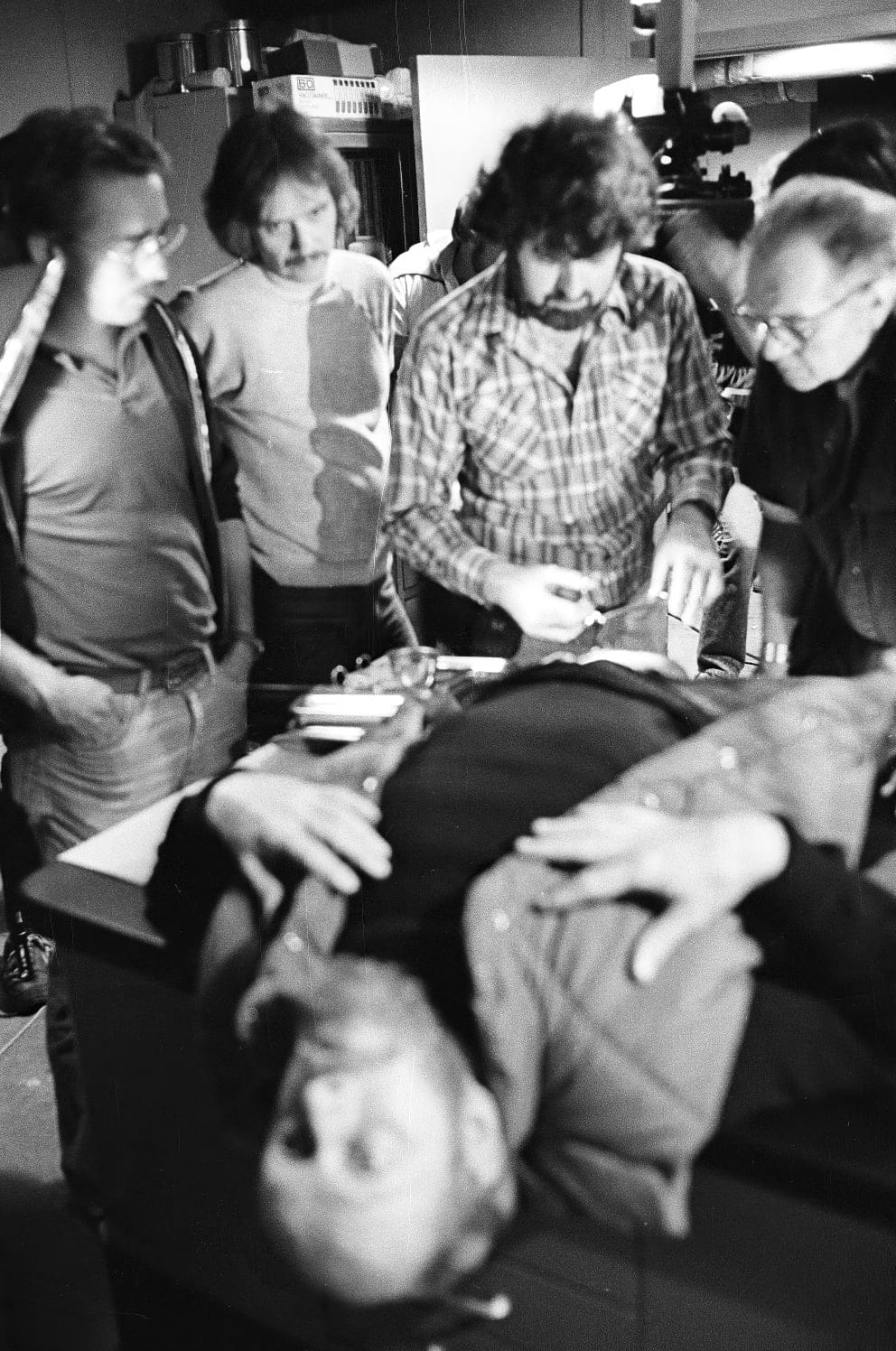
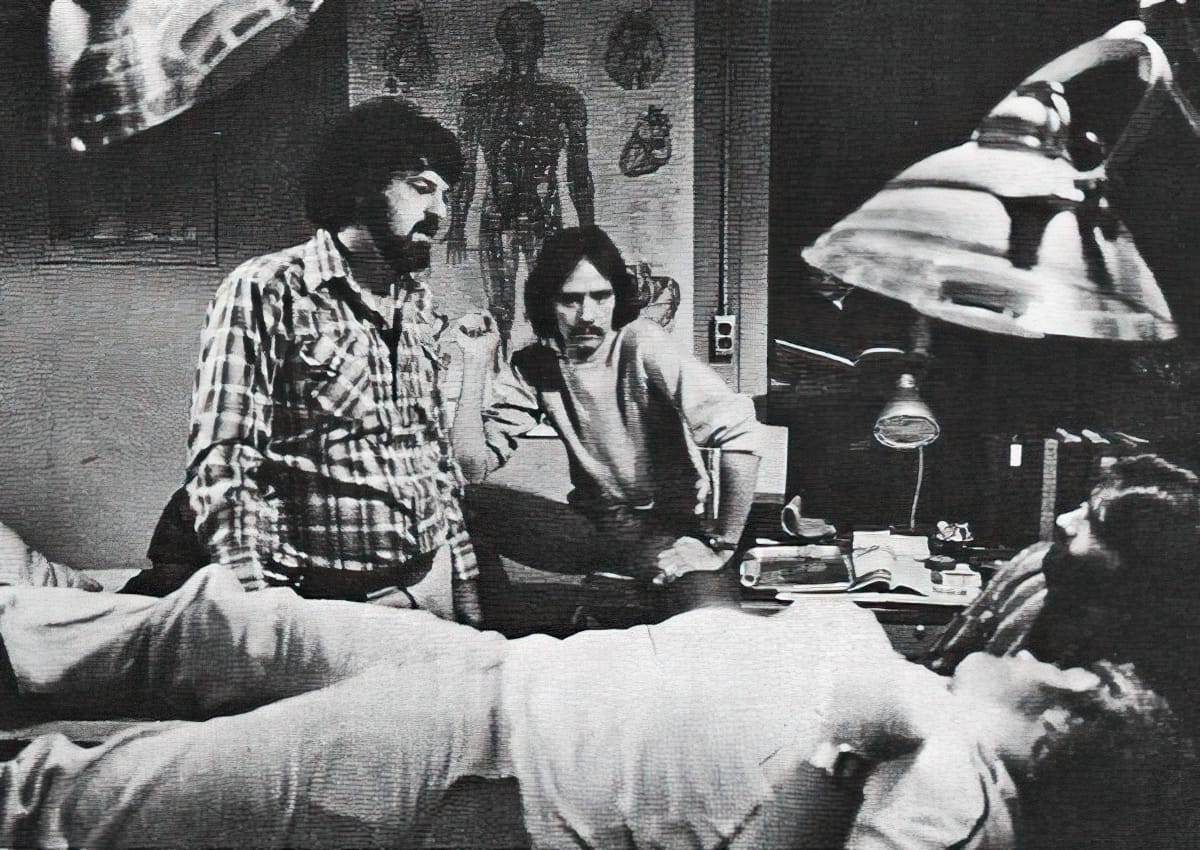
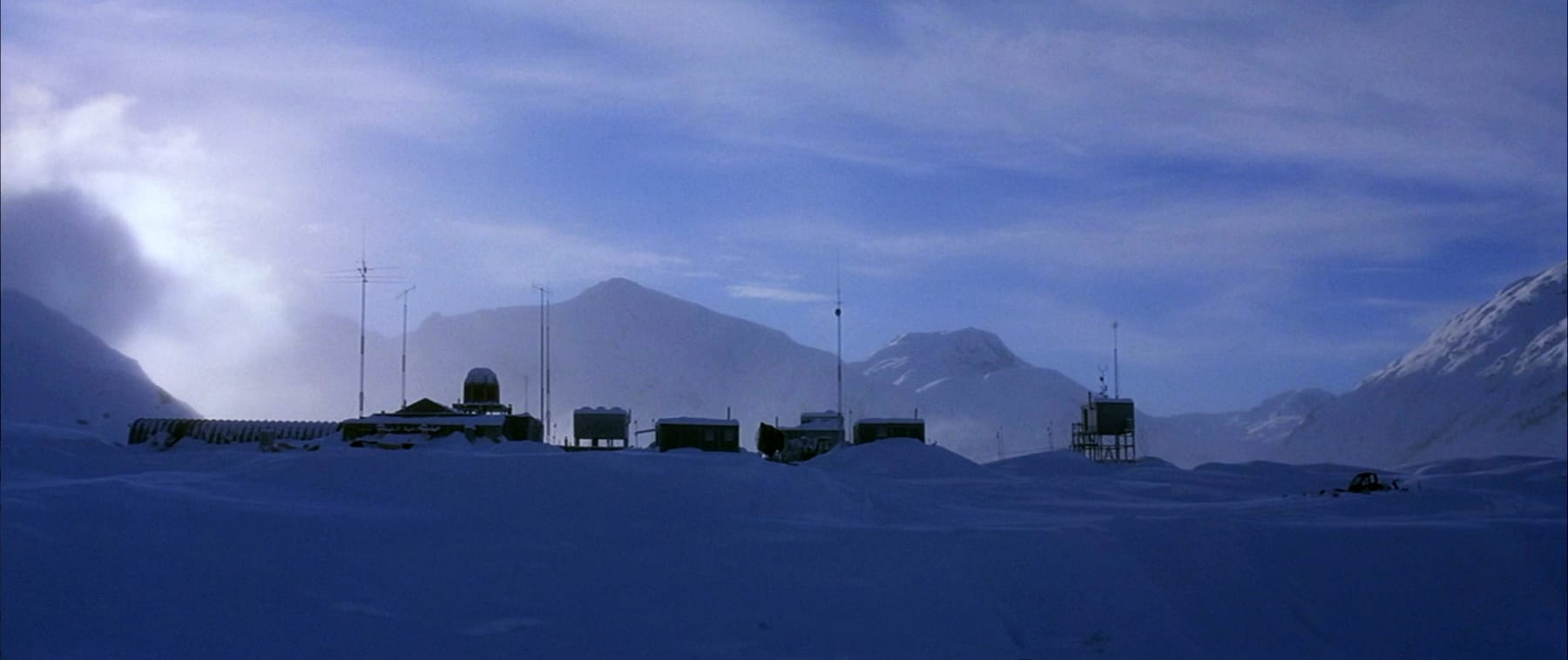
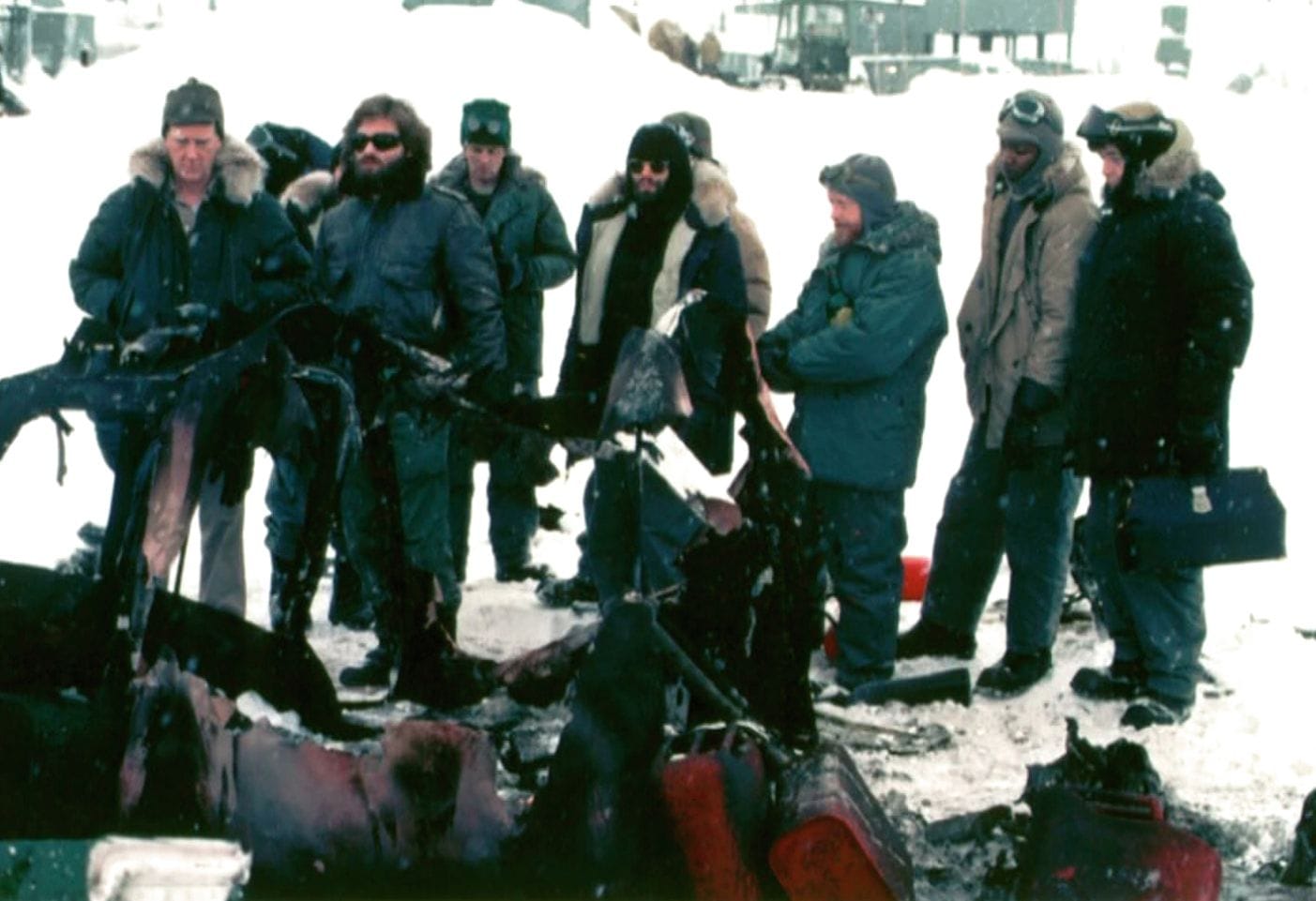
On December 2, 1981, about a hundred American and Canadian crew members moved north to Stewart, a small mining town in British Columbia on the Alaska border. On the way up the crew bus slid in the snow toward the unguarded edge of the road above a 500-foot drop. Some of the crew lived in town and others on barges moored in the Portland Canal, and every morning they drove a narrow road up to the exterior set, built that summer on rock overlooking a glacier and left for the snow to bury. The buildings couldn't be heated above freezing or the snow would slide off the roofs. Lenses froze and cracked, and the cameras had to stay outside overnight, because bringing them in to warm up fogged them for hours. On some days the snow stopped work altogether. When the American camp had been blown up for the finale, the production used the wreckage as the burned-out Norwegian base. Rigging that explosion took eight hours, and the camera assistants had to stand inside the set with the charges and run once they were fired. Seven cameras covered it.
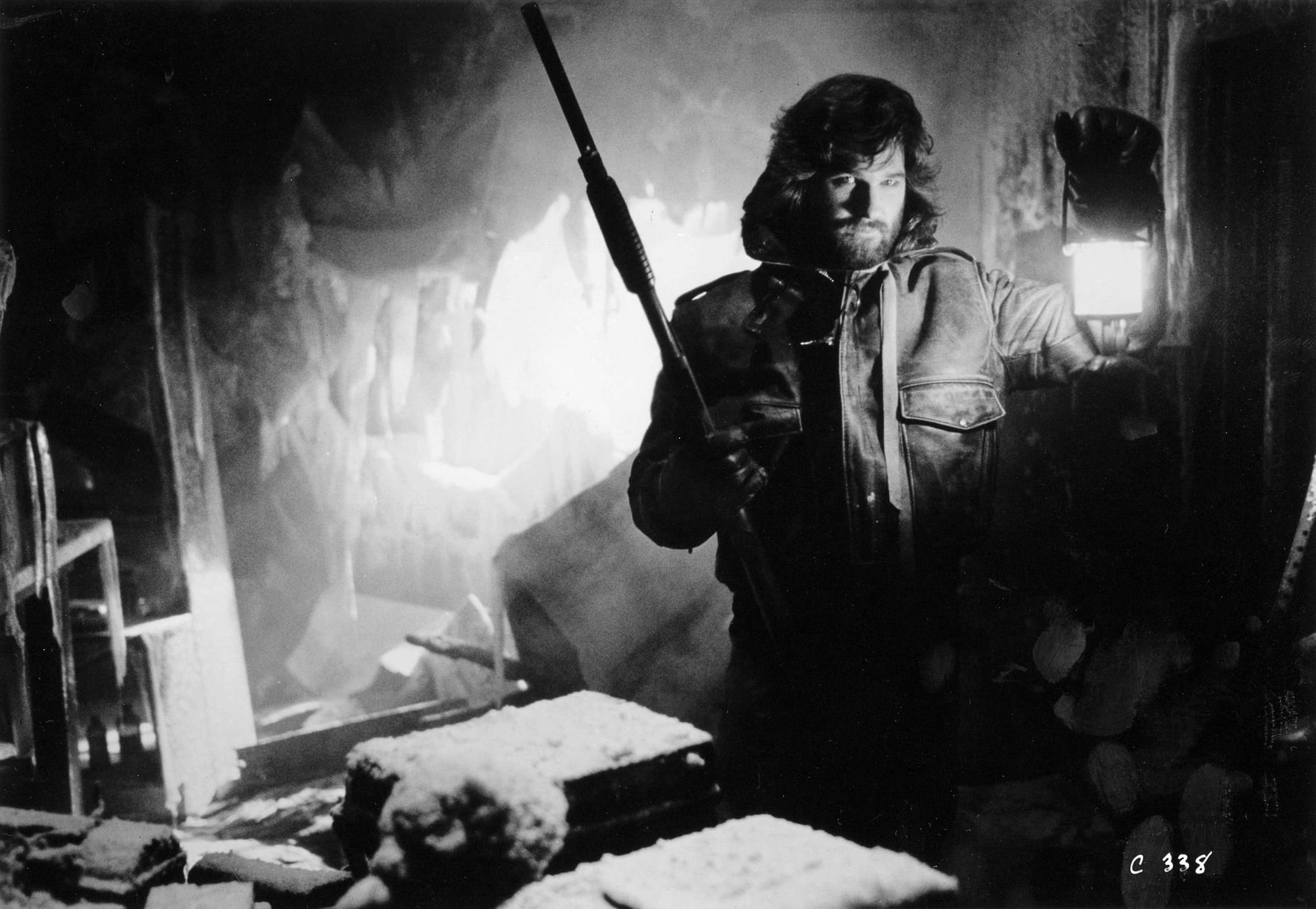
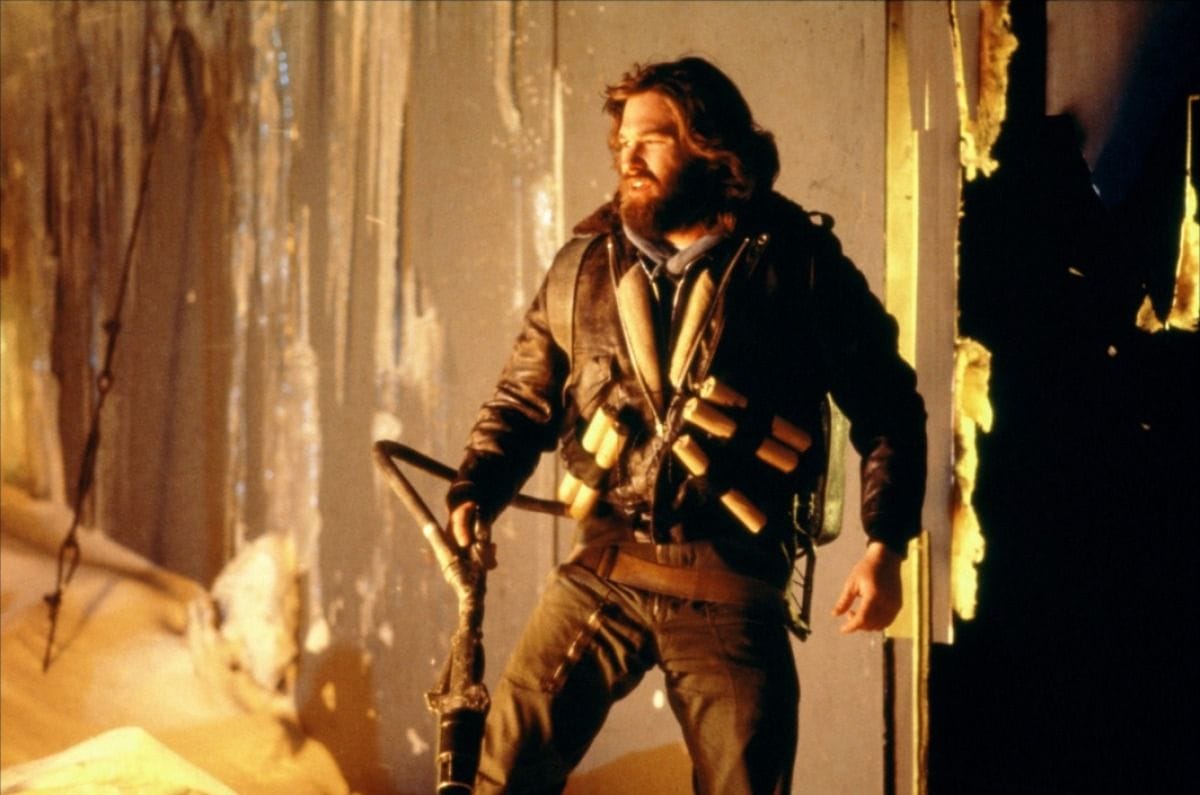
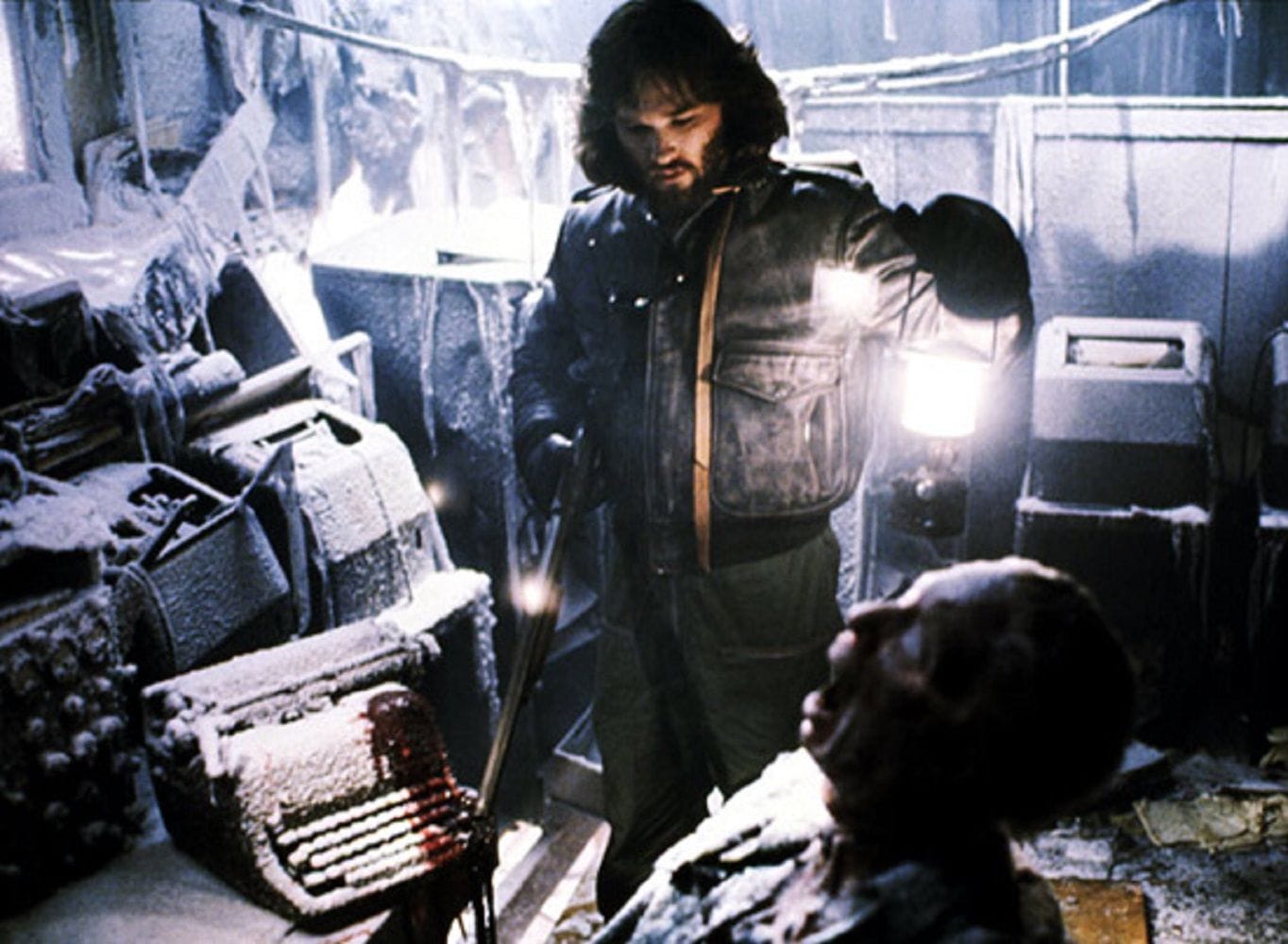
The cinematographer was Dean Cundey, who had shot Halloween, The Fog and Escape from New York for Carpenter. The Thing was their first studio film together. He pushed for the anamorphic widescreen format, which seems an odd choice for a film about confinement until you notice how it lets Carpenter keep six or seven men in one shot, each of them half-watching the others, with empty space around them where something could be standing. Cundey also asked for ceilings and visible pipes on the sets so that the rooms would feel closed in. He and Carpenter had wanted to shoot in black and white, but Universal refused because it would hurt the television sale, so Cundey took out as much color as he could. The interiors and many of the props were painted gray, and the costumes were browns, blues and grays. Indoors the light came from warm overhead lamps in conical shades that left pools of darkness on the set, while the snow outside was lit with a cold blue he had seen on airport runways. Almost all the strong color in the film comes from fire, either the flamethrowers or the magenta flares the men carry into the dark.
On the commentary track for the 2016 Blu-ray, Cundey explained that he always gave actors a small light in the eye, a gleam that he said "gives life," and that during the blood test he kept it out of Palmer's eyes. Once you know, it's hard to miss.
Then, there's the music. One of the more unusual decisions Carpetner made. He usually scored his own films, but for this one he wanted something European, and he flew to Italy to ask Ennio Morricone. Morricone, unsure what Carpenter had in mind, arrived in Los Angeles to record with a tape of synthesizer music already prepared, and he wrote an orchestral score, an electronic score and a third that combined them, knowing which Carpenter would pick. Carpenter played him the Escape from New York score as a reference, and with each pass Morricone moved closer to Carpenter's own style. The main theme, a low synthesizer pulse like a slowed heartbeat, sounds so much like Carpenter that people often assume he wrote it. Years later Morricone said he had asked Carpenter why he'd hired him at all if he wanted to do it himself, and Carpenter had told him, "I got married to your music."
When Carpenter cut the score into the film, it didn't work in places, mostly the scenes of tension. He then went off with his collaborator Alan Howarth and in a couple of days recorded a handful of cues of his own, which he later described as hardly music at all, closer to tones or sound effects. About an hour of what Morricone wrote went unused, and some of it resurfaced thirty-three years later in Quentin Tarantino's The Hateful Eight, another film about snowed-in men who can't trust one another, again with Kurt Russell. In 1982 the score was nominated for a Golden Raspberry for the year's worst.
Tests
The first test in the film comes before anyone has seen the creature. MacReady sits alone in his shack, a hut raised off the snow away from the main building, with a glass of J&B over ice, playing a computer called Chess Wizard. A woman's voice calls out the machine's moves. When it checkmates him, he says "Cheatin' bitch," pours his scotch into the circuitry and shorts it out. It's supposed to be a moment of levity, but it also tells you how MacReady deals with something that outthinks him. The critic Daniel Clarkson Fisher has pointed out that he does the same thing at the end of the film, choosing to destroy what he can't beat. Chess players who have gone through the scene frame by frame say the moves the computer announces don't match the positions on the screen, so in a sense the machine really was cheating.
The second test is the dog. After the Norwegians are dead, the husky they were chasing is left to wander the station for a whole day, and Carpenter builds the dread almost entirely out of nothing happening. Jed, the wolfdog playing it, was remarkably still on camera, and the camera follows him down corridors while the men ignore him and he looks into their rooms. He walks into one where a man stands with his back to us, and we see the man's shadow turn on the wall toward the dog. Carpenter cuts away there and never shows what happens in that room. The shadow was supposed to be Palmer's, but David Clennon's silhouette was too easy to recognize, so Carpenter had the stunt coordinator Dick Warlock stand in front of the light. The film's first assimilation is performed by a stand-in precisely so that the audience can't identify the victim.
That night Clark puts the dog in the kennel with the others. The other dogs start to whine, the Morricone pulse comes in under the scene, and then the dog's head splits open. It is the only point in the film where we see a copy halfway made, one animal turning into another: Winston's puppet, legs that are not a dog's legs, the head opening out like petals, clawed hands reaching for the roof. MacReady hears it and breaks the glass on the fire alarm with a beer can, and Childs arrives with a flamethrower. Doing the autopsy afterward, Blair realizes what they are dealing with, an organism that makes perfect imitations of other organisms.
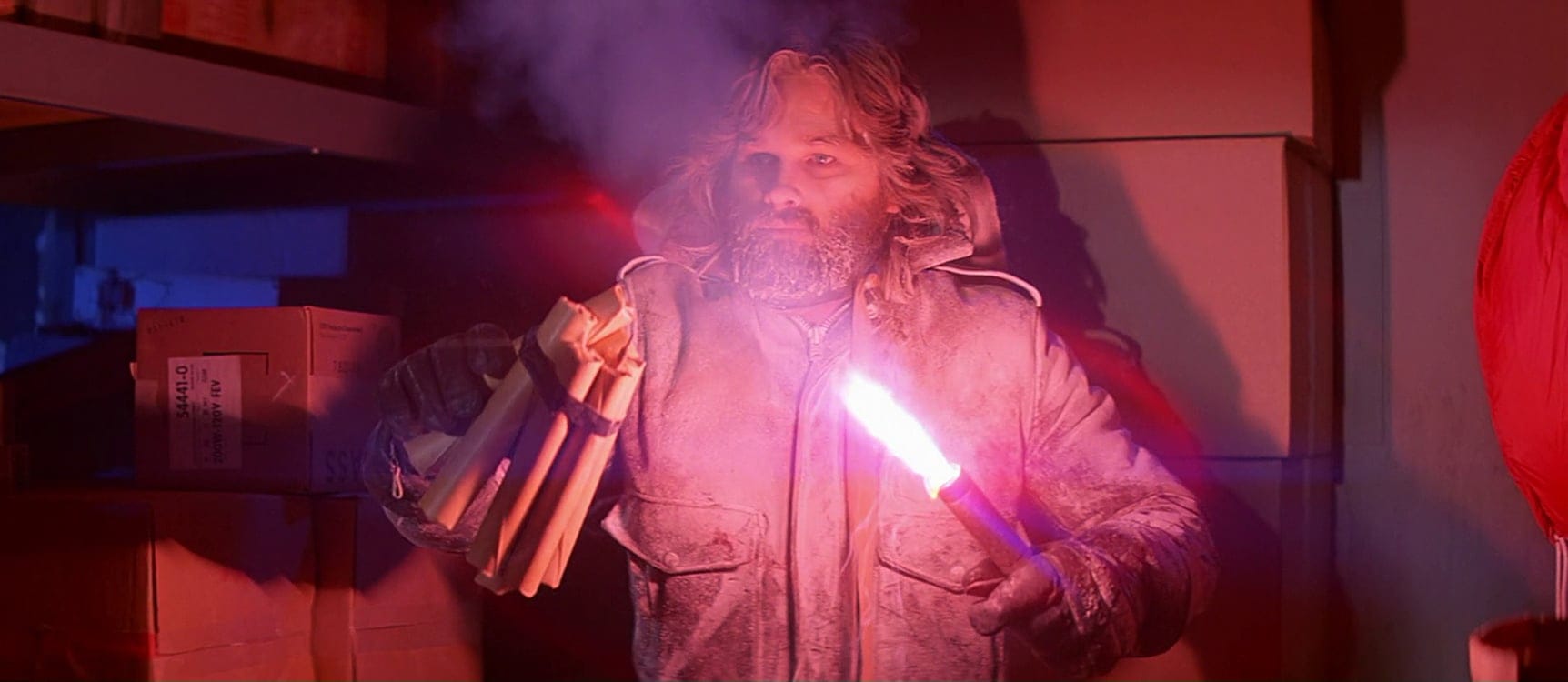
The third test is an accident. MacReady has been locked out in a storm by Nauls, who found his torn clothes and decided he had been taken over. He breaks back in with a bundle of dynamite and holds the room, and in the middle of the standoff Norris, the geologist, grabs his chest and collapses. Copper gets him onto the infirmary table and brings the defibrillator paddles down on him. Norris's chest opens, Copper's arms go into it up to the elbows, and the chest closes on them.
MacReady burns the body. While the others are putting out the fire, Norris's head stretches away from the neck on a strand of tissue, slides off the table onto the floor, sends out a long tongue to hook itself under a desk and drags itself out of sight. Then it grows six spider legs and two eyes on stalks, flips upright and starts for the door. Palmer's reaction, a single stunned obscenity, gets the biggest laugh in the film, and MacReady turns and burns it. It is also the moment he works out the test. A piece of the creature has just tried to save itself independently of the rest, so every piece must be alive, and anything alive can be made to react. Bottin's spider-head is the reason the blood test exists.
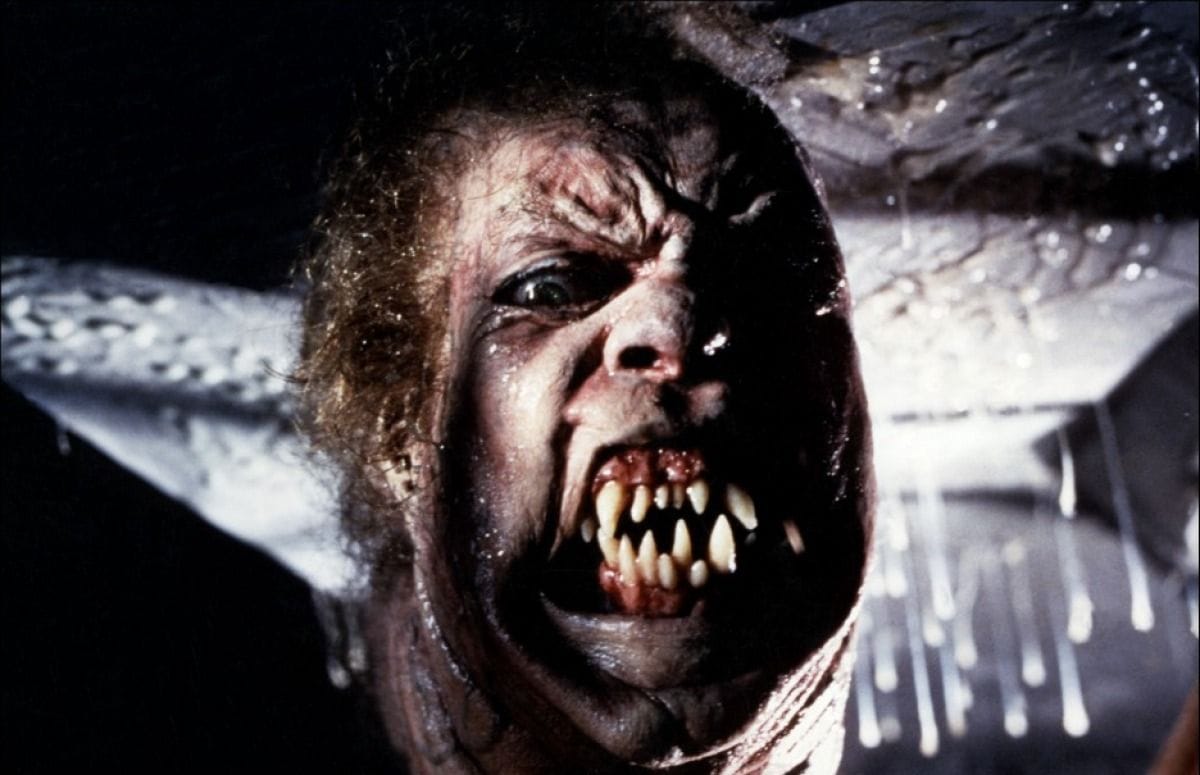
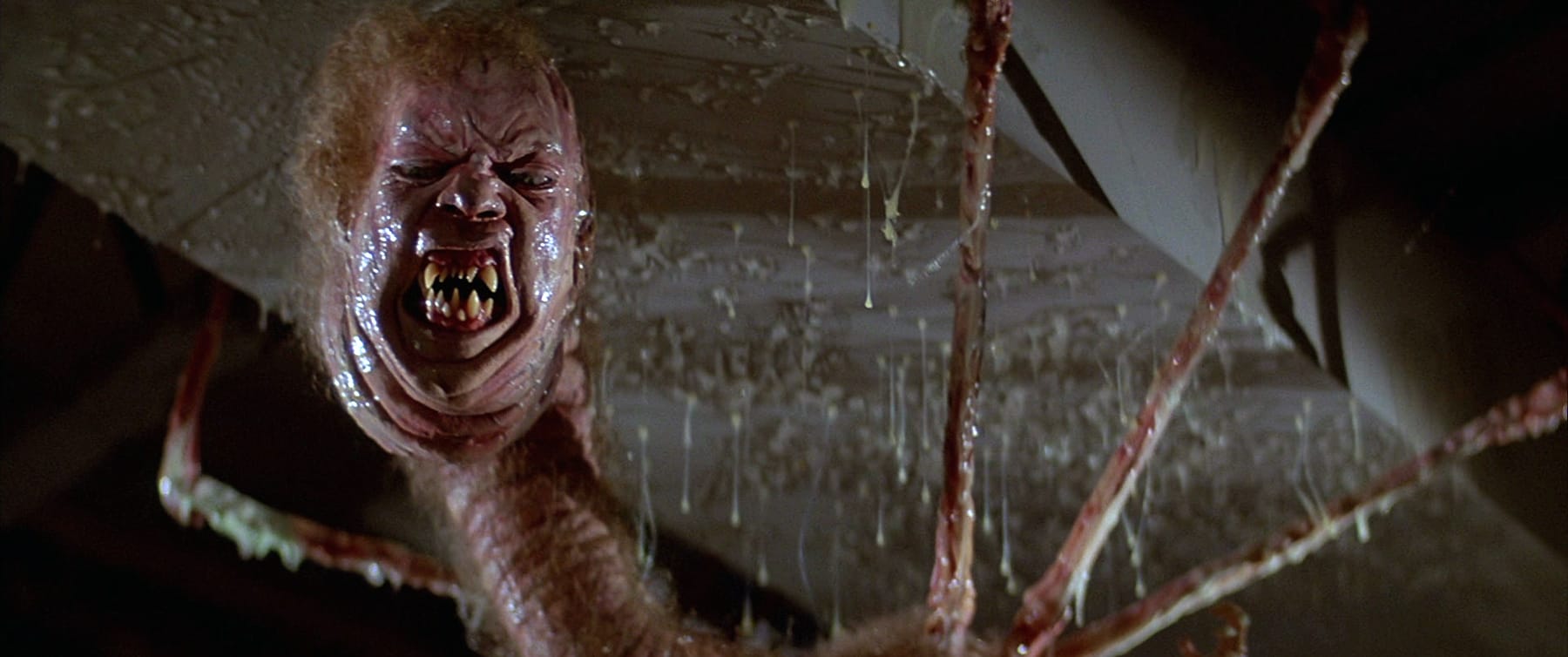
Back on the couch, when the hot wire touches Palmer's blood, it shrieks and leaps out of the dish. Palmer changes where he sits, breaks his ropes and goes for Windows, and MacReady's flamethrower jams at the worst possible moment. When both of them have been burned, MacReady goes back to the couch and carries on. Nauls passes, Childs passes, and so does Garry, the man MacReady had suspected most, who has just sat through all of this with two flamethrowers pointed at him. He tells the room, through an obscenity that Donald Moffat delivers with real exhaustion, that he would rather not spend the rest of the winter tied to the couch.
The Summer of E.T.
Early in 1982 Universal had no finished effects to show theater owners, who were getting nervous. Cohen and Foster cut a twenty-minute reel of action and suspense that kept the creature out of sight, and the exhibitors liked it. A Universal executive told Cohen the studio was counting on The Thing to be its summer hit, since E.T. was expected to play mostly to children. Around the same time Universal sent Carpenter a study showing that the audience for horror films had shrunk by seventy percent in six months, which he took as a hint to lower his expectations.
At one market-research screening Carpenter took questions afterwards. Someone wanted to know what had happened at the end and which of the two men was the Thing, and when Carpenter said that was up to the viewer, the response was "Oh, God. I hate that." Foster had a worse moment after a screening of E.T., when the trailer for The Thing played to complete silence and he turned and said, "We're dead." After the previews the studio dropped the somber black-and-white campaign the producers had approved in favor of a color image of a figure with a glowing face, and the tagline went from "Man is the warmest place to hide" (what a LINE!) to "The ultimate in alien terror," to pick up the Alien audience. Carpenter tried at the last minute to retitle the film Who Goes There?, and was refused.
The Thing opened on Friday, June 25, 1982, on 840 screens, the same day as Blade Runner. E.T. had been out for two weeks and was on its way to becoming the most successful film ever made. Poltergeist, a horror film rated PG, could be shown to children; The Thing was rated R, and the country was in a recession so paying for a babysitter to go see a horror movie was getting difficult. It made $3.1 million on its first weekend and came in eighth, behind Poltergeist in its fourth week, while Blade Runner came in second. Within three weeks The Thing was out of the top ten, and it finished its North American run with about $19.6 million against its $15 million cost, the forty-second biggest release of the year. On paper that isn't a a complete disaster. Everyone involved treated it as one.
The reviews were worse. Vincent Canby in The New York Times called it "instant junk" and floated it as the decade's quintessential moron movie. Roger Ebert called it "a great barf-bag movie" and complained that the characters existed to be jumped on from behind. David Denby, in New York, found it more disgusting than frightening. Alan Spencer, in Starlog, held it up against the optimism of E.T. and the integrity of Blade Runner, said it had no warmth or humanity, and suggested that Carpenter was better suited to directing "traffic accidents, train wrecks, and public floggings." Even the critics who admired Bottin's work tended to treat it as obscene. Carpenter remembers a magazine cover that year asking whether this was the most hated film of all time. The men behind the 1951 film joined in. Kenneth Tobey, its star, said the effects were so explicit they ruined how you were meant to feel about the characters, and Christian Nyby said that if you wanted blood you could go to a slaughterhouse, and called the film "a terrific commercial for J&B Scotch."
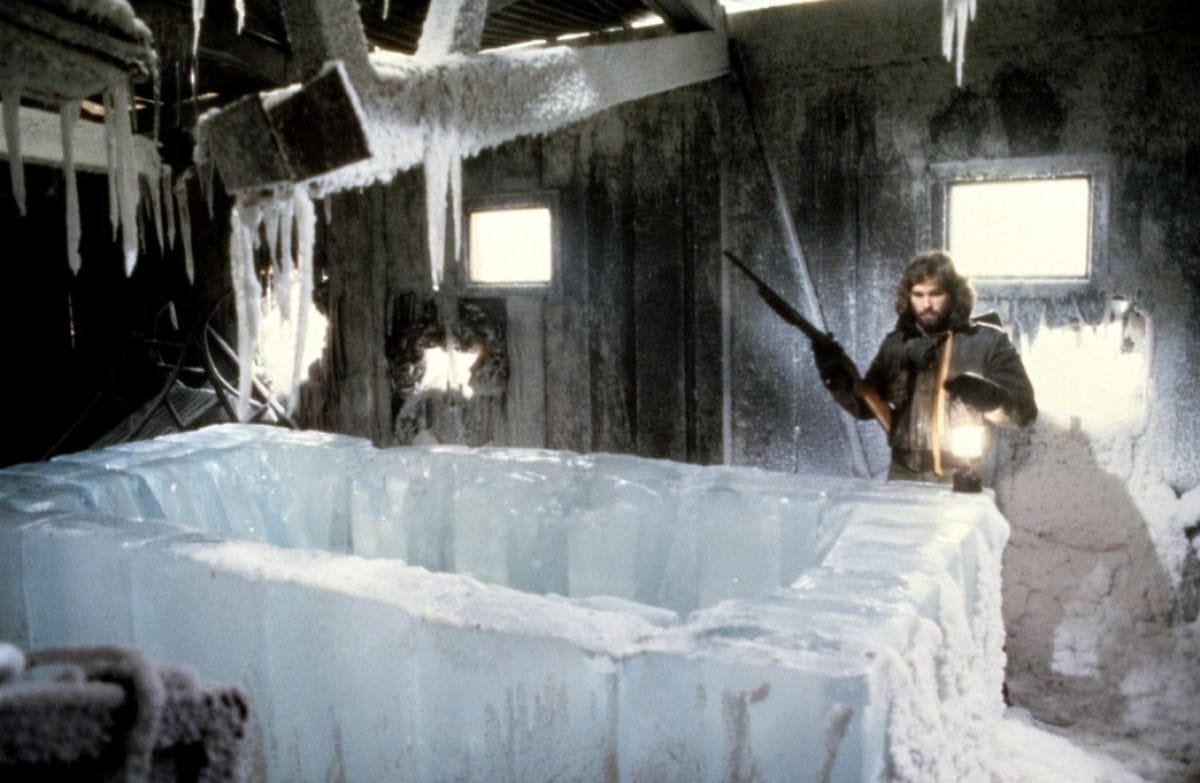
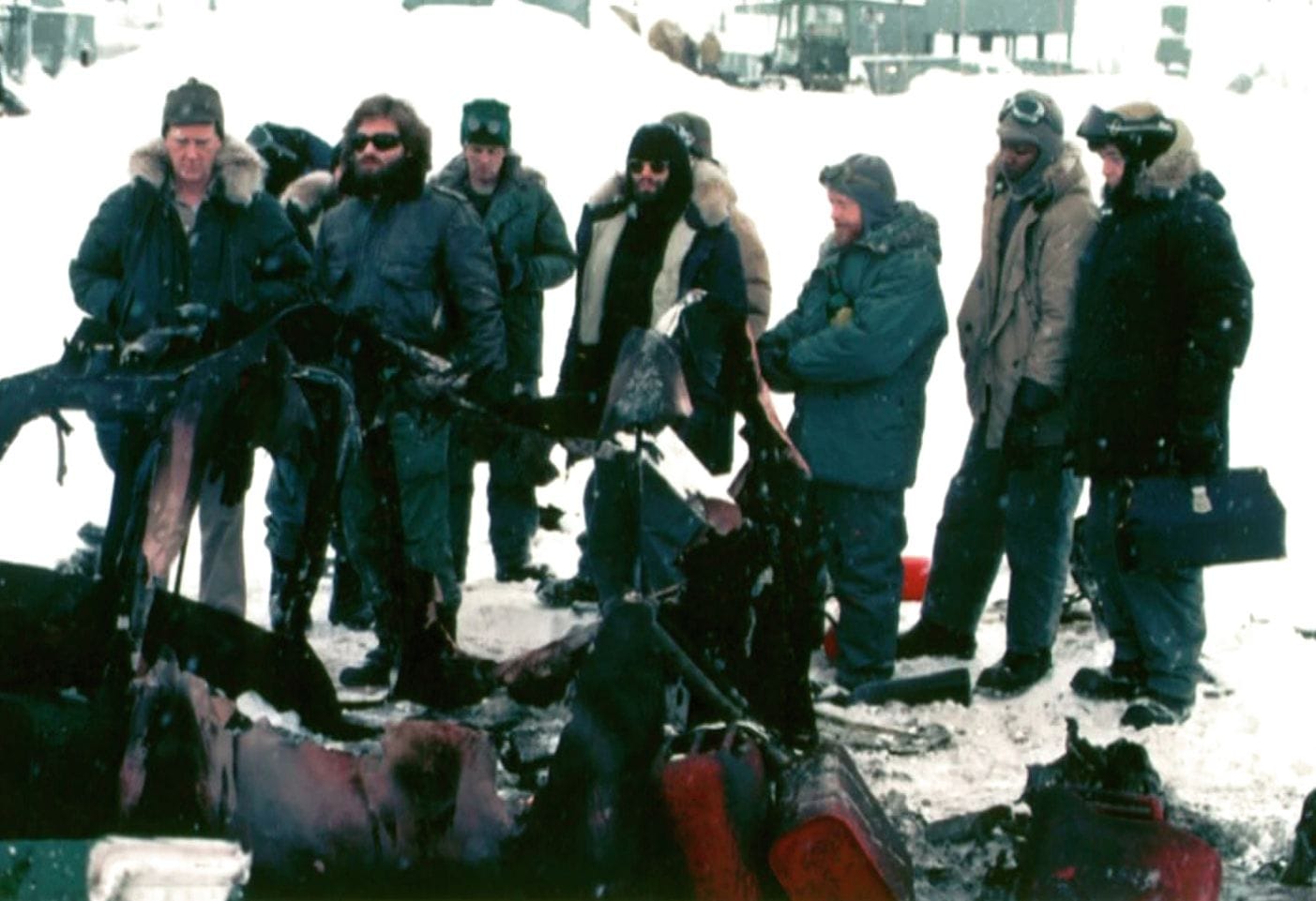
The damage to Carpenter was immediate. He lost Firestarter, which he had been set to direct, and Universal bought him out of his multi-picture deal. He kept working, on Christine, Starman and Big Trouble in Little China, but he has said the experience shook his confidence, and for a few years he wouldn't talk about it. When he did, to Starlog in 1985, he said he had been called "a pornographer of violence" and hadn't seen it coming; he had expected the film to be strong but not too strong for its moment. Much later he was blunter. "The one I took the hardest was The Thing," he said, and he has said more than once that his career would have taken a different shape if it had been a hit.
Second opinions
Like a lot of films that failed in theaters in the early 1980s, The Thing found its audience at home, on rented videocassettes and cable, among viewers who came to it with no reviews in mind, usually late at night and often alone.
Not every version they saw was Carpenter's. Sidney Sheinberg, the MCA president who had disliked the bleakness of the ending, prepared a cut for network television with added narration and a new ending in which the creature, disguised as a dog again, runs off from the ruined camp. Carpenter disowned it. For years, then, a version of the film was going out under its name that its director didn't recognize.
In 1992 the critic Peter Nicholls wrote that it was a bleak, memorable film that "may yet be seen as a classic." By 1998 Universal had put it out on DVD with a feature-length documentary, Terror Takes Shape, and a commentary by Carpenter and Russell, and the phrase cult classic had stopped being a hedge. Empire put it on its list of the five hundred greatest films in 2008. Directors who had seen it young, among them Guillermo del Toro and Edgar Wright, talked about what it had done to them, and Tarantino borrowed Russell, the snowy landscape, the paranoia and some of Morricone's unused score for The Hateful Eight. At the Amundsen-Scott South Pole Station it is screened every February to mark the beginning of winter.
Carpenter now calls it perhaps his favorite of his own films. In January 2026 the Library of Congress added The Thing to the National Film Registry as part of its class of 2025, and it was the film the public had nominated more than any other that year.
The Fire
MacReady blows up the station to kill the last and largest of the creatures, the thing that used to be Blair. Garry is dead and Nauls has vanished into the dark. MacReady sits down in the snow beside the burning camp with a bottle, and Childs walks out of the night. He says he saw Blair and went after him and got lost in the storm. MacReady doesn't ask how he survived. Neither man reaches for a weapon, and both know they will freeze before morning. MacReady passes him the bottle, Childs drinks, and MacReady gives a short, tired laugh and suggests they wait a while and see what happens. The Morricone pulse comes back in and the screen goes black.
It nearly didn't end there. Carpenter shot alternatives, partly because his editor, Todd Ramsay, thought the bleak ending would test badly. In one, MacReady has been rescued and passes a blood test, which Carpenter later called cheesy. The editor Verna Fields was brought in to make something clearer and produced a version without Childs, leaving MacReady alone by the fire. It tested only a little better, but the studio wanted it, the producers agreed, and it was about to go to print when Carpenter, the producers and the Universal executive Helena Hacker decided that an unanswered question was better than an empty ending. The original went back in, with a scream added over the explosion to suggest that the monster had died.
The ending has since become a forensic exercise with a literature of its own. Some viewers point out that MacReady's breath shows in the cold and Childs's, in some shots, does not. Some go by the eye light: in the 2016 commentary Cundey said it wasn't meant as a clue in the final scene, but his interviewer noticed that MacReady has the gleam and Childs, for most of the scene, doesn't. Others cite the earring Childs wears, pointing to a rule in the 2011 prequel that the creature can't copy anything inorganic, and one school holds that MacReady's bottle is full of the gasoline he has been using for Molotov cocktails, and that Childs drinks it without blinking.
The people who made the film have been consistently unhelpful. Asked recently about Cundey's lighting theory, Carpenter said of his cinematographer, "He has no clue," and repeated that he knows who is the Thing at the end and isn't telling. Russell has called the hunt for clues "missing the point." He and Carpenter, he has said, worked a long time on the ending to put the audience back where the men were, knowing nothing, unsure by then even of themselves. Keith David has said Childs was human, which is what you would expect from the man playing him.
My own view is close to Russell's. Earlier in the film MacReady had a procedure, and for a few minutes on the couch it worked. By the fire he could probably still heat a wire, and he doesn't. Either he is tired of testing or he sees that the result no longer matters, since they are both going to die there. What he does instead is hand Childs the bottle, which could be the most trusting thing he does in the film or the most calculating, and Carpenter shoots it so you can't decide which.
Box and Papers
Clennon's line about the takeover, that the man would act, look and smell exactly the same before and after, resonate with me so much when I think of modern replica watches.
Fakes are nothing new. What has changed is how good they are. The old ones gave themselves away to anyone who had even seen the real thing, with the wrong weight, a second hand that ticked where it should sweep, a crude caseback or a date in the wrong typeface. The best modern copies, the ones the trade calls superfakes, have closed most of those gaps. They are built to the original dimensions in convincing materials, with movements made to pass through a display back or a quick look with the case open. Experienced dealers will tell you privately that there are pieces they can't call without taking the movement apart, and some they still aren't sure of afterwards. The days when you could catch the copy half-finished, as in the kennel, are mostly over.
The superfake is the obvious version of the Thing. The cases I find harder to categorize are the ones where the copy is built partly out of the real thing. A redialed watch is genuine in its case, its movement and its history, but has a dial that has been refinished or repainted, sometimes well enough that only a specialist with a loupe and a reference archive will see the difference. A frankenwatch is assembled from genuine parts of different watches, so that every component passes inspection on its own and the case, the movement and the dial are all real, but they were came together until someone assembled them years later. Carpenter's creature is a single body in which every piece is independently alive; a frankenwatch is closer to the opposite, a set of authentic pieces that add up to a false whole.
Service replacements are stranger still. A watch goes back to its maker for a service and comes home with a new dial, new hands, perhaps a new bezel, because the old ones were worn or damaged or no longer met the maker's standards. Every part fitted is genuine, certified by the one authority that can certify it, and collectors mark the watch down for it, sometimes heavily, because something original has been taken out and replaced with something correct. The maker has kept the watch running by changing what it's made of, and it's not clear what a blood test would make of that.
All of this is why collectors have learned to trust paperwork, provenance and experts over their own eyes. When you can't tell by looking, you look for evidence outside the object: the original box and papers, a warranty card whose serial matches, an extract from the brand's archive confirming when the watch was made and where it was sold, a chain of previous owners, an auction catalog note, the word of a dealer whose living depends on being right. At Outpost 31 that was the first plan too. Before MacReady improvises his wire, Copper proposes checking everyone's blood against the uncontaminated samples kept in storage, a reference collection of known originals. Someone gets to the blood bank first and wrecks it, and because Garry held the keys, MacReady suspects Garry.
The film is good on what happens after that, and the parallel is uncomfortable. When the reference is gone, or forged, or was never there, suspicion moves to whoever controlled it. Paperwork can be faked as easily as a dial, and forged box and papers can do more damage than a forged watch, because they borrow the authority of an institution. An archive extract is only as reliable as the archive, and an expert only as reliable as the expert. MacReady's test works because it needs no outside reference; it puts the material under stress. The watch trade has its own versions, the movement examined under magnification, the lume tested, the metal analyzed, and like MacReady's wire they only work as long as the copy still reacts differently from the original.
That leaves the question the film keeps asking without answering, which is what "real" means once the copy can't be told apart. One answer is the one MacReady tests for. In that view the real thing is the one whose history is unbroken. Norris's body was genuinely Norris's body, and what made it false was a break somewhere behind it, a moment offscreen when the original stopped and something else went on wearing it. A real watch, by the same logic, is one whose parts have stayed together from the factory to your wrist, or been changed only by people with the right to change them, and provenance is the record that it was never interrupted.
The other answer is Clennon's. If it acts, looks and smells the same, the difference can't be located in the object. A superfake that keeps perfect time doesn't know what it is, and in Carpenter's film neither does a man who has been taken over. In this view "real" is not a property of the watch at all but an agreement among the people around it, the experts, archives and market, about which history to believe.
The Thing doesn't choose between these, and I doubt the watch world can either. What the film does show is what the question costs. The men at Outpost 31 mostly don't die because they fail to spot the copy. They die because they can't stop suspecting each other, and the testing is where the killing starts: Clark is shot for refusing it and proven human by it afterwards. Anyone who has walked away from an honest watch because one detail looked off, or fallen out with someone over whether a piece was right, has had a small taste of that couch.
Out In The Cold
The film's own history makes the same point. In the summer of 1982 The Thing went in front of the people whose job was to say which films mattered, and they judged it a gross-out dressed up as something serious, a piece of junk with expensive effects. Then it was examined again by other people with other instruments: video renters, late-night television audiences, a generation of directors, a restoration from the original negative, and finally a public vote and a place in the Library of Congress.
None of that changed the film. The frames Canby reviewed are the frames the Registry preserved, down to Bottin's spider-head crossing the infirmary floor and Morricone's pulse running under the last black screen. What changed was the agreement around it. Watches work the same way, though the trade doesn't like to say so. The watch on the counter is what it is, and the loupe, the papers, the archive and the expert decide what to call it. Usually they're right the first time, and occasionally, as with this film, it takes them forty years.
At the end MacReady has run out of tests. He has a bottle, a man he can't quite read and a long night of cold that will decide things for both of them by morning, and he passes the bottle across and settles in to wait.
Subscribe to It's About Time to get daily