Serica Just Keeps Getting Better And Better; And New Watches From Nomos, Jacques Bianchi, Minase And Piaget
Hey friends, welcome back to It’s About Time. Enjoy the weekend everybody. Oh, and people who are on the paid tier are getting The Caseback weekend magazine tomorrow. I'm writing it right now, and I'm very much digging how it's turning out – it's all about Giugiaro and one of my all time favorite movies. I think that's a pretty good hint. If you're not a paid subscriber, grab one now to not miss The Caseback and help me make the newsletter.
THIS IS SUPER IMPORTANT! Ever since I moved to this new platform, deliverability of emails has been so-so. Some are delivered to a lot of inboxes, some are routed to people's promotions tabs. In case you haven't been getting your emails, check the promotions or junk folders and move it to the primary. That way you'll always get it.
I write this newsletter on my own, and paid subscribers are what keep it running. If you'd like to support it, you'll also get The Caseback, a weekend magazine with longer writing, every Sunday.
👂What’s new
1/ Serica Gives the 8315 Travel Chronometer an Olive Dial and a Golden Green Ceramic Bezel
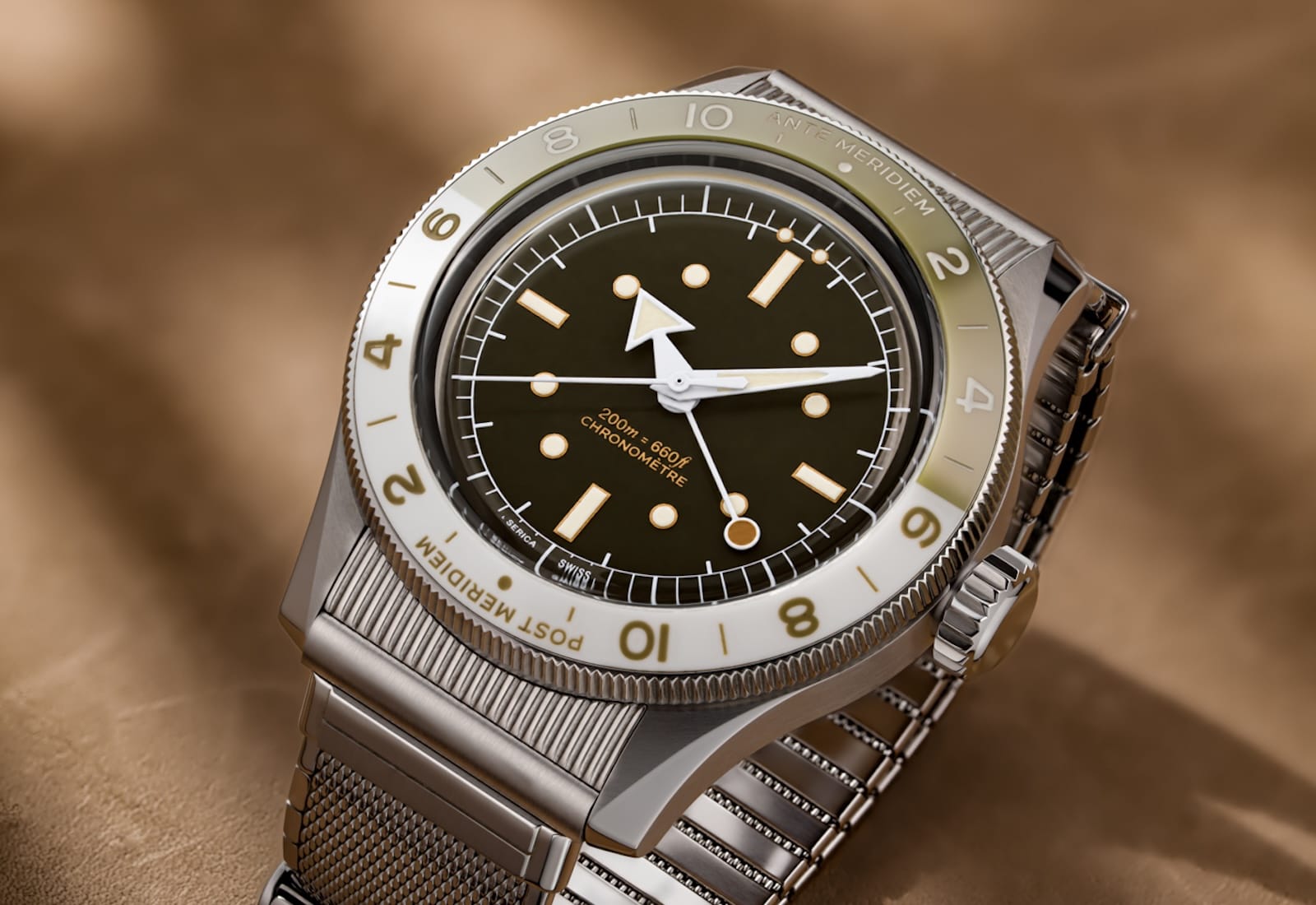
The Serica 8315 Travel Chronometer is one of my favorite watches of the past 10 years, so a new version of it gets my full attention. If you haven’t come across it, the 8315 is the French brand’s GMT: a compact sports watch with a wide 24-hour bezel and a COSC-certified movement. Up until now, the permanent collection had a black and a sensational brown model in the lineup, but now the new Ref. 8315-3 gets an olive dial and gold bezel. That sounds like it shouldn't work. But this is Serica. Of course it works. And it works beautifully.
The steel case remains unchanged from the black and brown versions. It is 39mm wide and 12.3mm thick, with a lug-to-lug of 46.5mm and 200 meters of water resistance, which is about as small as a proper GMT gets. Most surfaces are brushed, with polished bevels running down the lugs. A 2mm double-domed sapphire sits on top, and both the crown and caseback screw down. The bezel insert is where we see the first change. It’s ceramic, made in one part with two colors. The daytime section is longer, so no numeral gets cut in two. Night hours are done in ivory. Day hours are the new golden green, that seems impossible to photograph and looks so much better up close. The bezel turns in both directions.
The dial is a deep olive with an enamel-like surface, that goes almost black. Gold is used for the printing and the marker outlines, and only there, which is the right amount. The layout is unchanged: domed applied markers in Serica’s unusual arrangement, white lacquered broad arrow hands, a railroad track around the edge and the lollipop-tipped GMT hand. Hands and markers are filled with cream Super-LumiNova C3.
Inside is the Soprod C125, a COSC-certified automatic running at 4Hz with 42 hours of power reserve. It’s a caller-style GMT, meaning you set the 24-hour hand on its own rather than jumping the local hour hand. The bracelet is Serica’s Expedition: a woven mesh center flanked by thin polished outer links, attached with guilloché-patterned end links and closed by a fully adjustable clasp. It’s thin and flexible, and it looks absolutely world class.
The Serica Travel Chronometer Golden Green Ref. 8315-3 joins the permanent collection and is available now for €2,090. See more photos here and the watch on the Serica website.
2/ NOMOS Releases the Club Sport neomatik 34 in All Silver

Until now, the 34mm Club Sport neomatik came in purple, gold or rosé, and people generally enjoyed the colors. But what happens when you drop all the color? Club Sport is the sporty NOMOS line, with screw-down crowns, integrated steel bracelets and more water resistance. And now it comes in all silver. The 34mm size and the very monochromatic look make this a very compelling watch.
The steel case is 34mm wide and 8.2mm thick, with a lug-to-lug of 41.5mm. Those are decently good numbers for a small wrist. It’s a fully polished case and there's a domed sapphire crystal on top, AR-coated inside and out. Water resistance is 200 meters. The crown screws down and has one of those very cool bright red indicators if it isn't fully screwed in. You can choose a sapphire caseback (reference 758) or solid steel (reference 758.SB), with no change to the specs.
The dial is silver with a sunburst finish. The small seconds at six is sunk into the dial and has a finer circular grain, so it reads as a separate surface. Numerals and indices are filled with white Super-LumiNova that glows blue, and the rhodium-plated hands carry lume too. The one bit of warmth is “neomatik” printed in gold.
Inside is the in-house calibre DUW 3001, an automatic only 3.2mm thick, which is why the case stays this slim. It has the NOMOS swing system, a Glashütte three-quarter plate and the DUW regulation system, runs at 3Hz and has 43 hours of power reserve. The bracelet has been resized for the 34mm case and alternates brushed and polished surfaces. It has quick-change spring bars, a deployant clasp and an 18mm lug width.
The NOMOS Club Sport neomatik 34 All Silver joins the permanent collection and it's priced at €2,720 with the steel caseback or €3,020 with sapphire. See more photos here and the watch on the NOMOS website.
3/ Jacques Bianchi and Deepsea.EDC Come Together For A Forged Carbon Combat Diver
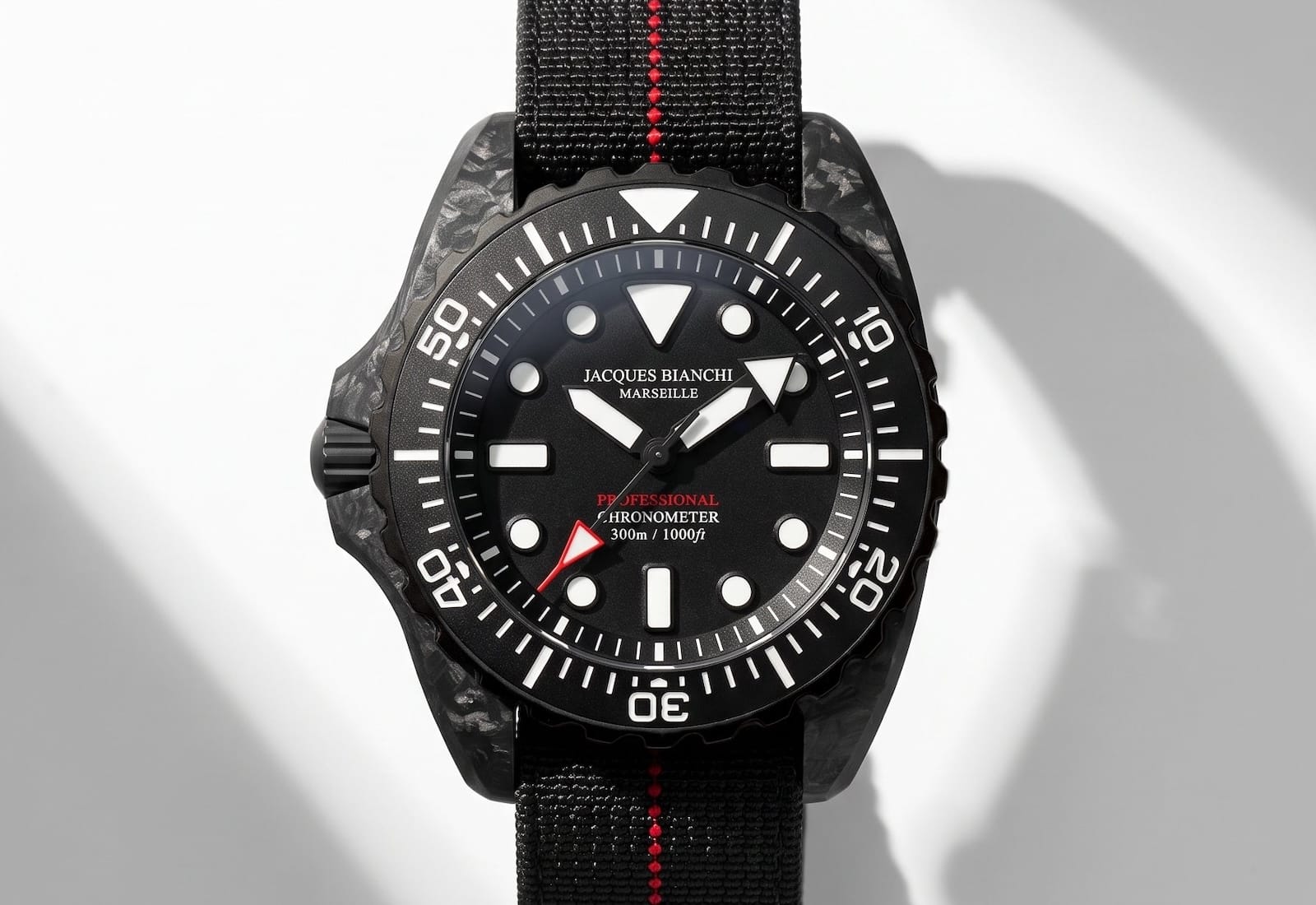
Jacques Bianchi Marseille is a revival of a French brand that made dive watches for the military in the 1980s. Deepsea.EDC is the Instagram alias of Brock Stevens, a photographer and gear tester who spent more than seven years as a US Navy diver and now works with brands like Watches of Espionage and Tornek-Rayville. Their first collaboration, the titanium JB300 Profonde, was one of the best titanium divers I've seen in ages. And it so well, the two are coming back together again. For the JB300 Professional, Stevens asked combat divers in the SEALs, MARSOC and Army Special Forces what they need on long rebreather missions, and designed the watch around their answer: a lighter case.
The case is made out of forged carbon over a Grade 5 titanium core, 41.5mm wide and 13mm thick, with a 20mm lug width. The lugs are fixed bars in reinforced forged carbon, so there is no spring bar to fail underwater. The bezel is black DLC-coated Grade 5 titanium. The crown stays on the left side, as on the first JB300. On top is a sapphire crystal, and you get 300 meters of water resistance.
The bezel is very cool. Lume runs around the entire scale, but the pip and the opening 15 minutes glow green while the remaining 45 minutes glow blue. Stevens says the split helps divers time short navigation legs in low light. The dial is matte black with oversized maxi indices and no date. Each hand has its own shape, so you won’t confuse hours, minutes and seconds. It’s a plain, highly legible dial, which is what this watch should have.
Inside is the Soprod P024, a Swiss automatic running at 4Hz, with a 38-hour power reserve. This version is COSC-certified, rated to -4/+6 seconds a day. The fixed bars limit you to pass-through straps. The first 200 examples ship with a black and red Watches of Espionage × Zulu Alpha Commando strap.
The Jacques Bianchi Marseille x Deepsea.EDC JB300 Professional is limited to 500 pieces. However, only 300 are available to the public directly from Jacques Bianchi; the other 200 are reserved for military and police units. Price is set at €1,995. See more photos here and the watch on the Jacques Bianchi Marseille website.
4/ Minase Shrinks the Mastercraft J3 to 37mm and Gives It a Japanese Movement
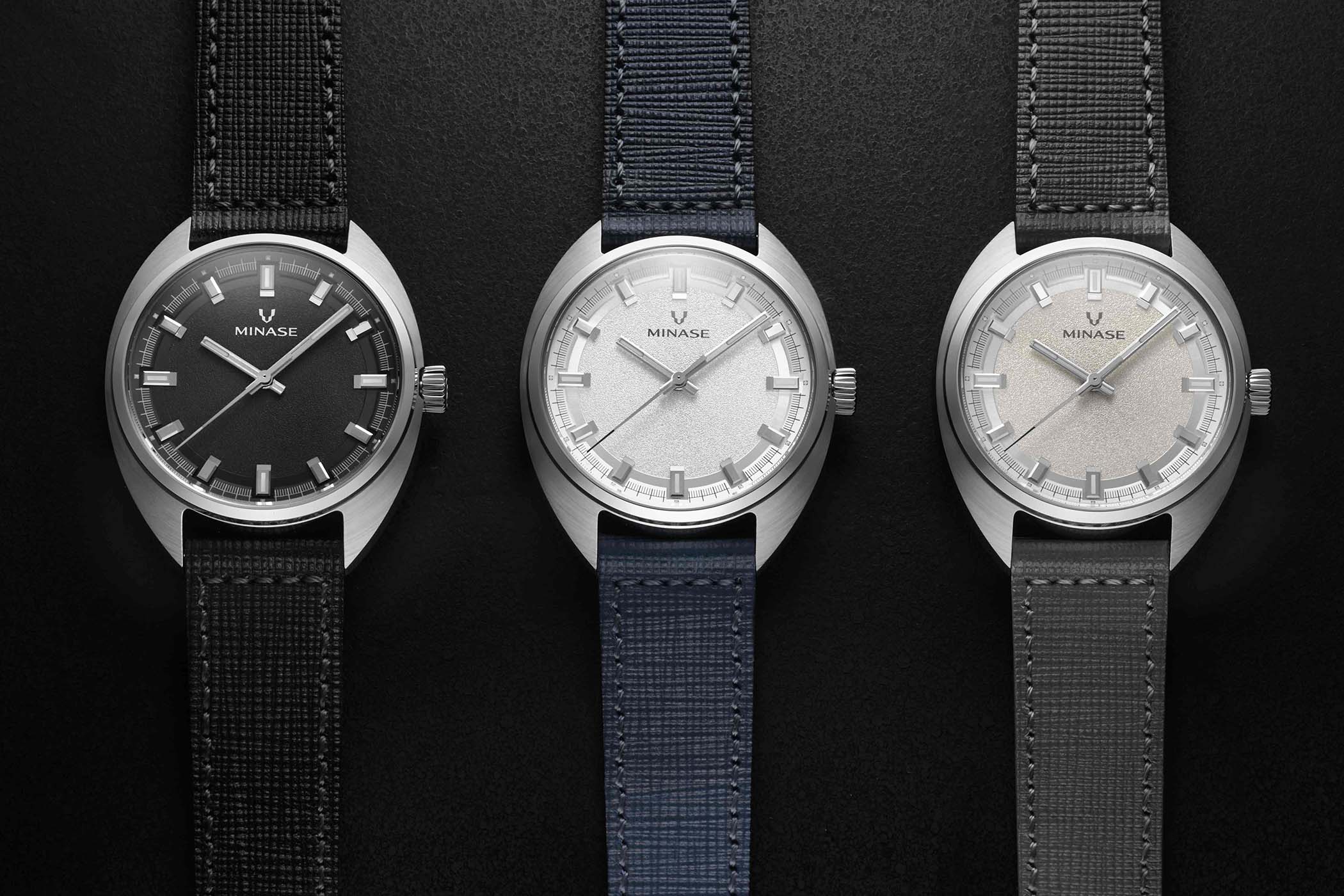
Minase is a watchmaker from Akita, Japan, best known for incredibly intricate multi-part steel cases with sapphire panels set into the sides that allow for an unusual look at the sides of their often three-dimensional dials. They also make the Mastercraft J3, their simplest watch. And at $2,050 it is also the cheapest. This new Mastercraft J3 gets a new case and it's also the Minase with a Japanese movement, which is interesting.
The steel case of the J3 is 37mm wide and 9.9mm thick. It is a smaller version of the M3, the tonneau-shaped model we've seen before. Minase calls the shape a cushion, but the profile is closer to a 1970s helmet case. The tops are brushed, and the bevels and round bezel get Sallaz polishing. Minase does this polish as well as anyone at this price. On top is a sapphire crystal, out back is a closed caseback and you get 50 meters of water resistance. I think 100 would have been kind of a necessity at this price point and with this style.
The dial come in white, beige or black, all with a sand texture. The indices and hands are applied, stepped and polished, with blue lume inside them. A raised chapter ring has cutouts where the rectangular indices sit.
Inside is the Miyota calibre 90S5, an automatic running at 4Hz with a 42-hour power reserve and hacking seconds. The original M3 used a Sellita SW200-1, chosen because a Swiss calibre carried weight with Japanese buyers. Switching to Miyota makes sense for a Japanese brand, and the 90S5’s slim build is the reason the case stays under 10mm. You get 10 strap options in total: three embossed calfskin, four textured leather, two rubber and a steel bracelet, all with quick-release fittings.
The Minase Mastercraft J3 is available for order now, priced at $2,050 on leather, $2,080 on rubber and $2,500 on the steel bracelet. See more photos here and the watches on the Minase website.
5/ Piaget Turns Warhol’s 1986 Camouflage Self-Portraits Into a Sodalite and Turquoise Dial
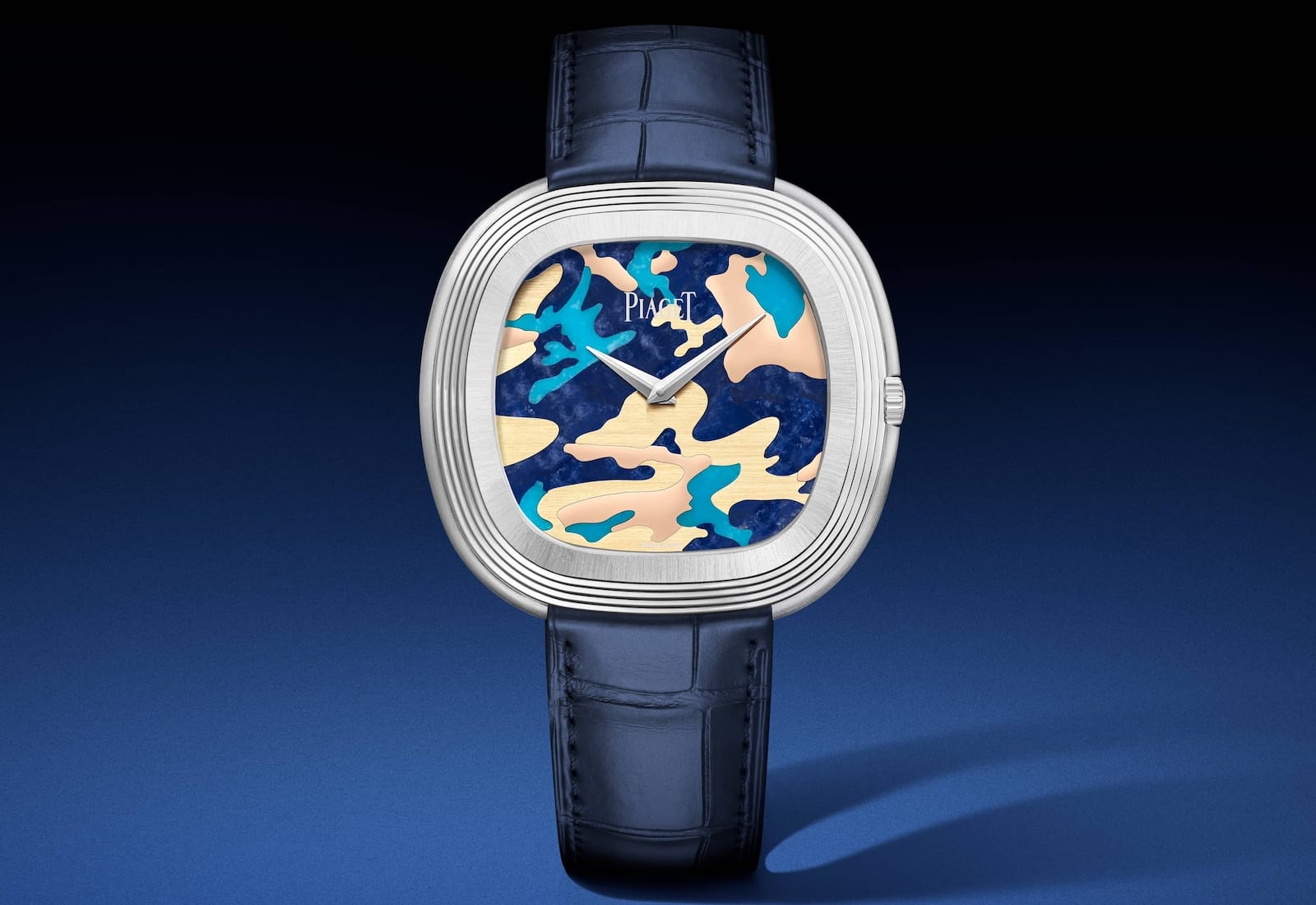
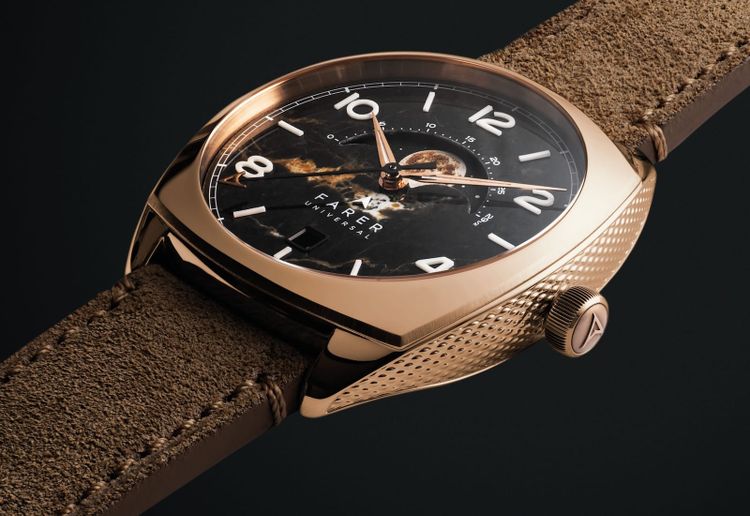
Piaget’s Andy Warhol Watch is based on reference 15102, a 45mm gadrooned cushion case Jean-Claude Gueit designed and Piaget made from 1972 to 1977. Warhol owned seven Piagets and bought this one in 1973, and it later picked up the nickname Black Tie. Piaget renamed it after him in 2024 with the Warhol Foundation’s approval and has released one new dial a year since: the hobnail Clou de Paris first, then the 2025 Collage in onyx, Namibian serpentine, pink opal and chrysoprase. This year’s Camouflage takes its pattern from the self-portraits Warhol painted in 1986, and it's very likely the best of the three.
The case remains unchanged. It is made out of 18k white gold, rhodium-plated, 45mm wide, 43mm tall and 8.08mm thick, with stepped gadroons along the sides and a crown set into the case band. A sapphire crystal sits on top, and the solid caseback is engraved with Warhol’s signature and the individual number. Water resistance is 30 meters.
The dial, a tribute to Warhol's camouflage collages, is a marquetry of 27 inlaid parts: dark sodalite, brighter turquoise, satin yellow gold and polished rose gold. There are no indices and no lume. Two polished dauphine hands, a logo above center and Swiss Made at 6 o’clock are the only additions. Reading the time to the minute is approximate, but that's how it's supposed to be.
Inside is Piaget calibre 501P1, an in-house automatic built from the ultra-thin manual-wind 430P. It measures 20.8mm across and 3.63mm thick, runs at 4Hz and has 40 hours of power reserve. The strap is blue alligator with a pin buckle.
The Piaget Andy Warhol Camouflage, reference G0A51242, is an edition of 86 numbered examples, matching the year of the self-portraits. It's priced at CHF 74,000. See more photos here and the watch on the Piaget website.
I write this newsletter on my own, and paid subscribers are what keep it running. If you'd like to support it, you'll also get The Caseback, a weekend magazine with longer writing, every Sunday.
⚙️Watch Worthy
⏲️End links
- London’s feral parakeets are an invasive species—but they are also beautiful, and David Wingrave takes the chance to linger on their nightly roost at Hither Green Cemetery before asking whether they should be here at all. As calls for culls grow—backed by fears of crop damage, disease, and pressure on native wildlife—he probes what we really know about the harm these birds cause. Along the way, he asks deeper questions: how we decide where an animal “belongs,” when (if ever) it becomes native, and why we are so uneasy about seeing bright green birds in London’s parks.
- We’ve all heard about Phineas Gage, the railroad worker who, in 1848, survived an accident that sent a metal rod through his skull, a brain injury that altered his personality in lasting ways. Sadie Dingfelder’s story of Edward Freytag is no less compelling: Following a motorcycle accident, Freytag discovered he could flawlessly identify and even visualize musical notes. Dingfelder’s account of Freytag, while succinct, is surprising, and given a lush animation treatment by artist Daniel Barreto that complements and elevates her narrative into a special experience. Not to be missed.
- Barbed and wire fencing covers hundreds of thousands of miles of the American West. It is highly effective, and can be unsparing. It is also costly—”$15,000 per mile or more to replace,” Kylie Mohr writes, a devastating expense for any rancher who may’ve lost miles of boundary during a wildfire. Mohr’s feature on the dawn of virtual fencing is a stimulating history of manmade borders and the inexpert ways in which they are deployed; it’s also an optimistic bit of technology reporting on an innovation that may prove wildly beneficial for ranchers and their herds.
👀Watch this
I have some niche interests in life, that's for sure. I also have some that are very weird. Like, for example, my obsession with Appalachia. I wish I could explain why I'm so interested in this part of the world that I've never been to, and likely never will go to, but it's just the way it is. So, let me share a bit of my fascination with it.
Thanks for reading
Vuk
P.S. If you have any questions, suggestions, gripes or anything else, just reply to this email. It comes straight to me and I try responding to everyone.
Subscribe to It's About Time to get daily watch news