- It's About Time
- Posts
- Tissot Revives The Classic Visiodate; Hamilton Brings Quartz To Two Sizes Of Jazzmaster; Squale Hits It Out Of The Park With A 37mm Diver; Dryden's Second Gen Chrono Diver; A Magnificent Sarpaneva
Tissot Revives The Classic Visiodate; Hamilton Brings Quartz To Two Sizes Of Jazzmaster; Squale Hits It Out Of The Park With A 37mm Diver; Dryden's Second Gen Chrono Diver; A Magnificent Sarpaneva
We're just months away from quartz being really cool again, I think

Vuk Radic
March 20, 2026
Sponsored by

Hey friends, welcome back to It’s About Time. It might fly a bit under your radar, but I think that Squale might be a legendary level release.
HELP RUN THIS NEWSLETTER
If you like this newsletter, and would like to support it, there’s two ways you can do it. First, the completely free one — just share it with your friends. That’s it.
However, if you would like to help me pay for all the services that are needed to run it, you can get a premium subscription, one that gets you a TON of extra content every week.
A paid subscription will get you:
the satisfaction of helping run your favorite watch newsletter
no ads
weekly Find Your Next Watch posts
early access to reviews
Watch School Wednesday posts
a look at watches you haven't seen before
historical deep dives
What Will Your Retirement Look Like?

Retirement looks different for everyone. What it costs, where the income comes from, how long it needs to last. Those answers are specific to you.
The Definitive Guide to Retirement Income helps investors with $1,000,000 or more work through the questions that matter and build a plan around the answers.
Download your free guide to start turning a savings number into an actual retirement income strategy.

In this issue
Tissot Revives The Classic Visiodate Collection With A Good Looking Trio
Hamilton Brings Quartz Movements To Two Sizes Of The Jazzmaster
Squale Hits It Out Of The Park With A Very Good Looking 37mm Diver
Dryden Presents The Second Generation Of Their Cool Chrono Diver Collection
Sarpaneva Is A Bit Late To The Year Of The Fire Horse Thing, But The Wait Was Certainly Worth It
👂What’s new
1/
Tissot Revives The Classic Visiodate Collection With A Good Looking Trio

Tissot introduced the Visodate in 1954, a year after the brand’s Centenary model became the first automatic watch to change the date instantaneously at midnight. Beating Rolex to the point, not that it matters. The name has been in the catalogue on and off since, and it carries real significance for Tissot specifically: the Le Locle brand has been making watches since 1853, and the Centenary and Visodate were imporatnt moments for the brand in terms of a technical jump. The most recent generation of the Visodate was a decent but unremarkable entry-level mechanical. For 2026, Tissot has taken the whole thing apart and started again, and the new version is a significantly better watch for it.
The new case measures 39mm wide and 10.45 mm thick, 1 mm narrower and 1.2 mm slimmer than before, and it shows. Straight lugs, a thin flat polished bezel, and a polished bevel running along the lug sides give the case a definition that the previous generation simply did not have. On top is a box-shaped sapphire crystal with AR coating, a conical crown, and a see-through caseback. Water resistance is 50 m.
The dial is the bigger change. The previous Visodate dial was flat and plain. This one has a pie-pan-like look, with a domed construction, combining circular and vertical brushing that shifts with the light, framed by an angled inner flange carrying the minutes and seconds track. Applied markers are polished and facetted, the new slimmer Dauphine hands carry Super-LumiNova, and small SLN dots sit next to each marker. The trapezoidal date window at 3 o’clock is framed by a thin line, a nod to the watch’s original purpose. Three versions are available: silver dial with gold-toned markers and hands on an embossed crocodile-pattern brown leather strap, and black or dark blue with silver markers and hands on a retro beads-of-rice steel bracelet.
The Powermatic 80 runs things inside, Tissot’s revision of the ETA 2824, running at 3 Hz with an 80-hour power reserve and a Nivachron balance spring for magnetic resistance.
The new Tissot Visodate is available now as part of the permanent collection. The silver dial on leather strap is €795, and the black and blue dial versions on beads-of-rice bracelet are €875 each. See more on the Tissot website.
2/
Hamilton Brings Quartz Movements To Two Sizes Of The Jazzmaster
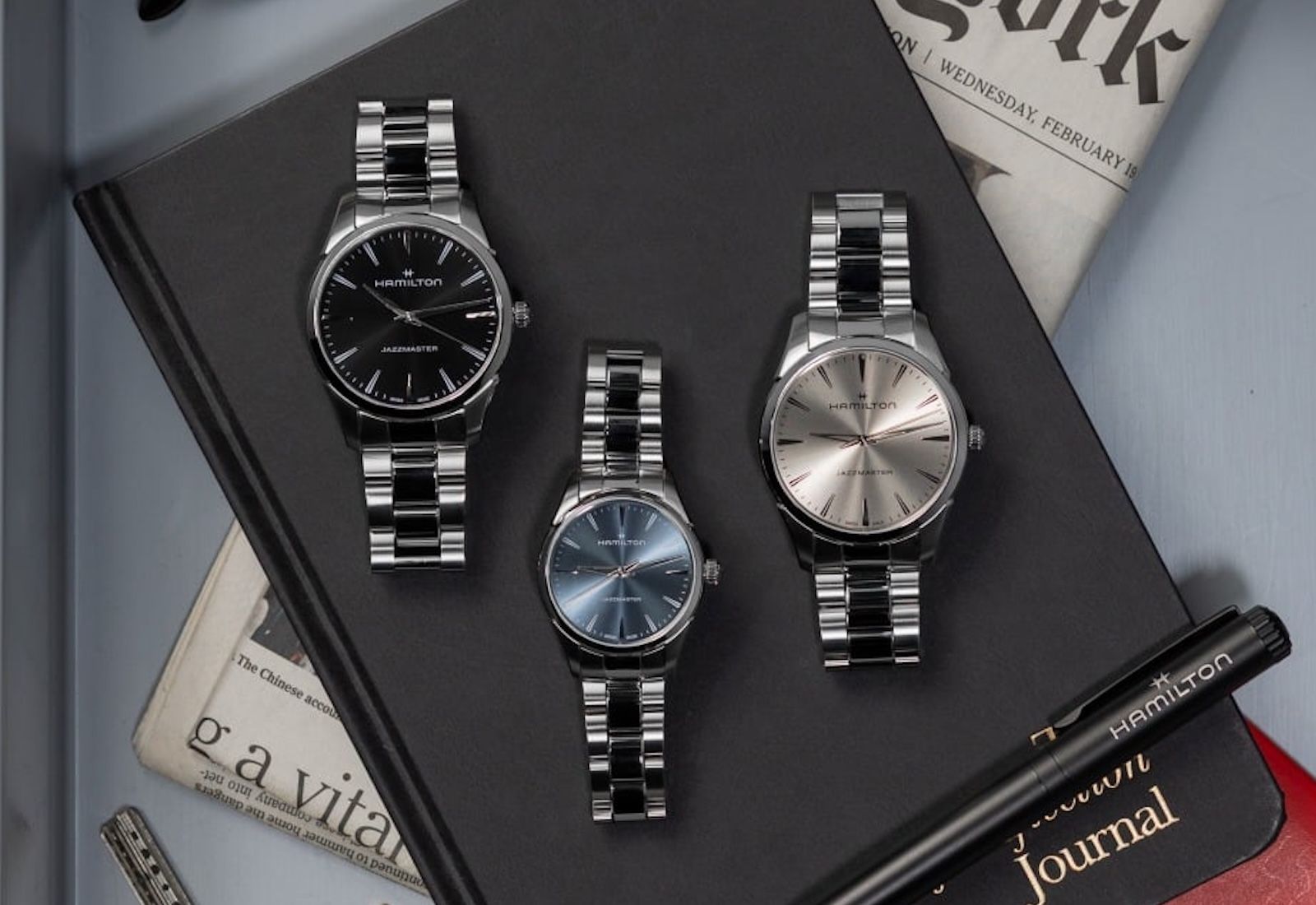
Quartz has spent the better part of three decades being dismissed by watch enthusiasts, but something has been shifting lately. Younger buyers are less bothered by the movement debate, and brands are starting to lean back into quartz. At least I hope they are. I wish they would stop treating quartz as a budget fallback and embrace its advantages. I’m not sure that the new Hamilton Jazzmaster Quartz is that, but it might be a step in the right direction, with eight new references across two sizes and six dial colours and a great price.
The watches come in two case sizes — 40mm and 32mm, both at a notably slim 7.8 mm thickness, in stainless steel with horizontal and vertical brushing, and polished chamfers. inishing is on par with a Hamilton watch, but at a more accessible price. I kind of which that it was 32 and 38mm, especially since the expansive sapphire crystal and thin bezel make the watch look larger than it actually is. Water resistance could also be a bit better than the 50 meters you get.
Six dial colours run across the two sizes: black, silver, Arctic Dawn Blue, mint green, and beige on the 40 mm; Arctic Dawn Blue, turquoise, pink, and silver on the 32 mm. All have a sunray-brushed finish. Time is indicated with skeletonised dauphine hands pointing to applied and printed indices. Some people will want a date aperture, but I think the dials look great without.
Inside, you’ll find a Swatch Group quartz movement, but I can’t exactly figure out which one it is. You’ll just know it works. Both sizes come on a three-row steel bracelet with butterfly clasps.
The new Hamilton Jazzmaster Quartz collection in 32 and 40mm is available now, with price set at CHF 395. See more on the Hamilton website.
3/
Squale Hits It Out Of The Park With A Very Good Looking 37mm Diver
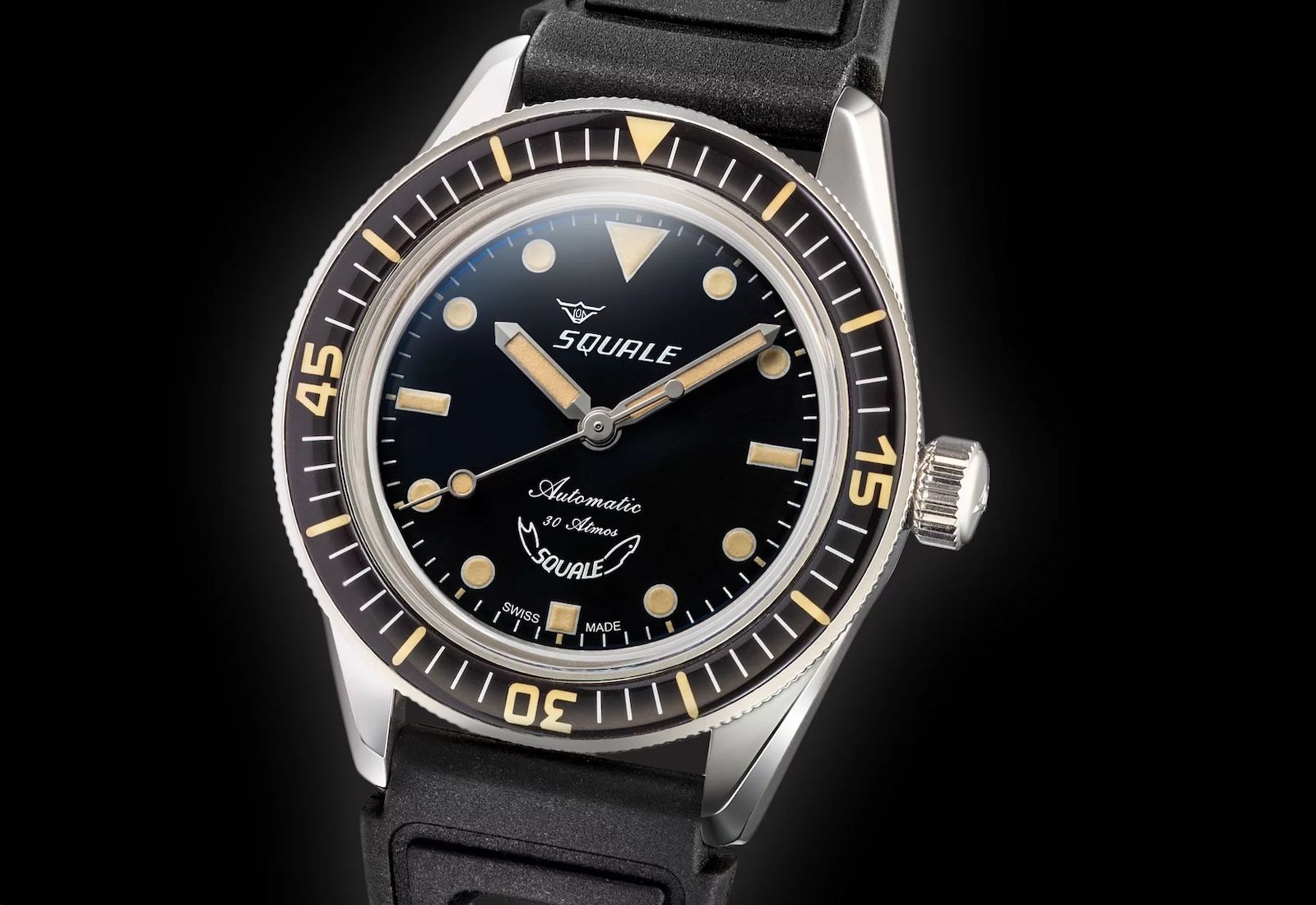
Squale started out as a case manufacturer supplying other brands before eventually putting its own name on the dial. That history gives the company a credible claim to knowing what a properly built dive case looks and feels like. It also makes the SUB-37 Legend particularly interesting in context: in a market saturated with 42 mm and 44 mm divers, a 37 mm watch with 300 m water resistance and serious dive credentials is a genuine rarity, and Squale is one of the few brands with the pedigree to pull it off convincingly.
The case measures 37mm wide, 10.7mm thick without the crystal and 12.6mm with it. The bezel sits at 38.5mm wide, slightly wider than the case itself, has 120 unidirectional clicks and has a K1 glass insert to give it a vintage, bakelite-like, look. The case is made out of stainless steel, overall brushed with polished bevels along the lug flanks that widen outward. On top is a box-shaped crystal, out back is a solid caseback and on the side is an unprotected screw-down crown that gives you the 300 meters of water resistance.
The deep black dial is classic functional diver: a mix of round and straight hour markers, triangle at 12, and pencil hands, all filled with Super-LumiNova Old Radium lume for a fauxtina look. Two Squale logos appear on the dial — the main wordmark at 12 and the shark at 6, the latter a holdover from the brand’s case-making era when the Squale name identified the case manufacturer rather than the watchmaker. Also, one of the best logs in the industry.
Inside, you’ll find the Sellita SW200-1 automatic beating at 4Hz, with a 40-ish hour power reserve. The watch ships on a Bonetto strap in black Italian vulcanised rubber with a steel pin buckle.
The new Squale SUB-37 Legend is available now, priced at €1,650. See more on the Squale website.
4/
Dryden Presents The Second Generation Of Their Cool Chrono Diver Collection

Dryden Watch Co’s Chrono Diver Gen 2 takes the formula from Gen 1 — solid spec, accessible price — and gives it a more convincing 1970s vibe through case revisions and dial tones that feel authentically period-worn. Recessed pushers, solid end-links on the new tapered five-link bracelet, and muted colour combos replace the brighter first-gen approach without sacrificing modern reliability.
The case keeps the width of the original, and the measurements are quite straightforward — 42mm wide, 13.5mm thick, with a 49mm lug-to-lug. Not great, but also not terrible. The one thing that I would love to see improved is that thickness, especially when you find out what movement is inside. On top is a double domed sapphire crystal with internal anti-reflective coating, surrounded by a unidirectional bezel has 120 clicks and a stainless steel insert in either black or blue, depending on the variant. There’s also the PVD Vintage model that coats the entire case and bracelet in black PVD. The pushers are slightly recessed, the crown screws down and you get 100 meters of water resistance.
Three dial options are available. The Black Vintage and PVD Vintage have light yellow indices and hands over black dials with white chrono subdials. The Blue Panda swaps to a white dial and hands with a blue bezel and blue subdials. All use BGW9 and Old Radium Super-LumiNova for legibility, and the overall effect is subtle and period-mimicking, without looking too gimmicky.
Inside, you’ll find the Seiko VK63 mecha-quartz movement powers the chronograph, with a 3-year battery life. You know what that gets you — a quartz time telling movement, a mechanical chronograph, and that freaking useless stupid 24 hour scale at 3 o’clock. The watches come on a tapered five-link steel bracelet, with on-the-fly micro adjust on the bracelet.
The Chrono Diver Gen 2 is available now, with the Blue Panda and Black Vintage models retailing for $450, while the PVD Vintage goes for $475. See more on Dryden’s website.
5/
Sarpaneva Is A Bit Late To The Year Of The Fire Horse Thing, But The Wait Was Certainly Worth It
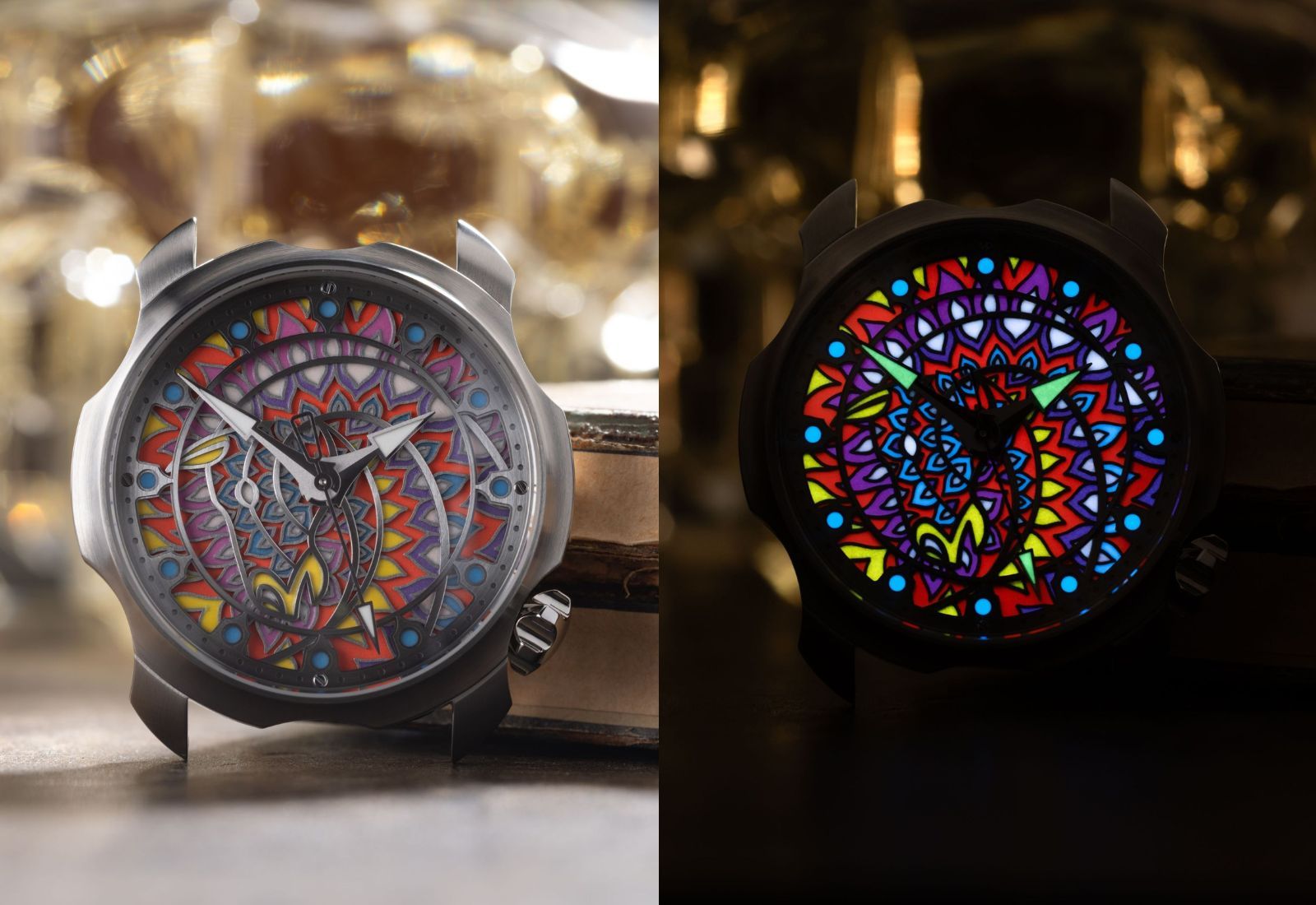
Sarpaneva watches have always had a certain glow about them. It is the lume play that sets them apart from the pack. Hand-applied Swiss Super-LumiNova in multiple colours on multi-part dials produces a slow-burning, hypnotic effect in the dark, and it is one of the most distinctive visual signatures in independent watchmaking. Now, this might a bit late, as all the major brands released their watches celebrating the Chinese Year of the Horse, but if your watch looks as good as the Sarpaneva Firehorse, you can release it whenever you damn please.
The case is Sarpaneva’s signature Korona shape in high-grade Outokumpu SUPRA 316L/4435 stainless steel from Finland, brushed and polished. It looks like a huge case, but it’s not that humongous. It measures 42mm wide, 11.4mm thick and thanks to the almost pagoda-like lugs, it has a 46mm lug-to-lug. You get sapphire crystals on top and bottom, and the crown is positioned at 4 o’clock. Since that screws-down, you get 100 meters of water resistance.
The dial is a 5-part stainless steel construction, hand-finished and hand-painted with Swiss Super-LumiNova. Each Firehorse dial is unique, shaped by hand with a pattern made out of a possible eight available Super-LumiNova colours. Two-tone steel hands also carry the lume. The overall effect is textures that shift in light and a slow, steady glow in darkness, like fire breathing beneath the surface. I love these so much!
The movement is a modified Chronode P1003 automatic that beats at 4 Hz and has a 60-hour power reserve. The movement looks good, rhodium-plated with matt finishing. The Sarpaneva Moonface rotor uses a ceramic ball bearing. The watch comes on a handmade Sarpaneva Epsom leather strap at 22 mm lug width with an 18 mm stainless steel pin buckle and for an additional €2,500 (without VAT), you can get the brand’s Moonbridge steel bracelet.
The new Sarpaneva Firehorse is technically not a limited edition, but every piece is made to order and will be fully unique. Price is set at €18,500, without taxes. See more on the Sarpaneva website.
⚙️Watch Worthy
A selection of reviews and first looks from around the web
⏲️End links
A bunch of links that might or might not have something to do with watches. One thing’s for sure - they’re interesting
This article that claims to undeniably confirm Banksy’s identity is very well written, incredibly researched around the globe and laid out beautifully. But I’m not sure it should exist. Not because we should protect Banksy’s identity — it was pretty certain that Robin Gunningham was him for decades now — but because it shouldn’t matter who Banksy is at all. Despite that, it’s a great read.
As anyone who has ever loved a dog knows, they age too soon. Prepare some tissues for Blair Braverman’s moving essay for The New York Times Magazine. Braverman, after many years a successful musher, is retiring, and has rehomed her remaining sled dogs. In meeting the members of her pack, you’ll feel her deep love and respect for every dog and its singular contribution to the sled team. This is a beautiful story of teamwork and friendship forged in the harshest conditions this planet has to offer.
Did you watch any online videos today? Anything on YouTube, TikTok, Instagram? How about television? The news? A reality show? If the answer to any of these is yes, you’re more familiar with “sync music” than you realize. But that’s not the same as knowing anything about it; for that, Ryan Francis Bradley takes you down the rabbit hole, and into the part of the music industry that’s as massive as it is hidden.
👀Watch this
One video you have to watch today
I’m a bit skeptical about the Project Hail Mary movie, mostly because I can’t stand Ryan Gosling, but also because it’s such a good book. But the behind the scenes with Adam Savage are freaking cool.
What did you think of this newsletterYour feedback will make future issues better |
Thanks for reading,
Vuk
Reply