- It's About Time
- Posts
- Farer Proves Red, Green And Gold Is A Timeless Combo; Orient Star's Handwound Moon Phase Duo; Timex Revives Obscure Pulp Fiction Q; AP Puts Their QP Into Three New Watches And Updates The Overseas
Farer Proves Red, Green And Gold Is A Timeless Combo; Orient Star's Handwound Moon Phase Duo; Timex Revives Obscure Pulp Fiction Q; AP Puts Their QP Into Three New Watches And Updates The Overseas
You learn something new every day. Like, for example, what watch Vincent Vega wore.

Vuk Radic
February 05, 2026
Hey friends, welcome back to It’s About Time. I feel like Farer was in a bit of a slump lately, but I’m happy to see them come back to what they do best.
HELP RUN THIS NEWSLETTER
If you like this newsletter, and would like to support it, there’s two ways you can do it. First, the completely free one — just share it with your friends. That’s it.
However, if you would like to help me pay for all the services that are needed to run it, you can get a premium subscription, one that gets you a TON of extra content every week.
A paid subscription will get you:
In this issue
👂What’s new
1/
Farer’s Already Spectacular World Timer Gets Even Better Red, Green And Gold Colorways
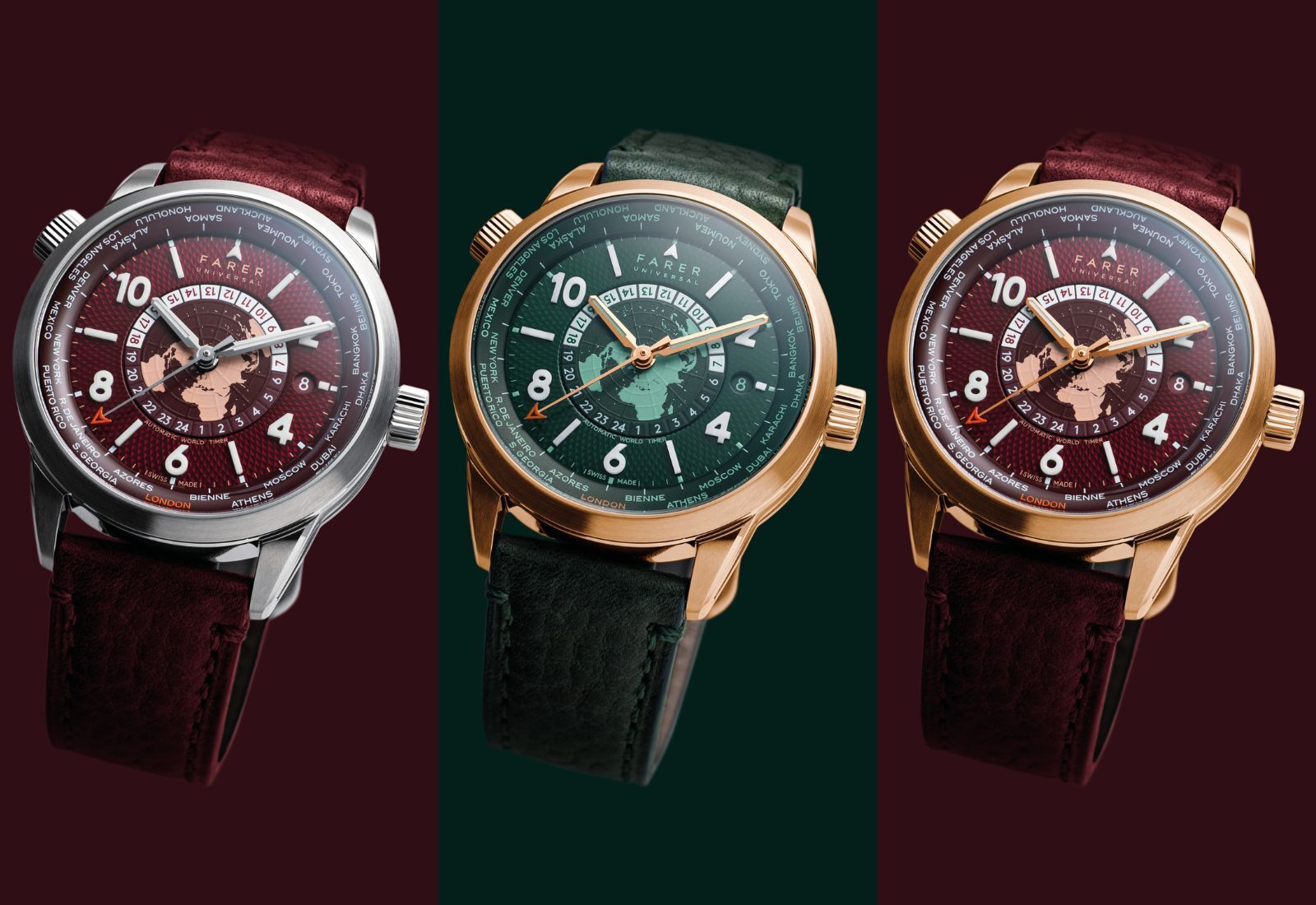
There are very few, if any, watch brands that can match Farer when it comes to the use of color. But is it just me or have the last few releases from them been a bit conservative, with more whites, blacks and grays? Whether it’s reality or in my head, Farer seems to go back to what we know them for best — awesome colors. Two years ago, they revived one of their best watches, the World Timer. Now, they’re rendering them in some very classic colors — a deep green and deep red — paired with silver or gold colored cases.
Outside, the watch remains the same. It still measures 39mm wide, a great 11mm thick and has a very comfortable lug-to-lug of 45mm. The case is made out of stainless steel with a combination of brushed, polished and media-blasted finishes. The case has indents on both sides where you’ll find the blasted finish, the bezel and lug chamfers are polished, while the rest is brushed. There are two versions available — an untreated silver one and one that gets a gold colored PVD treatment. On top is a domed sapphire crystal, out back is a flat one and water resistance is 100 meters.
All three dials have the same setup, just differ in colors. You can get a deep and beautiful red dial with a gold or a silver colored case, while the deep green dial is classically paired with a gold colored case. The gold colored cases also get gold colored hardware. The rest is very familiar from the latest World Timer update. Around the dial is a bezel that features 24 global cities and it’s paired with an internal 24-hour scale on the dial which is operated with the primary crown. You use the secondary crown to set the primary city on the bezel and then don’t touch that, instead relying on the internal rotating ring which matches up with the cities on the bezel. Sounds complicated, but actually works pretty simple. Especially when you realise that what looks like a GMT hand, with it’s prominent arrow on top, is not the GMT hand but instead a seconds hand. On the 24 city bezel Paris has been replaced with Bienne, the birth place of the world time complication.
Inside is the a modified version of the Sellita SW331-2 Elaboré that Sellita makes for Farer. They change the GMT hand for the rotating 24-hour complication. They also upgrade the mainspring which ups the power reserve to 56 hours. The watches come on great looking leather straps in a variety of colors.
The new Farer World Timers are available for purchase right now on Farer’s website with a price of £1,525 (€1,725 / $1,715). See more on the Farer website.
2/
Orient Star Introduces A White And Grey M45 F8 Mechanical Moon Phase Hand Winding
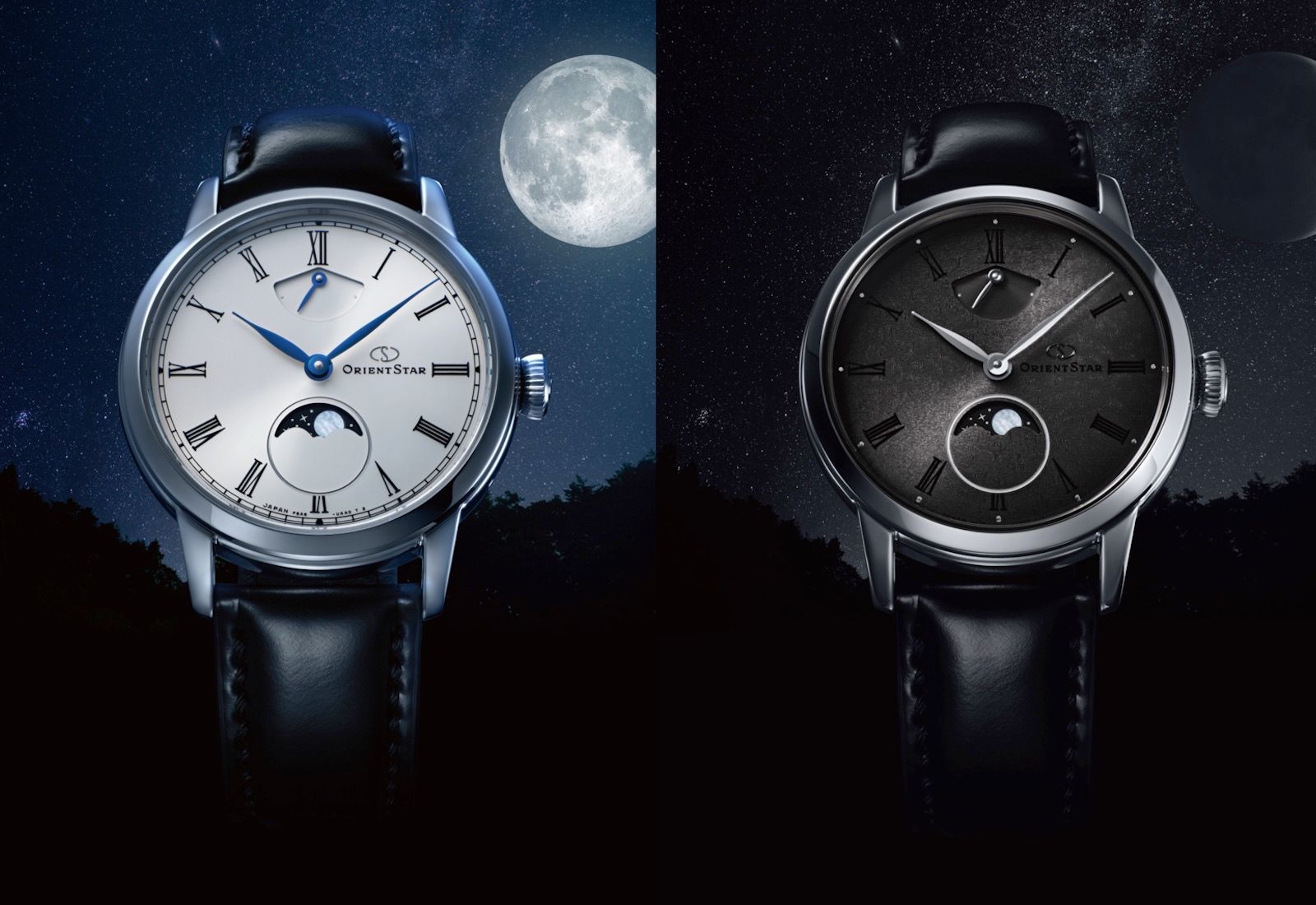
Ah yes, here we are, back with Orient Star. Both Orient and their higher-end Orient Star (think Seiko and Grand Seiko) have been fan favorites for decades now, but the brands have also done everything in their power to make it as difficult to learn about them or even buy their watches as possible. For example, they have a brand new moonphase complication on their M45 watch, but for the life of me I can’t figure out where you can buy it and for how much money. To spoil the ending, I did find where you can get one and for how much, but it sure wasn’t easy. And I’m not sure you’re going to like it. These are the new Orient Star M45 F8 Mechanical Moon Phase Hand Winding, available in white and a grey limited edition.
Previous versions of the Orient Star M45 came in cases that were just too large in either way for what they were trying to be — a slightly complicated dress watch. This one, however, does it a bit better. The stainless steel case measures 39.5mm wide, 11.9mm thick, with a 46.7mm lug-to-lug. It’s a simple case with a brushed finish and a slightly oversized crown. On top and out back are sapphire crystals and water resistance is pretty bad at 30 meters.
There are two dial options available — a white dial that is part of the regular collection and a grey dial with a gradient and brushing mimicking the Pleiades star cluster which is limited to 140 pieces. Both versions come with black Roman numerals, which looks very cool on the grey dial, and while the white version features a railroad minute track, the grey one has polished steel dots. Both versions also feature moonphase indicators at 6 o’clock, with mother-of-pearl moons, with a blue background on the white and a black background on the grey. Both versions also feature a power reserve indicator at 12.
Inside, you’ll find an in-house movement the brand calls the caliber F8A62. It’s hand wound, has a pretty great 70-hour power reserve and features a silicon escape wheel. It’s actually decently accurate at +15/-5 seconds per day. The watches come on a black 20mm-wide cordovan strap closed with a triple-fold steel clasp.
Now, for where you can buy the watch. The only semi-functional Orient Star website, at least for me, seems to be the Orient UK one, and you can buy it from there. That is, if you’re ready to shell out £2,699.99 for the white one and £2,799.99 for the grey one, which is limited to 140 pieces. That translates to about €3,121 and €3,237, which quite the price for an Orient Star. Not sure what to say about that. You can see the white one here and the grey one here.
3/
The Timex Q Timex Red Vega 1978 Reissue Brings Back A Little Known Watch From A Tarantino Classic

Pulp Fiction has one of the all-time watch moments in movies. Not only does a major part of the plot hang on Butch Coolidge, played by Bruce Willis, going back to get his father’s watch, the watch is part of an incredible story told by Christopher Walken. You know the story. Walken plays Captain Koons who was captured in Vietnam with Coolidge’s father. For years, the two men hid a wristwatch up their asses, and Koons promised Coolidge that he would get the watch to his son. However, there was another watch in that movie that went way under the radar. I’ve seen the movie dozens of times and I only just now realized that Vincent Vega, played by John Travolta, also wore a watch. One that wasn’t exactly highlighted in the movie. As it turns out, the watch (best seen in the scene in the car in which Vega accidentally blows Marvin’s face off), was the Q Timex Red Nebula, a very cool Timex from 1978. Now, that exact watch, is subject to Timex’s epic run of vintage re-releases. This is the new Q Timex Red Vega 1978 Reissue.
The watch comes in a simple case that’s made out of stainless steel with brushed surfaces and epically cool polished areas on the lugs. It measures 38mm wide and 11mm thick. But most interesting on the outside of the watch is an acrylic crystal, replacing an expected mineral glass one. That isn’t that impressive by itself, of course. What makes it impressive is the fantastic faceted square shape of it, paying homage to similar faceted crystals of the 1970s. Water resistance is 50 meters.
The dial is a direct quote of the original release, with an incredible black and red marbling, unlike anything you’ve likely seen up close. At 3 o’clock is a framed day and date aperture. The indexes are applied with lume strips down the middle, the same finish that can be found on the hour and minute hands. Inside, you’ll find an unnamed quartz movement, which works just fine here, and the watch comes on a black leather strap that.
The new Q Timex Red Vega 1978 Reissue is available now, priced at a pretty fantastic €209. See more on the Timex website.
4/
AP Places Its Very Cool New Perpetual Calendar Into Three New Watches, Now With An Openworked Version

About this time last year, Audemars Piguet had another one of these release barrages in which they introduced a bunch of new models. Among them was a new perpetual calendar movement which was absolutely delightful. It was the Caliber 7138, a shockingly complicated movement that was an automatic, measured just 4.1mm thick, featured a perpetual calendar and a moon phase indicator, and, most impressively, didn’t use any corrective pushers — everything was operated through the crown. Now, AP is putting that movement into a “Bleu Nuit, Nuage 50" ceramic case, and releasing the Caliber 7139, an openworked version of the same movement.
Starting with the familiar movement, it now comes in a 41mm wide and 9.5mm thick deep blue ceramic case with a matching blue ceramic bracelet, both of which AP still calls “Bleu Nuit, Nuage 50”. Water resistance is 50 meters. On the dial side you get a matching blue Grande Tapisserie, with a blue inner bezel and blue sub-dials. That’s paired with white gold hour markers and hands, filled with lume, and at 6 o’clock is a moon-phase display with the realistic moon they introduced last year. The Calibre 7138 is seriously cool. Previous movements delegated some of the time setting functionality to pushers on the case. This new movement operates from an all-in-one crown, allowing AP to increase water resistance from 20 to 50 meters. To set the watch, the crown has four positions. Position one is used to wind the watch. Position two sets the date in the clockwise direction, and adjusts the month and leap year in the opposite direction. Position three sets the time. However, to get to position four, you push the crown back to position two, which then allows you to set the day and week clockwise, and the moon phases counterclockwise. The movement beats at 4Hz, with a 55 hour power reserve. The Royal Oak Perpetual Calendar in “Bleu Nuit, Nuage 50” Ceramic doesn’t seem to be a limited edition and it’s priced at CHF 133,900. See it here.
Then we have the two openworked versions that use the Calibre 7139. First is the Code 11.59 which measures 41mm wide and 10.6mm thick, with a case made out of 18k white gold, with a black ceramic middle. The case is polished and satin-brushed, with a double domed sapphire crystal on top and a transparent caseback. Water resistance is 30 meters. There’s no dial. Instead you get a sapphire crystal that exposes the movement, with sub-dials that have smoked outer rings. Just like the 7138, the 7139 has the same cool setting mechanism, same beat rate and power reserve, but now with hand-finished openworked bridges. The watch comes on a black alligator strap with a white gold folding clasp. Price is set at CHF 118,000. See it here.
Last, we have the same openworked movement in the Royal Oak case, but now made out of titanium paired with bezel, caseback frame and bracelet studs made out of Bulk Metallic Glass (BMG), a palladium-rich alloy that can be mirror polished. The case measures 41mm wide and 9.5mm thick. The watch gets one major improvement, and that’s a bump up in water resistance to 50 meters. Which is decent for a perpetual calendar. The dial gets the same treatment as the Code 11.59, with smoked sub-dials, paired with pink gold hour markers and hands. Inside is the same movement, with a pink gold openworked oscillating weight, barrel bridge and balance bridge. Price is set at CHF 180,300. See more on the Audemars Piguet website.
5/
AP Updates The Royal Oak Offshore Divers And Offshore Selfwinding Chronographs In Ceramic And Titanium
Say what you will, but I love the Royal Oak Offshore. I like it even more than the regular Royal Oak. It’s one of the watches that marked my favorite watch decade — the 1990s. It was also worn by Arnold Schwarzenegger in the still-very-cool movie End of Days. During their major release event on Tuesday, Audemaris Piguet introduced a bunch of new Offshore models, in both the Diver and the Chronograph configurations. Sure, these are just new colors to already familiar models, but it still makes me smile to see the Royal Oak Offshore be kept alive.
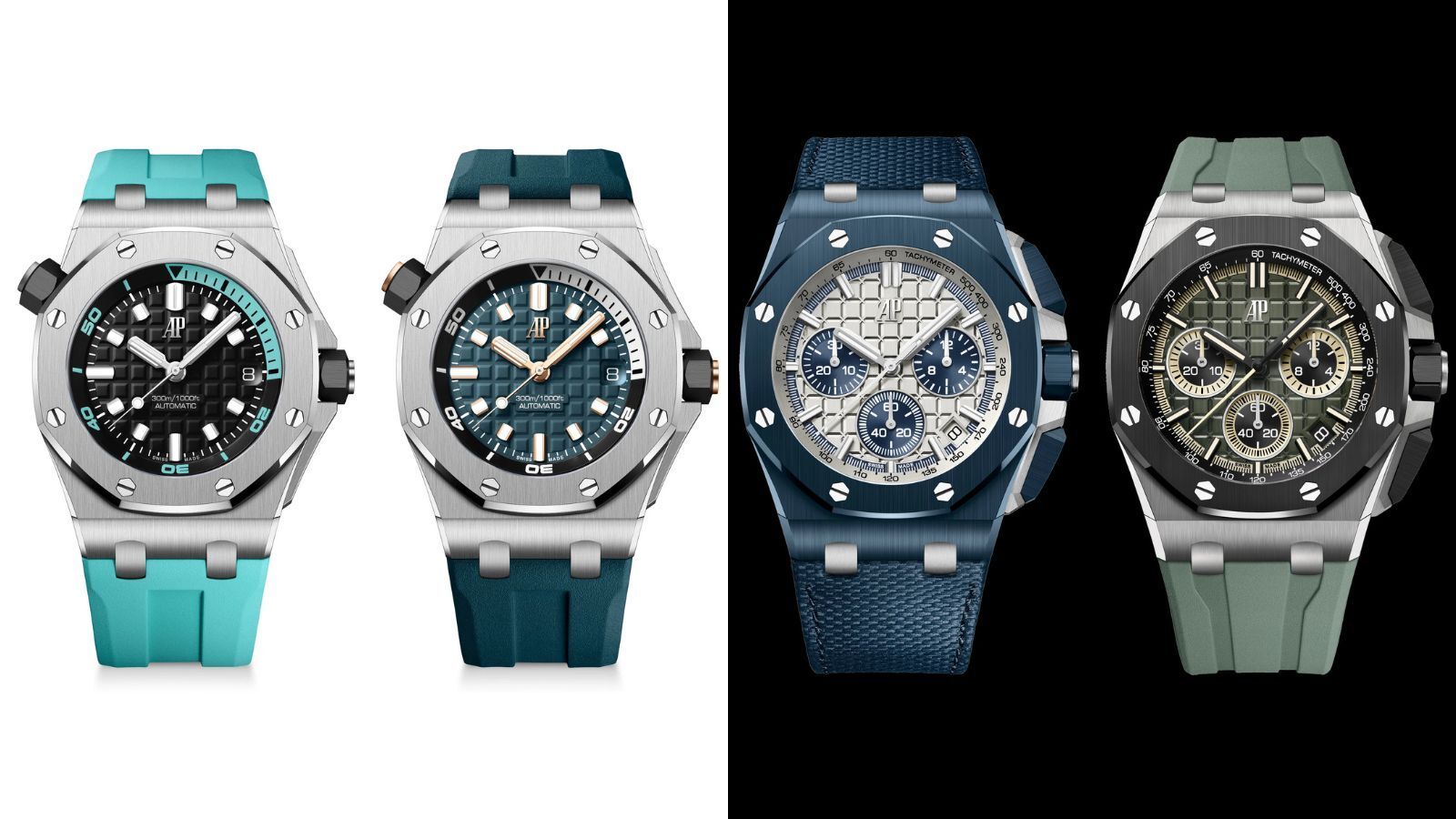
Starting with the simpler of the two models, we have the new variants of the Royal Oak Offshore Diver, a model that took almost two decades to be added to the lineup alongside the Chronograph. It was first introduced in 2010, significantly updated in 2021, and now we’re getting three new colors. On the outside, not much has changed. The case is still made out of stainless steel, measuring a hefty 42mm wide and 14.2mm thick. The octagonal bezel is brushed, with polished screws, and you get two black ceramic crowns — the one at 3 o’clock to set the time and the one at 10 o’clock to operate the internal bezel. Water resistance is 300 meters.
Three dials are available. Two of them have a black Méga Tapisserie patterned base, one with turquoise details on the bezel numerals and the first 15 minutes, and the other with a hot pink. The third has a dark blue Méga Tapisserie dial, with white lumed details on the bezel and pink gold tips of the two crowns, indices, and hands. A good look. All three have a date aperture at 3 o’clock, with a good looking magnifying cyclops above. Inside all three you’ll find the in-house automatic calibre 4308 which beats at 4Hz and has a 60-hour power reserve. Decorations include Geneva stripes, circular graining and bevelled edges, while the 22k pink gold rotor is blackened. The watches come on color matched rubber straps that have a quick-release system. Price remains the same as previous versions, €30,100. See more here.
Then, we have the new additions to the Royal Oak Offshore Selfwinding Chronograph collection, one in ceramic and one in titanium. Both versions measure 43mm wide and 14.4mm thick, with a screw down crown and integrated ceramic pushers. Water resistance is 100 meters and there’s a date aperture at 4:30. Both also have the calibre 4401 inside, a integrated flyback chronograph with a column wheel and vertical clutch beating at 4Hz and with a 70 hour power reserve.
But that’s where the similarities stop. One comes in a satin brushed and polished ceramic case, one that’s very blue and, just like the one above it, called the “Bleu Nuit, Nuage 50” ceramic. That’s paired with a titanium elements on the case. The dial also has a Méga Tapisserie base, but here in a beautifully contrasting beige with blue subdials, a beige inner bezel with a tachymeter scale, and rhodium-plated pink gold hour markers and white gold hands. The other model is made out of titanium, with black ceramic pushers, octagonal bezel, and crown. That is paired with a fantastic looking smoked green PVD Méga Tapisserie dial with black sub-dials and blackened white gold hands and hour markers with beige lume inside.
The new Royal Oak Offshore Chronograph models are available now, priced at CHF 36,800 in titanium and CHF 50,900 in ceramic. See more on the Audemars Piguet website.
⚙️Watch Worthy
A selection of reviews and first looks from around the web
FOR WATCH CLUB MEMBERS Watches You Might Not Have Seen, Week 62: The Gruen Electronic Jump Hour Explained
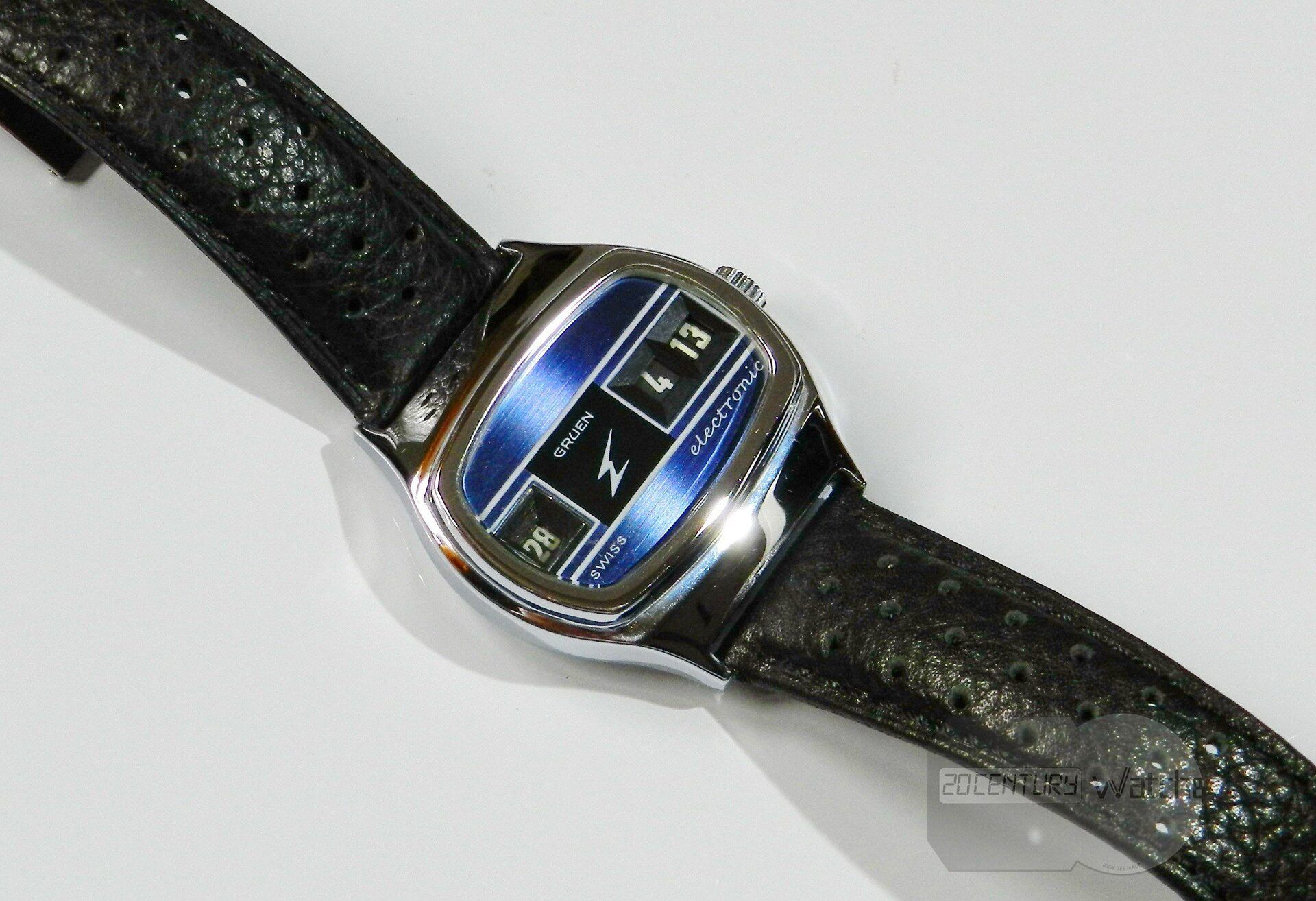
Inside the 1970s hybrid that made mechanical time look digital. Read it here.
⏲️End links
A bunch of links that might or might not have something to do with watches. One thing’s for sure - they’re interesting
Would you get in a jacuzzi after you know people regularly throw up in it? In the name of reporting, Emily Stewart does. In this Business Insider piece, Stewart documents her experience on a cruise. While the topic isn’t new, her angle is: she finds the whole thing distinctly mediocre. She neither trashes the trip nor gushes over it, and mostly has a generally all-right time. We rarely admit that things are just okay — although that is often the simple truth. It’s a refreshing take.
Over the past two decades, we’ve seen private equity firms decimate the local news landscape through holding companies like GateHouse Media and Gannett. But the private-equity playbook isn’t the only way to gut a newspaper. For CJR, Lois Parshley looks at Carpenter Media, which has gobbled up more than 250 papers in North America, and systematically starved many of them of crucial resources.
Yewande Komolafe, a cooking columnist for The New York Times, was born with a blood disorder. In late 2023, she was hospitalized; since then, medical treatments, including losing her limbs, have profoundly changed her relationship to her body and, by extension, to her cooking practice, an evolution she recounts in this short, measured essay.
👀Watch this
One video you have to watch today
Who would have thought that Rage Against the Machine would be more relevant today than it ever was. Here’s a throwback to their set at the wildest music festival of all time.
What did you think of this newsletterYour feedback will make future issues better |
Thanks for reading,
Vuk
Reply