Omega Releases A Bond Watch For The Villain In Your Life; Skulls On Your Mido; And New From Sinn, LV And Grönefeld

Hey friends, welcome back to It’s About Time. Gee, Omega, thanks for all the comment fodder you give us. Can't wait to see the reactions to this one. Oh, and a couple of you asked me if I could extend the paid subscription discount until the end of this week, so, sure!
THIS IS SUPER IMPORTANT! Ever since I moved to this new platform, deliverability of emails has been so-so. Some are delivered to a lot of inboxes, some are routed to people's promotions tabs. In case you haven't been getting your emails, check the promotions or junk folders and move it to the primary. That way you'll always get it.
I write this newsletter on my own, and paid subscribers are what keep it running. If you'd like to support it, you'll also get The Caseback, a weekend magazine with longer writing, every Sunday.
The paid subscription is discounted for just a few more days, so get it now.
👂What’s new
1/ Omega Releases The Seamaster Diver 300M James Bond And Spectre Collection
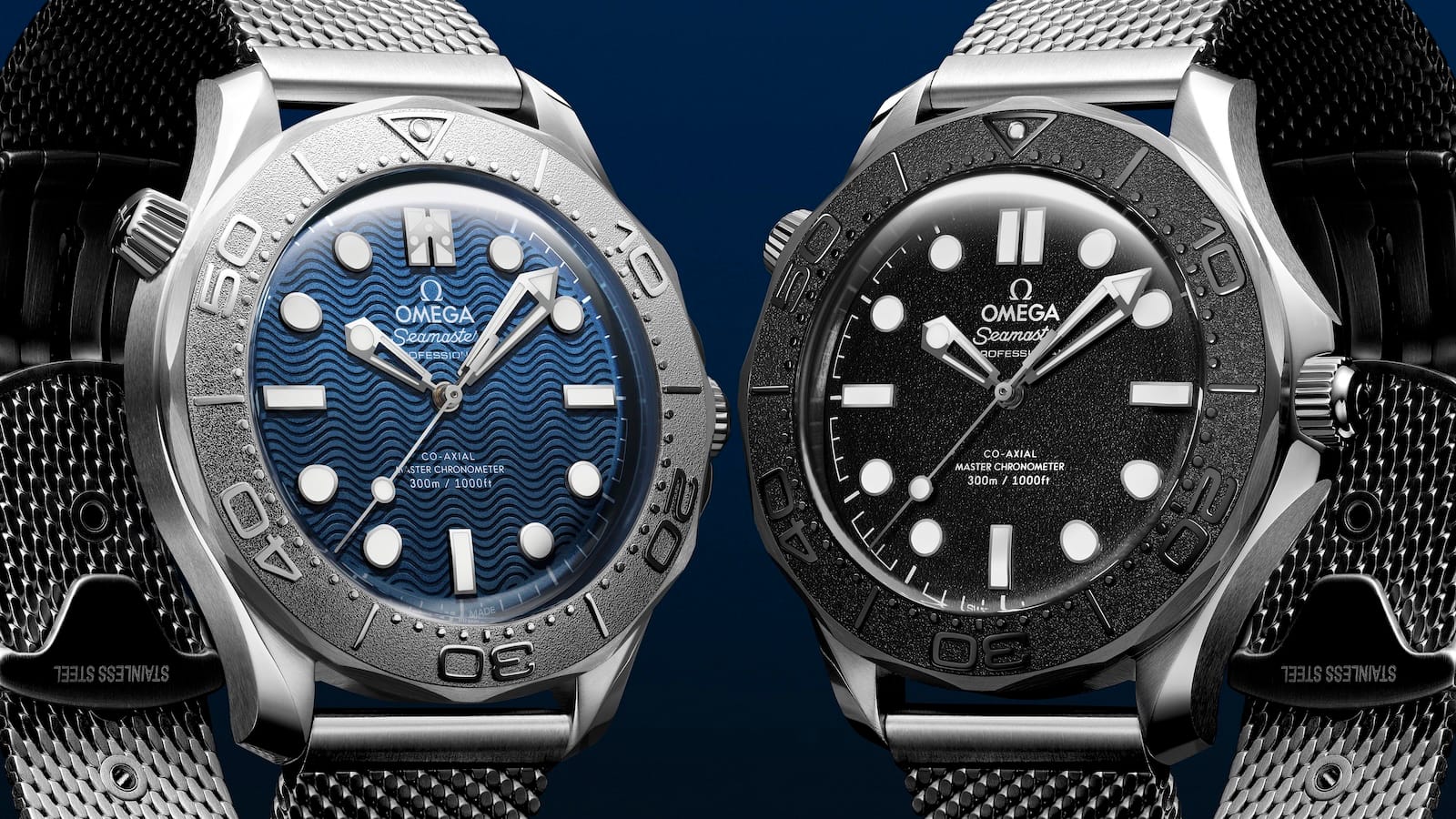
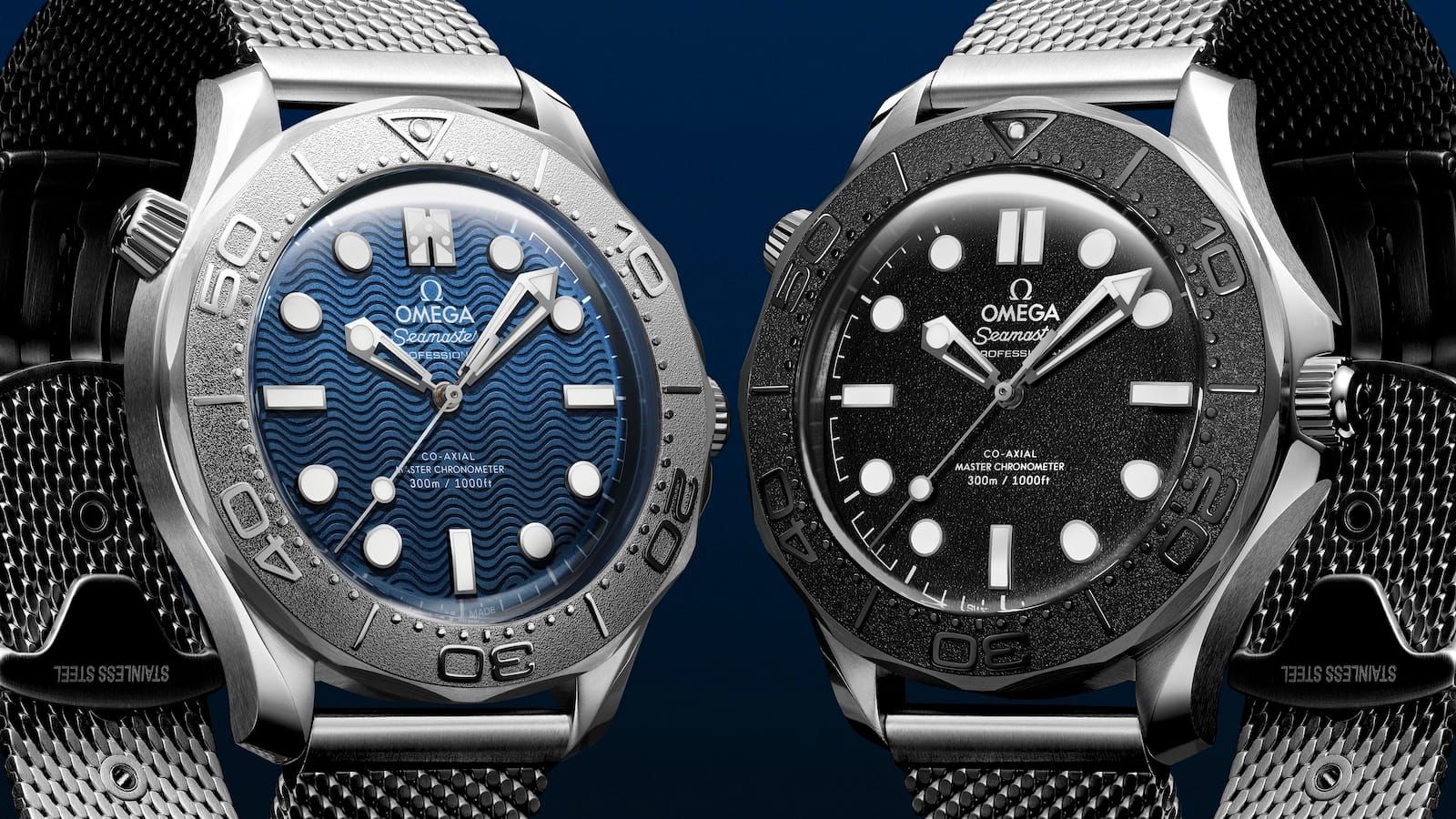
For three decades, Omega has sold the Seamaster to people who want to feel a bit like Bond. Yes, it was a silly fantasy, a marketing ploy, but one that worked quite well for the Swiss company. They've been making watches themed after characters, after movies, and in varying sizes and materials. What they haven't exactly done is make a watch for the people who were rooting for the man with the cat. Today, we're getting two new James Bond-themed Seamaster Diver 300M no-dates, one Bond, one Spectre.
Both of these watches share the familiar steel case, 42mm wide and 14.23mm thick, with a lug-to-lug of 50mm. Yes, before you say anything, this is a large watch. I don't think Omega cares much about what we think about it. You get the twisted lyre lugs, the conical helium valve at 10, a domed box sapphire over the dial and a transparent caseback. Water resistance is 300 meters. The bezels are the first place the two models part ways. The Bond variant gets a grade 5 titanium insert with a raised, laser-ablated scale on a matte ground, while Spectre gets a ceramic insert in black with its 60-minute scale also in relief. Looks a bit familiar, no?
The Bond dial is blue aluminium with laser-cut waves, a nod to the 1990s SMP, and the Bond family crest replaces the marker at 12. I'm thinking this will be controversial, but I like the small change. Rhodium-plated indices and skeleton hands glow blue, except the minute hand, which glows green so you can read elapsed time at a glance underwater. The Spectre dial is grained black aluminium with standard Seamaster hands and indices.
Inside is the Omega calibre 8806, the in-house automatic with a co-axial escapement and silicon balance spring, beating at 3.5Hz with 55 hours of reserve. It's a Master Chronometer, certified by COSC and METAS and resistant to 15,000 gauss. More changes can be found on the back, where you see new rotors through the caseback. Bond's rotor is cut into the gun-barrel shape in rhodium, Spectre's is a blackened octopus. Both come on the brushed steel mesh bracelet that debuted on the titanium No Time to Die model.
There are also two limited-edition sets, one for Bond and one for Spectre, each made in 77 numbered examples. Each set contains two watches: the matching steel model, with a numbered plate added on the case flank at 9, and a second Seamaster Diver 300M in Omega's platinum-gold, an alloy of roughly 95% platinum and 5% gold. The platinum-gold watches are 14.29mm thick, with solid white gold guilloché dials, polished ceramic bezels with platinum scales, alligator straps on platinum-gold buckles, and rotors with the emblem in 18k Moonshine Gold. Movement and water resistance don't change.
The Bond set's platinum-gold watch has a blue bezel and a blue gradient dial engraved with the gun-barrel spiral; its box adds 007 on the strap keepers and a blue travel pouch. The Spectre set's has a black bezel and a grey-to-black dial engraved with the octopus; its box adds the octopus on the keepers, cufflinks and cord bracelet, and a black pouch. Both boxes also come with a NATO strap and tool, a loupe and a leather card holder. Each set costs €88,500.
The steel editions are not limited and on sale from today at Omega stores and online for €8,500. See more photos here and the watches on the Omega website.
2/ Mido Pays Homage To The Day Of The Dead Once Again
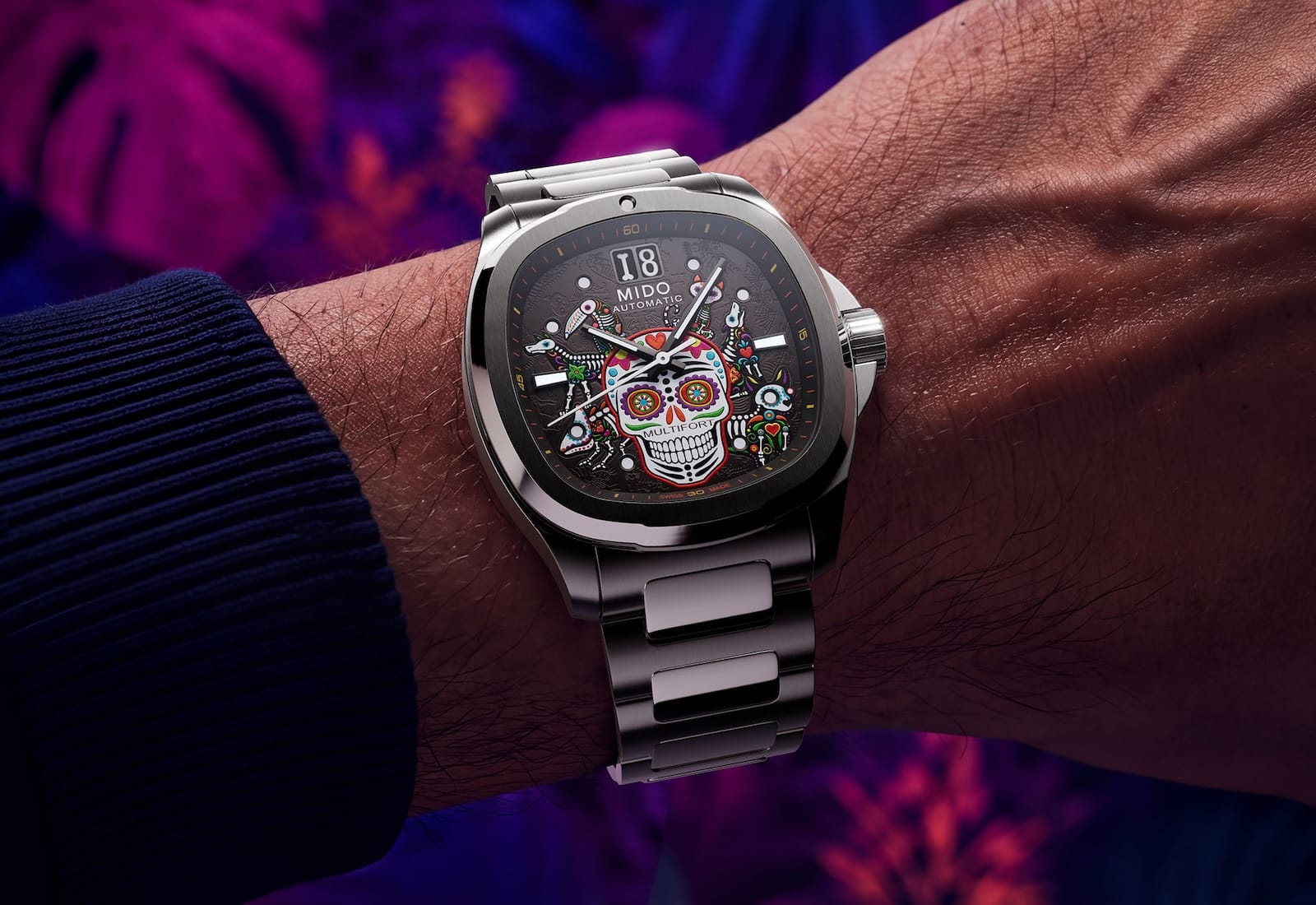
Since 2020, Mido has been making watches that pay homage to Mexico's Day of the Dead. This year, the DofD dial appears on one of my favorite Mido watches, the Multifort TV Big Date. Ever since the first release, the Day of the Dead watches have been polarizing. Some love the skulls and colors, others think it's a gimmick. I can't help myself, but I think they're hilarious. I would love one. This year, the watches use Alebrijes, the hybrid dream-creatures iconic artist Pedro Linares began making in Mexico City during the 1930s.
The case remains unchanged, which means it is 40mm wide by 39.2mm tall, 11.5mm thick, with a lug-to-lug of 46.85mm. It's steel, mostly brushed with polished accents, with sapphire crystal front and back, AR-coated inside and out. A screw-down crown gets you 100 meters of water resistance.
The dial fades from grey to near-black, with a large calavera dominating the bottom and a crowd of creatures cut into the surface around it, filled in with 12 lacquers. In daylight it's busy and complicated. Turn the lights off, though, and things get even wilder: three shades of Super-LumiNova are used on the skull, the animals and the smaller details separately. The big date is positioned just under 12, and the numeral one is drawn as a bone.
Inside is Mido calibre 80, built on the ETA C07.651, beating at 3Hz with a Nivachron hairspring, regulated in three positions, with 80 hours of power reserve. The display back lets you see the rotor with Côtes de Genève. The box comes with three strap options, all 22mm wide, all tool-free: the integrated steel bracelet, a Milanese mesh, and a red rubber strap.
The Mido Multifort TV Big Date Alebrijes (ref. M049.526.11.081.02) is on sale now, priced at CHF 1,250. See more photos here and the watch on the Mido website.
3/ Sinn Celebrates 100 Years Of Lufthansa With A Grey And Yellow 103 Chronograph
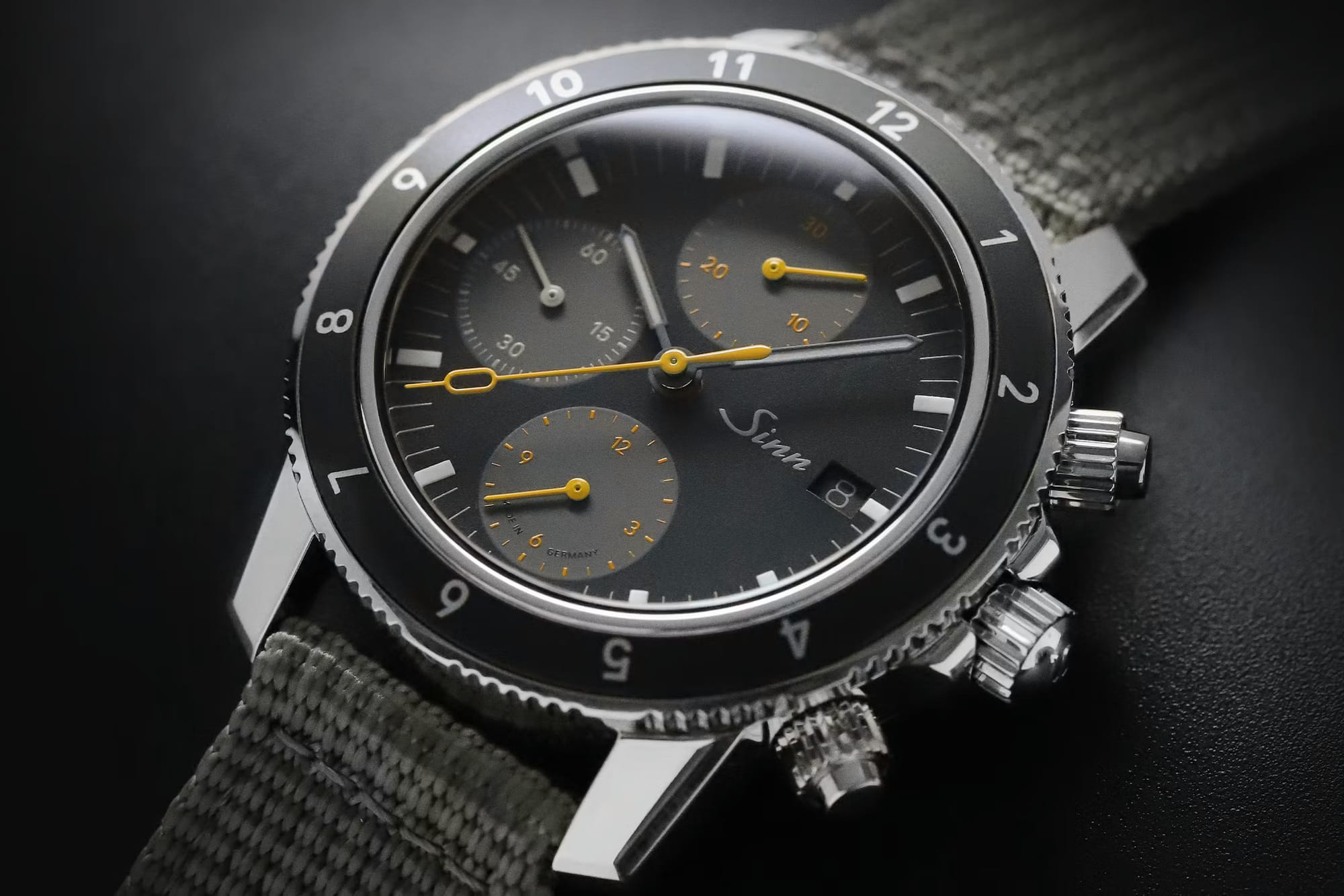
I flew a lot of Lufthansa flights in the past few weeks and you can't miss the fact that they're celebrating 100 years. Hints are everywhere, and they're doing it in a very tasteful way. I even stole a couple of their in-flight magazine stuff linked to the centenary as it's very well done and it's giving me inspiration for print stuff that IAT might do in the near future. The celebration is also moving outside of the aviation domain, as Lufthansa has teamed up with Sinn to create a celebratory watch. It makes sense since both are based in Frankfurt, and both have a very German sensibility about them. The base is the 103 St Sa, Sinn's pilot's chronograph and it's so incredibly cool.
The polished steel case measures 41mm wide and, wait for it, 17mm thick. How wild is that? I haven't had a chance to play around with a 103 St Sa, but I doubt that it's possible to hide that thickness. You get a screw-down crown and pushers, sapphire on both sides with anti-reflective treatment, and 200 meters of water resistance tested to DIN 8310. Sinn also certifies it against low pressure.
The dial and bezel are both dark grey, with light grey indices, bezel numerals and date disc. It's a muted palette, but it matches some older Lufthansa materials I saw in their historical overview they had in cabin. Yellow appears only on the chronograph hands and the central seconds hand, which has a rounded oval near the tip, referencing the window in a plane cabin. That's quite a lot of humor for two German brands and I love it. The hour and minute hands and the indices are lumed.
Inside is the Sellita SW 500, an automatic chronograph beating at 4Hz with magnetic resistance to DIN 8309. You get some 60 hours of power reserve. It's a proven workhorse. Through the caseback you'll see a decorated rotor carrying the edition number, model name and Lufthansa's centenary logo. Sinn ships the watch with both a black leather strap and a textile strap, 20mm at the lugs.
The Sinn 103 St Sa Lufthansa (ref. 103.231) is limited to 100 pieces and priced at €2,890 including tax. I can't find the watch on the Sinn website at all, so maybe it's not up ye. I doubt they sold all 100 already. See more photos here and check out the collection here.
4/ The Louis Vuitton Monterey Returns in Green and Black Ceramic, Like The 1988 Original
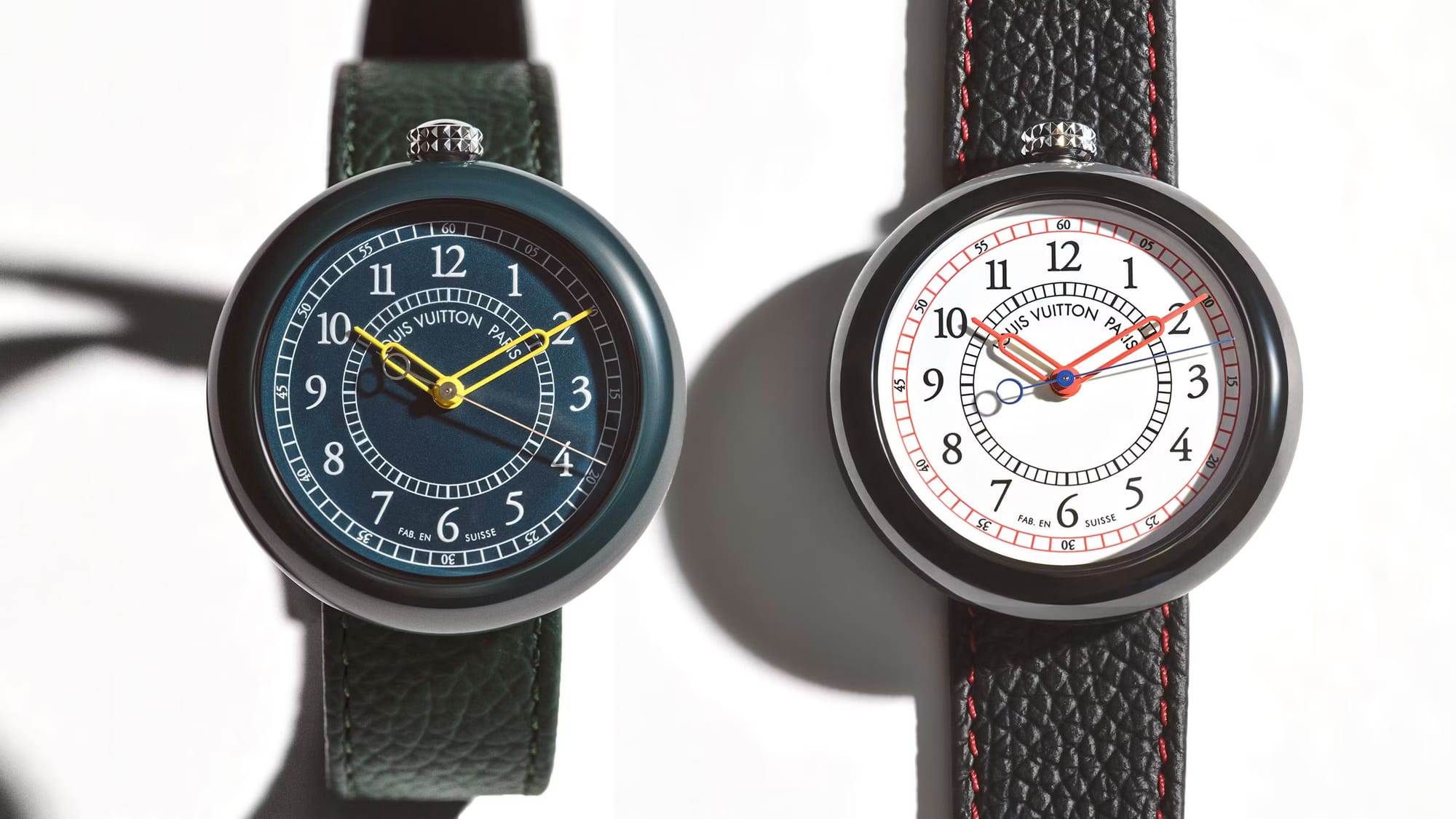
I wish more people were paying attention to the watches Louis Vuitton makes. It's easy to dismiss them as fashion watches, but their range is broad and deep, with some watches getting fascinatingly technical. But while they make some cool complications, one of my favorite watches of theirs is the Monterey. Gae Aulenti, the Italian architect, drew the original in 1988 with IWC quartz inside and a black or green ceramic case, which was kind of rare at the time. IWC had introduced its own ceramic on the Da Vinci QP two years earlier, and Louis Vuitton borrowed the know-how. LV revived the Monterey last year with a 39mm yellow gold limited edition, but now we're getting regular collection models and they're done in black and green ceramic. Very cool.
The case shrinks down to 37mm wide, matching the 1988 model, and 11mm thick, 2mm more than the quartz original to fit an automatic movement. Each one starts as a pressed block of zirconium oxide powder and pigment, is milled into the pebble shape on three axes, baked at 1,000°C, then ground and polished by hand. There are no lugs on the watch, which makes it wear much smaller. The steel crown is at 12 o'clock, wider than before, with a Clous de Paris grip. There's a sapphire crystal on top, a solid caseback out back and you get 30 meters of water resistance.
The green case gets a green dial with yellow hands, the black case a white dial with red ones. Both dials are lacquered and finished with a matte varnish, which keeps the color deep without the glare. thin blue seconds hand with a ringed counterweight appears on both versions. There are two railroad tracks, with classic serif numerals in between them.
Inside is calibre LFT MA01.02, built by La Fabrique du Temps, Louis Vuitton's own movement maker. It beats at 4Hz with a 45-hour power reserve, and the 18k rose gold rotor has V-shaped notches. The finishing includes perlage, polished bevels and sandblasted bridges, but it's all hidden behind a solid caseback. I love moves like that. The watches come on black or green calfskin straps that thread through a channel in the caseback, Aulenti's original solution.
The Louis Vuitton Monterey Ceramic is available in green or black as part of the permanent collection for €23,000. See more photos here and the watches on the Louis Vuitton website.
5/ Grönefeld Packs a Remontoire, Flying Tourbillon and Deadbeat Seconds Into the 1941 Quadrivium
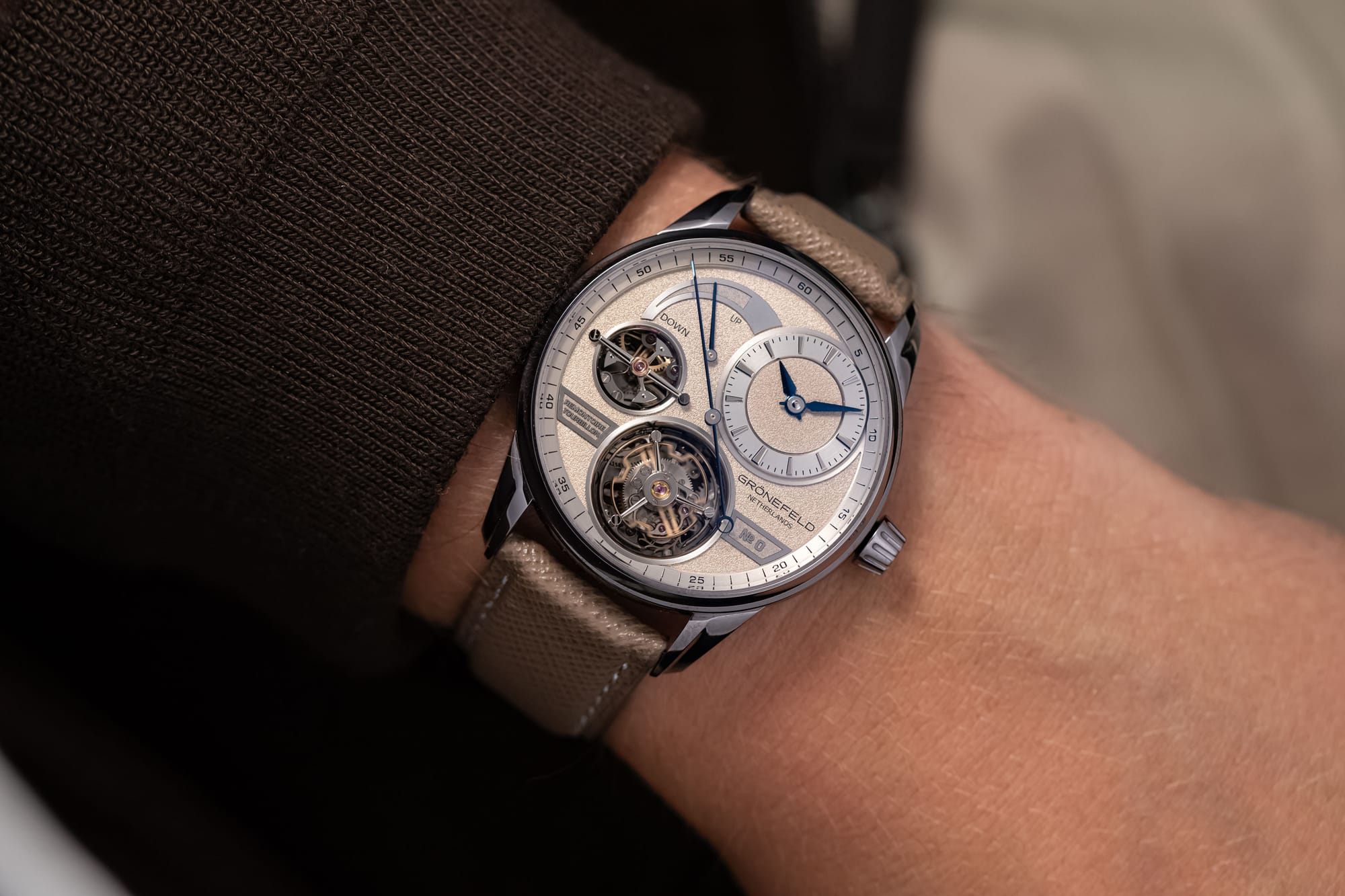
Tim and Bart Grönefeld have spent a decade diligently reworking the same case and the same basic movement layout until they reach perfection. This new 1941 Quadrivium is where that patience pays off. The 2016 Remontoire introduced the exposed constant-force governor, then the Principia, Decennium Tourbillon and Grönograaf each pushed the platform somewhere new. Now, a lot of those experiments come together. The 1941 Quadrivium combines a remontoire, a one-minute flying tourbillon and jumping central seconds in a single watch, and it's the most complete thing the genius brothers have built.
The case is the 1941 shape you already know: concave bezel, curved lugs, sculpted flanks and a conical crown. It's 40mm wide and 11.3mm thick, which is slim for this much going on underneath. The first run of watches will be made in tantalum, a dark grey metal that's miserable to machine and seems to create its own gravity field with so much weight. After a run of tantalum watches, the case will be made out of platinum. The cases are polished and get sapphire crystals on top and bottom.
The dial is crowded, certainly, but not in a bad way. A frosted champagne base gets hand-bevelled steel frames that outline each opening. Hours and minutes are positioned in an off-center subdial between 12 and three, with faceted white gold markers and blued hands, while the power reserve sits opposite at 11. The flying tourbillon at six has a three-arm steel cage and stops at the 60-second mark, so you can set the watch to the second. At nine o'clock, the governor spins once every 7.5 seconds, so you get to watch the constant-force system do its job. A long central seconds hand has my favorite complication of all time – it jumps in full one-second jumps. Four more dial colors are coming later.
Inside is a hand-wound in-house calibre with 473 parts and 49 jewels. Two concentric barrels run in series for 50 hours of power reserve, though their real purpose is feeding steady torque downstream. The remontoire is a small spring recharged every 7.5 seconds that delivers the same push to the escapement whether the mainspring is full or nearly spent; the governor softens each release so the gear train doesn't take a hit. Finishing follows recent Grönefeld practice, with gable-shaped bridges around the edge (a nod to Dutch canal houses), a long central bridge, gold chatons, black-polished steel and dark blasted recesses. It comes on a leather strap with a tantalum buckle.
The 1941 Quadrivium Premiere Edition in tantalum is limited to 28 examples, priced at €280,000 before tax, with deliveries starting in 2027. A platinum run of 28 will be made after that, priced at €310,000 before tax. See more photos here and the watch on the Grönefeld website.
I write this newsletter on my own, and paid subscribers are what keep it running. If you'd like to support it, you'll also get The Caseback, a weekend magazine with longer writing, every Sunday.
The paid subscription is discounted for just a few more days, so get it now.
⚙️Watch Worthy
⏲️End links
- In the tunnels beneath a placid suburban home, an angel investor turned into an angel of doom. This is the story of a paranoid tech bro, a homemade nuclear bunker, and a shocking death.
- He Was a Suspect in the Yogurt Shop Murders for Thirty Years. He Can’t Forget.
- A few years ago, Sebastian Barry—whose collected literary works, drawn from family history and lore, offer “a loser’s history of 20th-century Ireland”—announced that the final novel in his series would tackle the relationship between his parents. “The declaration seemed to set the table for a feast of disclosure,” writes Giles Harvey, who spoke with Barry for more than a year as the novel took shape. But the feast never arrived. The “career-spanning profile” Harvey once suggested to Barry becomes a study of abuse, memory, and revelation—one Barry’s forte, and now, perhaps, his greatest struggle.
👀Watch this
I just realized I haven't linked to one of Brock's videos in a long time, despite really loving them on a regular basis. I won't stop posting them until all of you are subscribed to him as well. Go!
Thanks for reading
Vuk
P.S. If you have any questions, suggestions, gripes or anything else, just reply to this email. It comes straight to me and I try responding to everyone.
Subscribe to It's About Time to get daily