Ming Goes Dress With Crystalized Titanium Gold Case; And New Watches From Orient Star, Praesidus, IWC and Bianchet + GPHG Winners
Hey friends, welcome back to It’s About Time. Yo, I'm late with and for everything today, so enjoy!
THIS IS SUPER IMPORTANT! Ever since I moved to this new platform, deliverability of emails has been so-so. Some are delivered to a lot of inboxes, some are routed to people's promotions tabs. In case you haven't been getting your emails, check the promotions or junk folders and move it to the primary. That way you'll always get it.
I write this newsletter on my own, and paid subscribers are what keep it running. If you'd like to support it, you'll also get The Caseback, a weekend magazine with longer writing, every Sunday.
👂What’s new
1/ Ming Makes a Slim 37mm Dress Watch From Crystallized Titanium With the 51.01 Halo
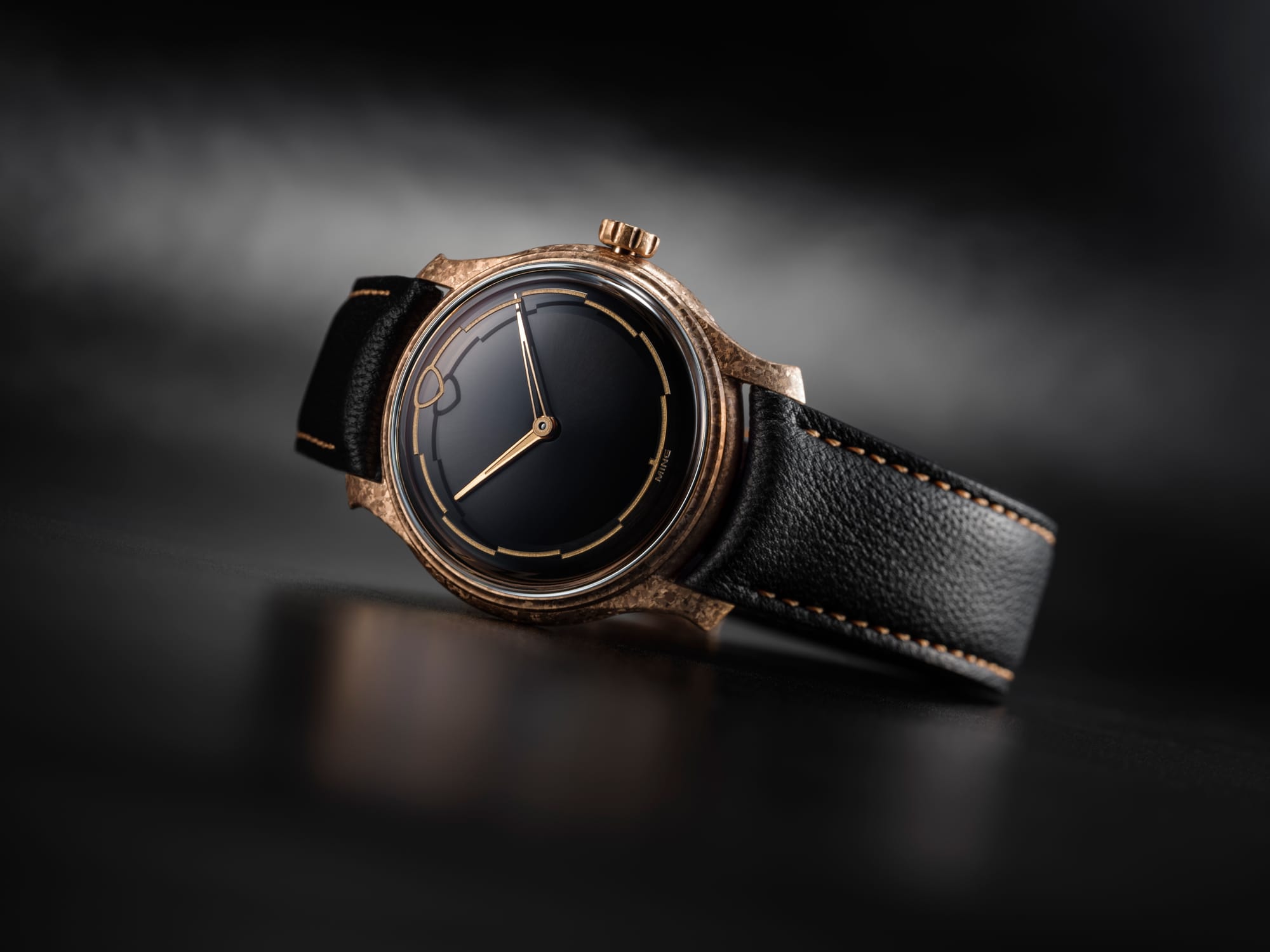
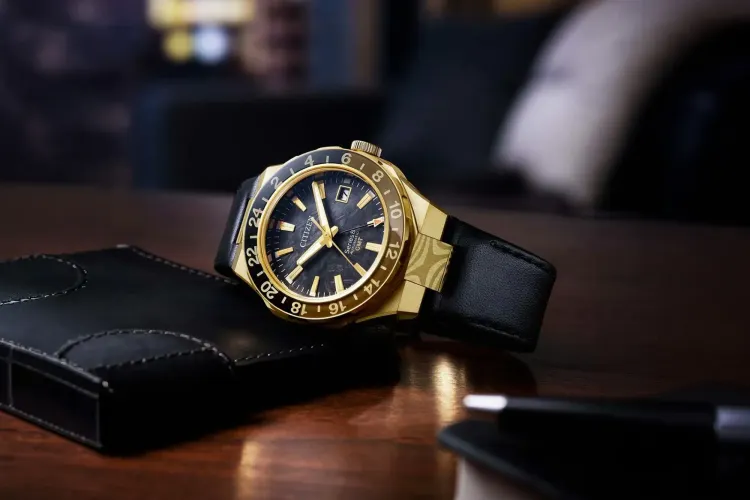
MING is best known for watches with lume built into the crystal, technical cases and a sporty character. The new 51.01 Halo goes the other way. It’s MING’s version of a dress watch, with a case and hands designed from scratch, hour markers that don’t glow, and proportions that are very attractive: 37mm wide and 8mm thick. The colors are black and rose gold, the classic dress watch combination, and one MING has barely used until now.
The case measures 37mm wide and 8mm thick, with a lug-to-lug of 43mm, and looks like rose gold, but it’s titanium. Like all metals, titanium is made of tiny crystals called grains, normally far too small to see. MING heats the titanium in a vacuum to as high as 1,200°C, which makes those grains grow, then cools it slowly so they stay that size. Acid etching then attacks the surface unevenly, so each grain catches the light a little differently and the case shows a patchwork texture instead of a smooth finish. Last, the case is coated in 5N, the reddish shade of rose gold, to give it the color. The result is a case with the warmth of gold, the weight of titanium and a unique pattern. The front crystal is a box sapphire, and both crystals are anti-reflective on each side. Water resistance is 50 meters, which is good enough for a dress watch of these proportions.
The dial is black lacquer, polished in the center and brushed around the edge. MING engraves the hour markers into the crystal, as it does on most of its watches, and here fills them with gold-colored lacquer. There’s no lume. The hands are new and very thin, coated to match the case.
Inside is the La Joux-Perret calibre 7380.M1, made exclusively for MING and heavily reworked. It’s 2.7mm thick, beats at 3 Hz and has a power reserve of about 90 hours, which is a lot for a movement this slim. The skeletonized bridges are coated matte anthracite and sit over a black mainplate, with hand-finished bevels and MING’s spoke motif on the barrel and ratchet wheel. This is MING’s second movement with La Joux-Perret after the 37.04 Monopusher. It comes on a goat leather strap in black from Jean Rousseau, 20mm, with quick-release bars and a titanium tuck buckle in the same gold finish.
The 51.01 Halo is limited to 150 pieces and it's priced at CHF 10,900. Orders open November 10 at 1pm GMT, and the watch will be at IAMWATCH in Singapore from November 12 to 15. See more photos here and the watch on the MING website.
2/ Orient Star Builds a New Hand-Wound Skeleton Calibre for Its 75th Anniversary Flagship

Orient Star is the upper line of Orient, the Japanese brand owned by Seiko Epson, and it's kind of known for partially openworked watches. Well, for it's 75th anniversary, they're making a brand new openworked watch, with a new in-house hand-wound calibre with a silicon escape wheel, a step up from the M45 F8 skeleton of 2021. It’s the most ambitious Orient I’ve seen, and I'm really stumped whether it works or not.
The new steel case is 40mm wide and 9.5mm thick, with a lug-to-lug of 46.8mm. The lugs are stepped, and the sides are brushed while the polished surfaces get Zaratsu treatment (Orient uses the other name, Sallaz). Both top and bottom crystals are sapphire. The top one curves on two axes and has an anti-reflective coating. Water resistance is 30 meters. Could be better.
There is no dial in the usual sense. You look straight into the movement, which is cut into overlapping circular openings on three levels, with fine lines inked by hand on the bridges. Blued skeleton hands tell the time, applied Roman numerals mark the quarters, and the vertical axis carries a power reserve at 12 and hacking small seconds at six.
The movement is the new calibre F9B82, made in-house and wound by hand. It beats at 4Hz, has 20 jewels and uses a silicon escape wheel with a patented shape meant to improve efficiency. Power reserve is over 72 hours, the longest of any Orient, and rated accuracy is +10 to -4 seconds a day. Through the caseback you can see mirror-polished chamfers cut with diamond tools, hairline finishing applied by hand and blued screws. The strap is black goatskin, vegetable-tanned and worked by hand in several directions using a Japanese method called Chari Happo, with a 20mm lug width and a folding clasp.
The Orient Star Skeleton 75th Anniversary Flagship RE-BR0001N is limited to 130 pieces and priced at ¥1,100,000 (about €6,150). See more photos here and the watch on the Orient Star website.
3/ Praesidus Makes Its First Ana-Digi, And It's Exactly What I Want From An Ana-Digi
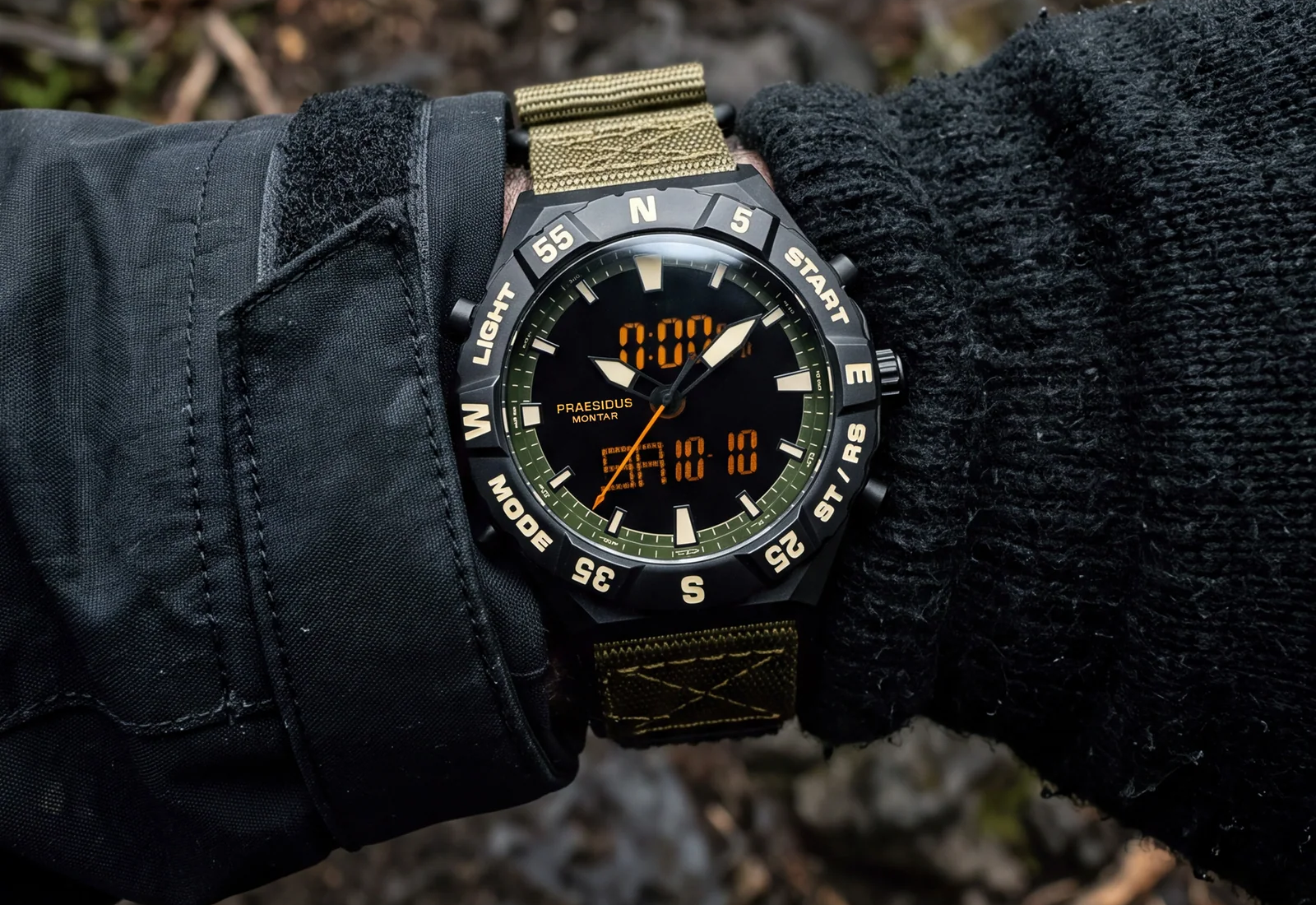
I am deeply in love with ana-digi watches, and I have been for years. Hands for the time, a screen for everything else, and a case big enough to hold both. However, ana-digi modules aren't exactly readily available off-the-shelf, so a lot of these watches are made by large watchmakers, whether on a lower budget like Casio, mid budget like Omega (although, they just discontinued the perfect X-33) or high budget, like H. Moser & Cie. You won't exactly see a small independent brand make one. Well, actually, you will. Praesidus, the company that has been riding the crest of the historic military-watch wave for years now, did exactly that. They just released the Montar, a perfect ana-digi for not a lot of money.
The case is 44mm wide and 13.5mm thick, in sandblasted steel with a black IP coating and 22mm between the lugs. That's a big boy. But other than the Breitlign Aerospace, and it's derivatives and precursors, I haven't met an ana-digi watch taht doesn't look cool in a massive case. The ratcheting bezel has a compass scale on one side of the markings and a dive-timing scale on the other, and every mark on it is lumed. The crystal is flat mineral glass with a sapphire coating, which is OK, I guess. Water resistance is 100 meters.
The dial is built in two layers. At the bottom sits a negative LCD with two windows; on top are the hour markers and handset, all filled heavily with Super-LumiNova. The hands run independently of the display, so you always have the time no matter which function is active, and you can read it in the dark without pressing the backlight. There are four colorways. Graphite has white lume and a light green seconds hand. Cinder pairs beige lume with an orange seconds hand, an olive minute track and orange LCD digits. Flint uses beige lume and a red seconds hand, and Canyon gets yellow lume, a yellow seconds hand and orange digits.
Inside is the BJS052 multifunction quartz module, with an alarm, chronograph, dual time, calendar and hourly chime. Pushers at 2:00, 4:00 and 8:00 operate the functions, and the one at 10:00 turns on the light. Graphite and Cinder come on an olive canvas hook-and-loop strap, Flint and Canyon on tan.
The Praesidus Montar Ana-Digi is available now, in four colorways for $275. See more photos here and the watches on the Praesidus website.
4/ IWC Marks the Dunhill Links Championship with an Olive Pilot’s Chronograph

IWC has a new version of the Pilot’s Watch Chronograph 43, reference IW378008, with an olive dial and gold-plated hands. It marks IWC’s sixth year as official timing partner of the Alfred Dunhill Links Championship at St Andrews. The colour combination works well, and it’s a nice change for this chronograph.
The case remains unchanged. It’s 43mm wide and 14.8mm thick, in steel with a mix of brushed and polished surfaces. That thickness is quite something. It’s a lot of height for a three-register chronograph, but it's nothing unique to this particular watch. Just worth mentioning. Sapphire crystals cover the dial and the caseback, the crown screws down, and water resistance is 100 meters.
The olive is warmer than the greens IWC has used before on the 41mm chronograph, the Racing Green Edition and the Big Pilot 43. It has a sunray finish and contrasts with the gold well. Markers, numerals and tracks are printed in white with Super-LumiNova, and the gold hands are lumed too. The layout is the usual IWC chronograph: three subdials plus a day-date.
Inside is IWC calibre 69385, an automatic column-wheel chronograph built at Richemont’s ValFleurier facility and based on the Valjoux 7750. It beats at 4Hz with 46 hours of power reserve, which is fine. You can see it through the caseback, finished with perlage, circular graining and an openworked rotor. The watch comes on a five-link steel bracelet with a folding clasp, and the box also has an olive rubber strap with a pin buckle.
The IW378008 joins the permanent collection, priced at €9,700. See more photos here and the watch on the IWC website.
5/ Bianchet Puts a Rose-Gold Line Through Its Black Ceramic UltraFino Tonneau

If you haven’t followed the collection, the Bianchet UltraFino launched in 2025 as the young independent’s first ultra-thin watch. It was also the brand’s first automatic and its first with an integrated bracelet, and it has since appeared in titanium, sapphire, carbon and ceramic. It also, I'll say, looks incredible up close. It's the one carbon watch I've ever worn that I would actually want to own. It's incredible. Now, the brand is playing with ceramic a bit more, and the update comes in the form of a thin ring under the bezel made out of 18k rose gold instead of rubber.
The case is black high-tech ceramic, 40mm wide, 47.5mm long and 8.9mm thick. Flat surfaces are brushed, the edges are polished, and the bracelet links are finished the same way. There are sapphire crystals over the movement front and back, and water resistance is 50 meters. The warm gold ring looks great against the cool black ceramic.
There is no dial. You look straight through to the movement, which is made out of titanium with a black PVD coating. The hands are rose gold with lume, and they match the rotor and the case ring. All-black skeleton watches are often hard to read. This one is easier than most, because the hands are so bright.
Inside is the proprietary UT01, the automatic calibre that debuted in the B 1.618 UltraFino last year. It’s 3.85mm thick, with a suspended barrel at 12 o’clock and a one-minute flying tourbillon at 6 o’clock. It runs at 3Hz with 29 jewels and a 60-hour power reserve, and Bianchet rates it to withstand 5,000G of shock. The skeletonised bridges are finished by hand. The ceramic bracelet comes with a black rubber strap in the box, and both use quick-release fittings.
The Bianchet UltraFino Tonneau Black Ceramic is available now, priced at CHF 80,500 before taxes. See more photos here and the watch on the Bianchet website.
6/ Rexhep Rexhepi Wins the Aiguille d’Or With His Chronograph Flyback

The Grand Prix d’Horlogerie de Genève, or GPHG, is the watch industry’s annual awards night. Brands submit their watches, an Academy of more than 1,000 industry members votes on a shortlist, and an international jury picks a winner in each category. The Aiguille d’Or is the top prize, given to the best watch overall. At the 26th edition in Geneva on Saturday night, it went to Rexhep Rexhepi for the RRCHF Chronograph Flyback. A small independent workshop beat Audemars Piguet, Chopard and Blancpain to the top prize, and it did so with a chronograph, a complication that leaves a watchmaker nowhere to hide sloppy work.
The big houses still did well. Audemars Piguet won twice: the Iconic Watch Prize for the Royal Oak “Jumbo” RD#5, an extra-thin self-winding flying tourbillon chronograph built for the brand’s 150th anniversary, and Calendar and Astronomy for the 150 Heritage pocket watch. Ferdinand Berthoud also left with two, Chronometry for Birth of a Watch 3 and Tourbillon for the Chronomètre FB 2TV. Chopard won Time Only with the L.U.C 1860 and Jewelry with the Mystery Nut. Blancpain’s Grande Double Sonnerie won Mechanical Exception, which surprised nobody.
The independents are where this year’s list gets good. Konstantin Chaykin won the Audacity Prize for the ThinKing Mystery, a record-thin watch. Dominique Renaud took Horological Revelation for the Pulse60 Titanium Black and its 1Hz escapement, which you can watch beat once a second. Cleguer won Complication with the Inspiration One, and Japanese independent Otsuka Lotec won the Petite Aiguille with the No.8. The SpaceOne x Baltic Seconde Majeure won the Challenge Prize, good news for anyone who thinks the GPHG only notices watches with six-figure prices.
The rest: Parmigiani Fleurier won Chronograph with the Tonda PF Mysterious Chronograph, Grand Seiko won Sports with the Spring Drive U.F.A. Ushio 300 Diver, and Daniel Roth won Essential with the Extra Plat Rose Gold Skeleton. Louis Vuitton took Artistic Crafts for the Tambour Taiko Arty Automata, Piaget won Gemset with the Swinging Pebble, and La Vallée won the clock prize with the Cosmo. Patek Philippe received the Special Jury Prize for its Watch Art Grand Exhibition. Wei Koh chaired the jury.
All 84 nominated watches are on show at the Musée d’Art et d’Histoire in Geneva until November 15. The winners then go to the Watches of Switzerland boutique in Knightsbridge, London, from November 18 to 23. The photos of all the winning watches can be seen here and the full results are on the GPHG website.
I write this newsletter on my own, and paid subscribers are what keep it running. If you'd like to support it, you'll also get The Caseback, a weekend magazine with longer writing, every Sunday.
⚙️Watch Worthy
- A review of the Bulova A-11 “Jimmy”
- Hands on with the H. Moser Pioneer Cylindrical Tourbillon Skeleton Aventurine Saquon Barkley Edition
⏲️End links
- London’s feral parakeets are an invasive species—but they are also beautiful, and David Wingrave takes the chance to linger on their nightly roost at Hither Green Cemetery before asking whether they should be here at all. As calls for culls grow—backed by fears of crop damage, disease, and pressure on native wildlife—he probes what we really know about the harm these birds cause. Along the way, he asks deeper questions: how we decide where an animal “belongs,” when (if ever) it becomes native, and why we are so uneasy about seeing bright green birds in London’s parks.
- We’ve all heard about Phineas Gage, the railroad worker who, in 1848, survived an accident that sent a metal rod through his skull, a brain injury that altered his personality in lasting ways. Sadie Dingfelder’s story of Edward Freytag is no less compelling: Following a motorcycle accident, Freytag discovered he could flawlessly identify and even visualize musical notes. Dingfelder’s account of Freytag, while succinct, is surprising, and given a lush animation treatment by artist Daniel Barreto that complements and elevates her narrative into a special experience. Not to be missed.
- Barbed and wire fencing covers hundreds of thousands of miles of the American West. It is highly effective, and can be unsparing. It is also costly—”$15,000 per mile or more to replace,” Kylie Mohr writes, a devastating expense for any rancher who may’ve lost miles of boundary during a wildfire. Mohr’s feature on the dawn of virtual fencing is a stimulating history of manmade borders and the inexpert ways in which they are deployed; it’s also an optimistic bit of technology reporting on an innovation that may prove wildly beneficial for ranchers and their herds.
👀Watch this
I'm crap at taking photos. But I am a Rian Johnson fan. So I wonder if this app will help me be a bit less crap.
Thanks for reading
Vuk
P.S. If you have any questions, suggestions, gripes or anything else, just reply to this email. It comes straight to me and I try responding to everyone.
Subscribe to It's About Time to get daily watch news