Hamilton Goes Very Vintage, Seiko Releases A Pandagraph, And More Watches From BM, Brellum And, Weirdly, G-SHOCK

Hey friends, welcome back to It’s About Time. The Hamilton deserved the top billing in today's edition, but the Seiko Pandagraph has my heart.
Oh, and a couple of you asked me if I could extend the paid subscription discount until the end of this week, so, sure!
THIS IS SUPER IMPORTANT! Ever since I moved to this new platform, deliverability of emails has been so-so. Some are delivered to a lot of inboxes, some are routed to people's promotions tabs. In case you haven't been getting your emails, check the promotions or junk folders and move it to the primary. That way you'll always get it.
I write this newsletter on my own, and paid subscribers are what keep it running. If you'd like to support it, you'll also get The Caseback, a weekend magazine with longer writing, every Sunday.
The paid subscription is discounted for just a few more days, so get it now.
👂What’s new
1/ Hamilton Revives Its 1926 Cushion Watches As The American Classic Cushion Mechanical
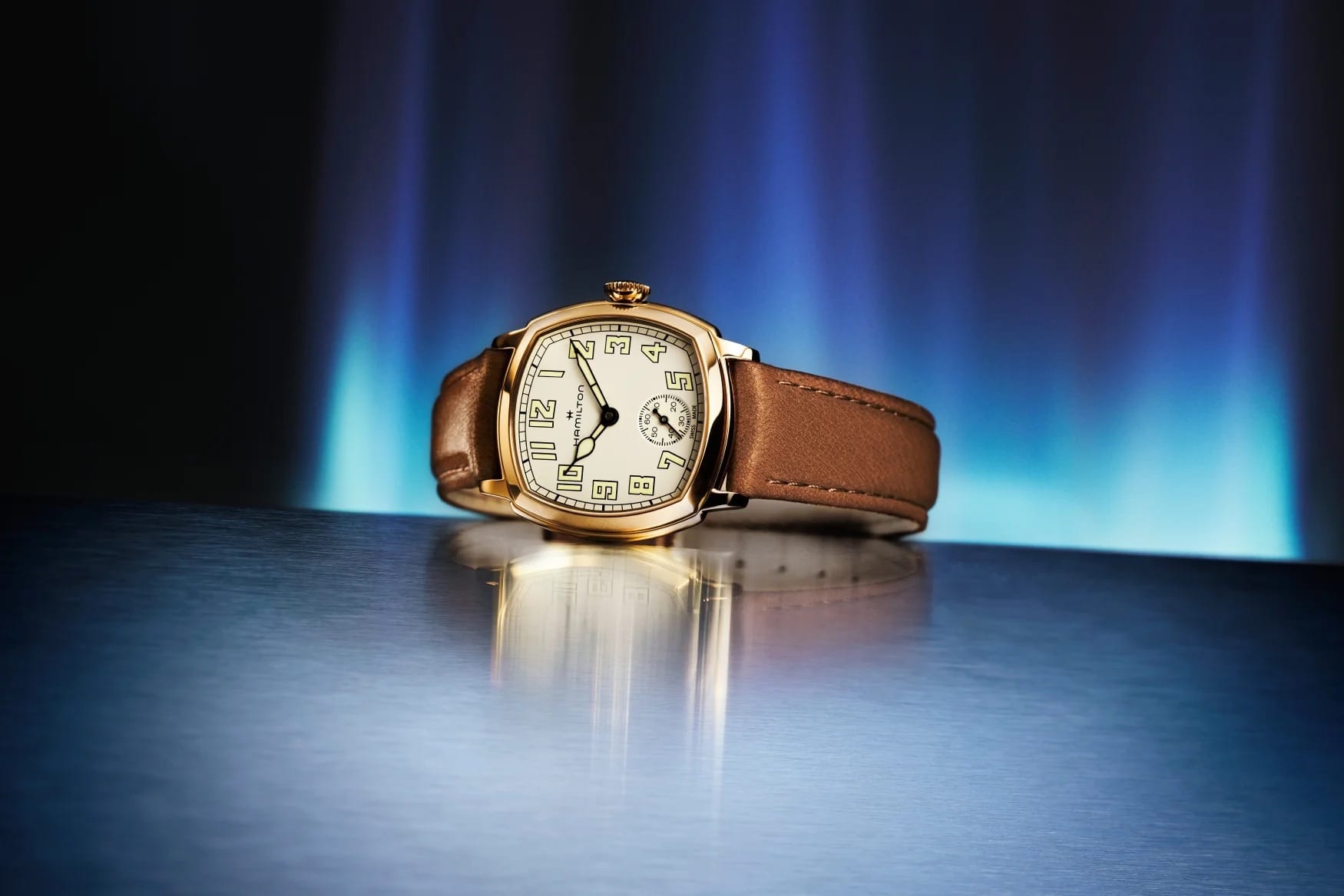
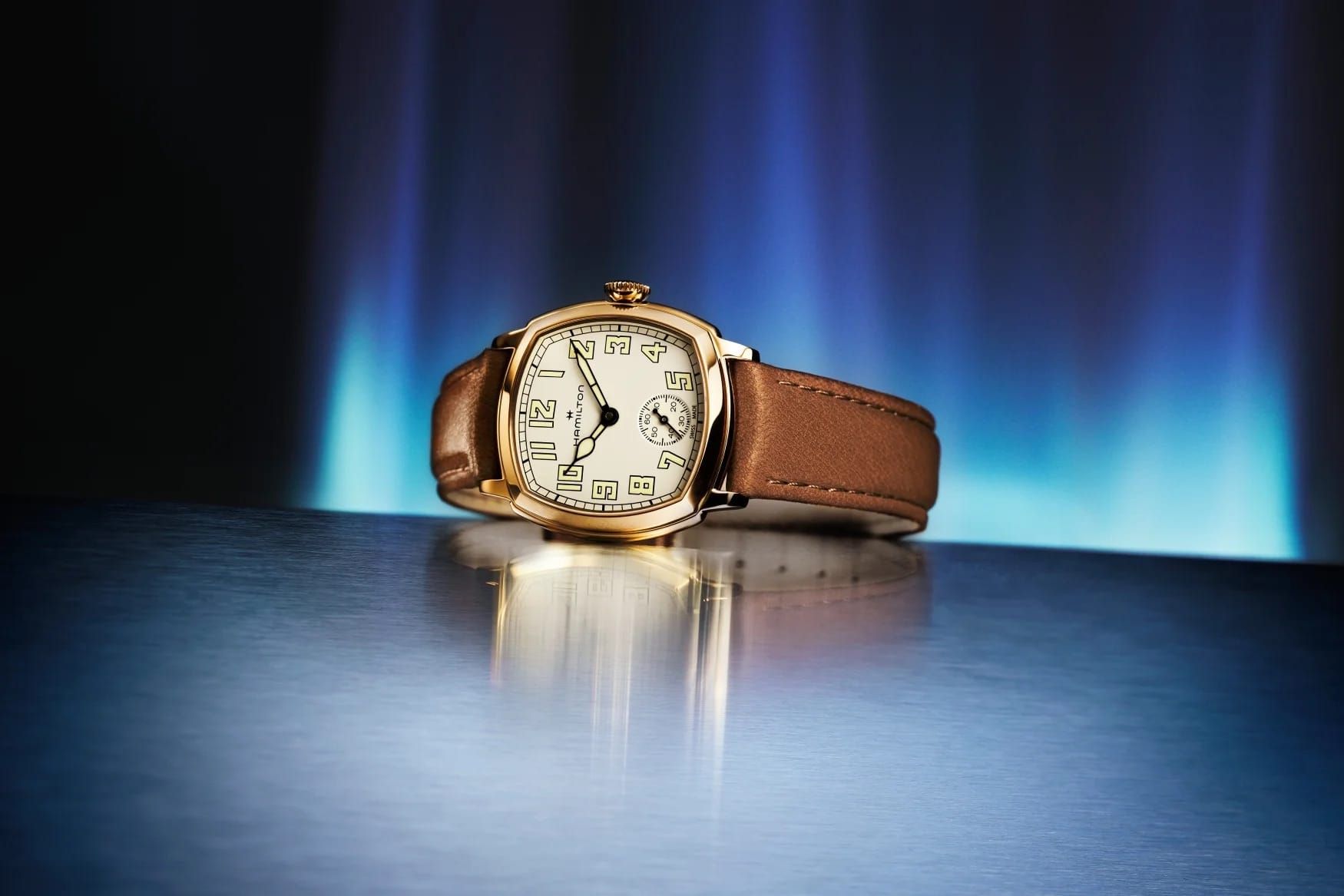
Hamilton has leaned on the Khaki Field for quite some time, so it's good to see the brand not just shift to other collection, but also open its dress catalogue for a change. The new American Classic Cushion Mechanical goes back to the Cushion Plain and Cushion Engraved of 1926, and the six new references walk the fine line between classy watches and costume accessories. If these watches look familiar, you would be right, as this entire collection has been inspired by watches worn in Oppenheimer.
Cases come in 30mm or 34mm wide, a refreshingly small size these days, and both are 8.1mm thick, properly slim for a mechanical watch at this price. Steel is the base, gold PVD is available in both sizes, and the 34mm also has an option of an engraved steel case which looks wild. The lugs are short, so the cushion shape wears compact. There's a sapphire crystal on top with an anti-glare treatment, a display caseback, and you get a decent 50 meters of water resistance.
The 30mm gets either a sandblasted beige dial with Arabic numerals or a white enamel-look dial with Roman numerals. The 34mm has black, beige or a silver sunburst dial. Every version has small seconds at six and glossy black hands with lume. Good on Hamilton for not going full retro with no lume.
Inside is the H-42, Hamilton's version of the ETA 7001, itself a descendant of the Peseux 7001 from the 1970s. But it's been upgraded, with a Nivachron hairspring and a power reserve stretched from 42 to 57 hours. Appreciated on a manually wound watch. Straps are black or brown leather with quick-release spring bars and a pin buckle matching the case, 16mm or 18mm at the lugs.
The Hamilton American Classic Cushion Mechanical is priced at €995 in steel, engraved case included, and €1,095 in gold PVD, regardless of size. These watches are part of the permanent collection, available now. See more photos here and the watches on the Hamilton website.
2/ Seiko Puts The Pandagraph Concept Into Production And It's The Cutest
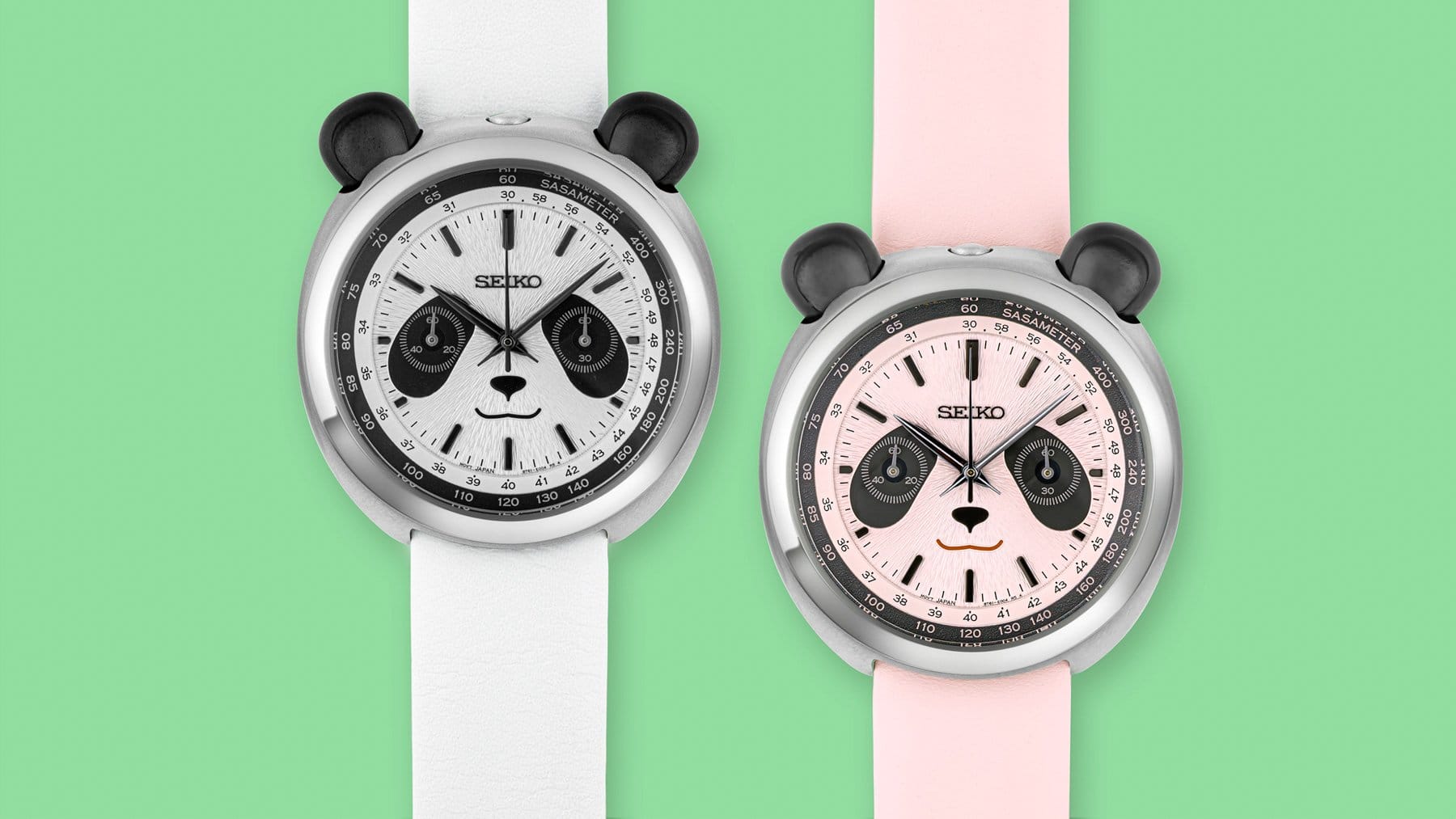
Two years ago, Seiko designer Kiyotaka Sakai made a very cure concept for a chronograph shaped like a panda's head and showed it off at the brand's Incredibly Specialized Watch Exhibition, part of the Power Design Project where Seiko lets its designers get weird. It was clearly a very fun gimmick, but people went wild for it. Well, if enough people want something, seems like Seiko can actually do it. Now if only they would listen to other things people want. This new former concept, current production duo, is named the HHK001 and HHK002 and remains almost completely unchanged from the concept. I say almost, because they dropped the Pandagraph name, which is a big miss. I love silly watches, so this is exactly my cup of tea.
In the photo above, without any context, this might seem like a dainty watch. But boy, is it not. This is still a Seiko chronograph, so the cushion shaped steel case measures 43mm wide and 14.6mm thick. Thanks to that cushion shape and the fact that he strap connects almost flush to the case, you get a lug-to-lug of 44.1mm, which means it should wear much smaller than the other dimensions suggest. The crown and both pushers sit up top in a bullhead layout, which is important because the pushers are rounded into ears, making it essential for the design. On top is a Hardlex crystal, you get a weak 30 meters of water resistance, and a steel caseback that shows the panda from behind, tail included, along with the edition number.
You get two colorways: white with black, or pink with black. Both dials have a texture that imitates fur and two sub-dials shaped like the dark patches around a panda's eyes. Around the edge runs a two-tier scale Seiko calls the Sasameter, named after sasa, the bamboo grass pandas live on. It's a tachymeter for timing pandas running, which top out at roughly 30 km/h. Love that
Inside is Seiko calibre 8T61, a mecha-quartz chronograph: quartz timekeeping rated at ±15 seconds per month, with a chronograph that feels mechanical when you use it. The battery lasts around three years. Straps are leather in white or pink to match the dial, smooth apart from a suede-like tip and first keeper.
The HHK001 is limited to 3,000 pieces and the HHK002 to 2,000. Both cost €590 and go on sale in November. See more photos here and the watches on the Seiko website.
3/ Baume & Mercier Shrinks the Clifton QP to 40mm and Pairs It With a Better-Value 39mm
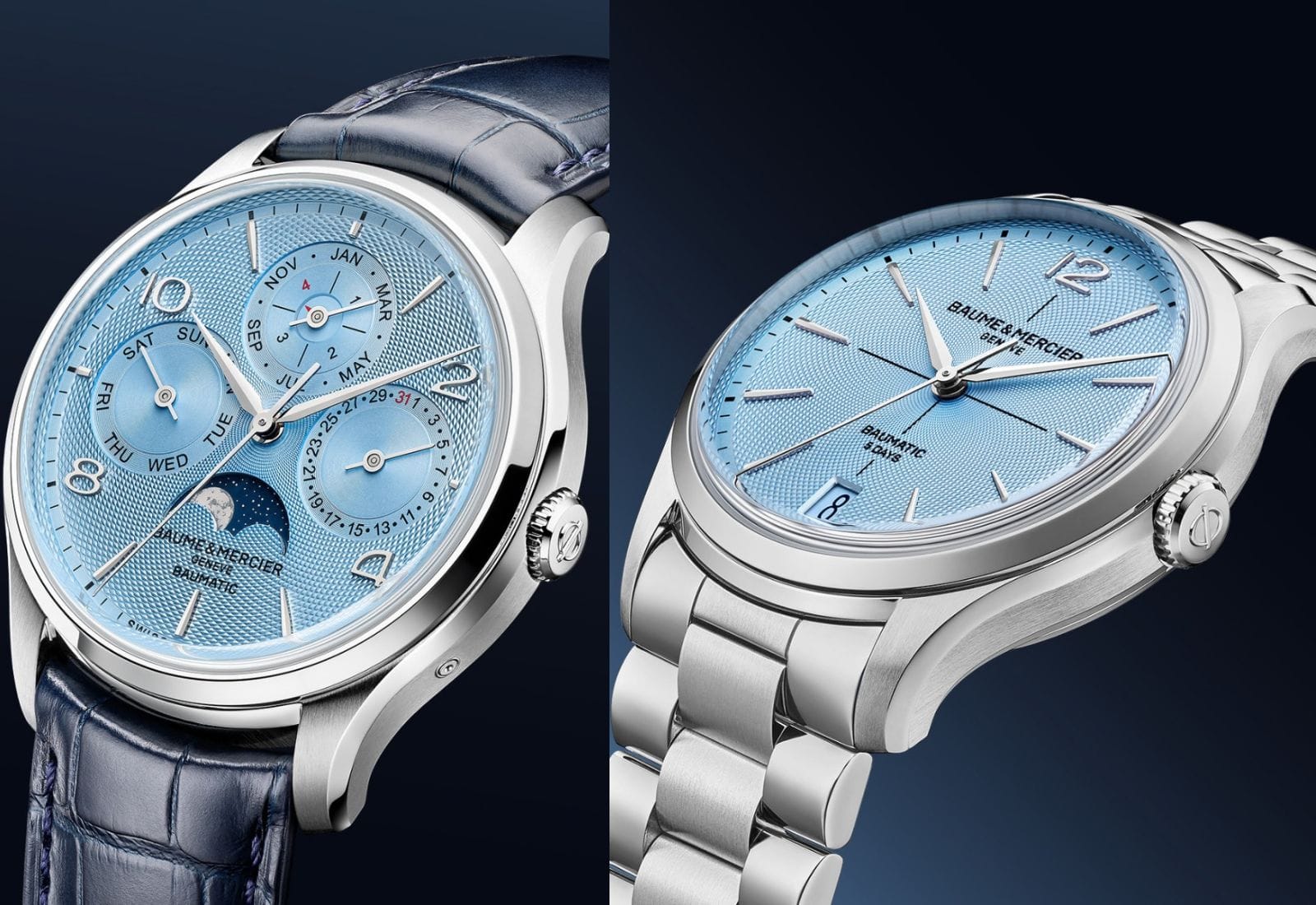
Over the past year, Baume & Mercier has been doing some good work making the Clifton collection tighter and more modern, and these two ice-blue limited editions continue on that path. But I don't think it's just a dial change. If I'm not mistaken, the big news is the perpetual calendar, which previously came only in 42mm precious metal and now gets a 40mm steel case. Add to that a 39mm time-and-date model launches next to it, and this is a very nice pair.
The time-and-date measures 39mm wide and is 11.22mm thick; while the perpetual is 40mm wide and 12.9mm thick. Quite reasonable on the QP. Both are made out of steel, with a mix of brushed and polished surfaces, a domed sapphire with anti-reflective coating on both sides, a semi-recessed crown and a display back secured by four screws. Water resistance is 50 meters for both watches.
The blue is pale and cool, with a guilloché pattern that's stamped rather than engine-turned. At €3,700 that's perfectly fair. At €19,500 it's harder to accept, but you have to account for the movement. The 39mm keeps the black crosshair, snailed minute track, long trapezoid markers, a single numeral at 12 and a matching date window at six. The perpetual fills the same surface with snailed sub-dials for day, date, month and leap year, a blue moonphase at six and four Arabic numerals. Red accents on the 31 and the leap-year marker help with visibility on a busier dial.
Both are equipped with the Baumatic movement, built by ValFleurier: calibre BM13-1975 A in the 39mm, BM13-1975 AC2 in the perpetual, which adds a Dubois-Dépraz calendar module to the same base. Each beats at 4Hz with 120 hours of reserve, which is great. The off-the-shelf module does make the perpetual's price steep, given Frederique Constant sells a steel perpetual with an in-house calendar for roughly half. The 39mm comes on the integrated three-row bracelet. The perpetual gets a blue square-scale alligator strap with a steel pin buckle.
The Clifton Baumatic 39mm (ref. M0A10870) is priced at €3,700 and the Clifton Baumatic Perpetual Calendar 40mm (ref. M0A10872) costs €19,500. See more photos here and the watches on the Baume & Mercier website.
4/ Brellum Puts The Black Pandial Power Reserve Chronometer Back In A Steel Case
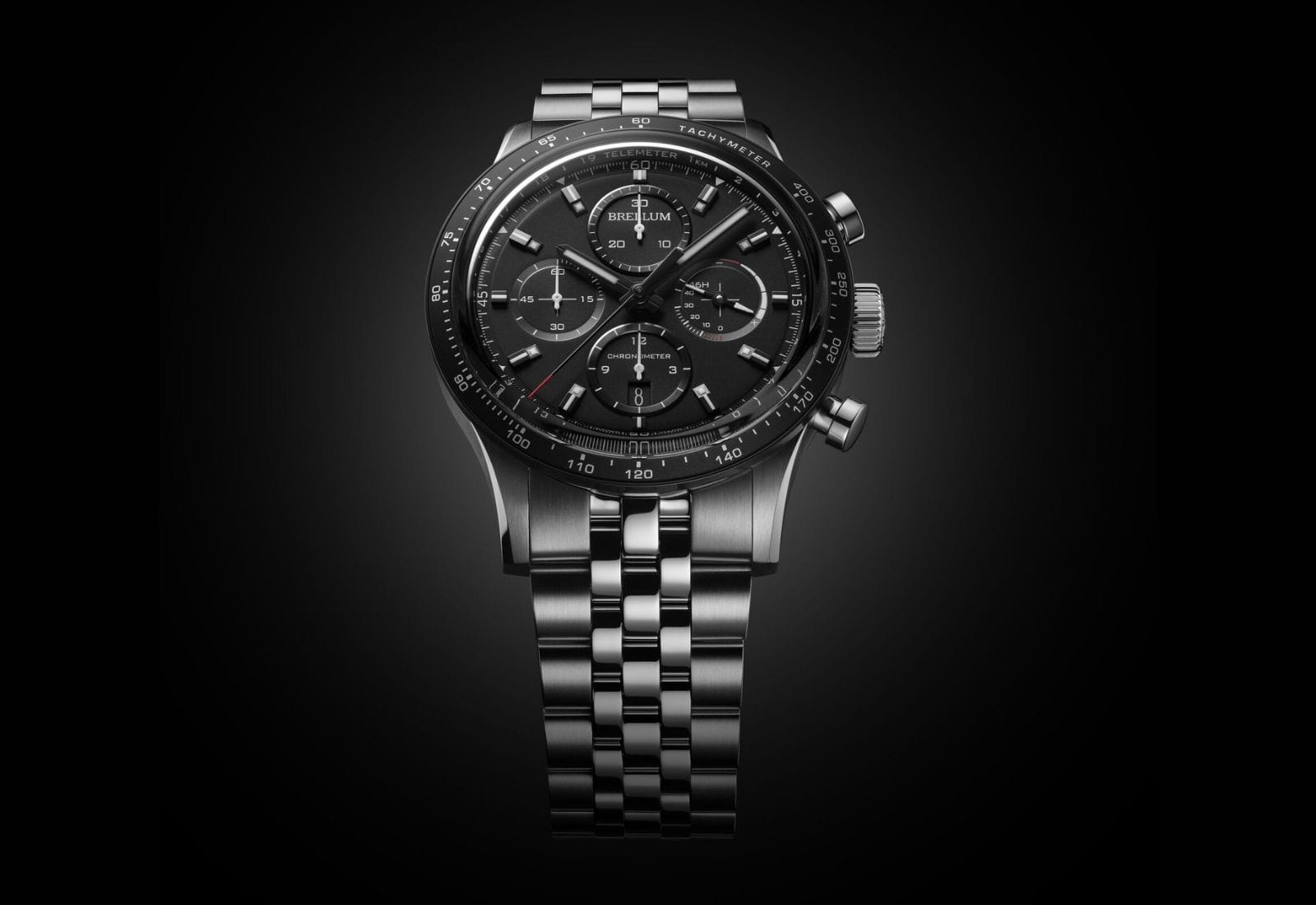
This is the third Pandial Power Reserve Chronometer from Brellum in about a year. The first was a steel panda last October, then came black DLC titanium in December, and now the two are combined: the titanium's black dial in the original's steel case, back on a bracelet. Brellum is an odd brand, one that takes a bit of patience to get into, but if you've been looking at them as long as I have, you start to really like them, despite their quirks.
The dimensions haven't changed, and it's still a chunker. The case is 43mm wide and 15.9mm thick, which sounds absurd until you remove the twin box sapphire crystals. The actual case, without the crystals, is 11.7mm. And people who have tried one on say it wears like a 12 or 13mm thick watch. All that explaining might be in vain if your wrist can't take the 51.5mm lug-to-lug. The 316L steel is brushed with polished accents, and the tachymeter bezel is now black DLC, instead of the aluminium insert on the earlier two. Water resistance is 100 meters.
The dial is the titanium edition's, black on black with black sub-dials. Small seconds sit on the left, the 30-minute counter up top, the 12-hour counter with its date window at the bottom, and power reserve on the right. A telemeter scale runs around the rehaut, and the diamond-cut hands and indices are filled with Super-LumiNova. Red shows up in two places only, the chronograph hand's tip and the power reserve.
Inside is the BR-750RM, Brellum's COSC-certified take on the Valjoux 7750, beating at 4Hz with a 46-hour power reserve. Through the domed sapphire caseback you can see perlage, Geneva stripes, blued screws and an individually numbered rotor. The bracelet is a five-link steel design, brushed and polished, closing with a deployant clasp.
Only 33 will be made, sold directly through Brellum and priced at CHF 3,390 with tax. See more photos here and the watch on the Brellum website.
5/ G-SHOCK Puts Kikuo Ibe's Sapphire Concept Into Production at $80,000
If you've been reading this newsletter for a while, you know the structure by now. I open up with what might be the most attractive release of the day, followed by a watch from a bigger brand, followed by a micro or indie brand and closing out on an expensive watch. What in the world, then, is a G-Shock doing in last place today? Well, the title might have gave it away. And it's just as crazy as you might expect.
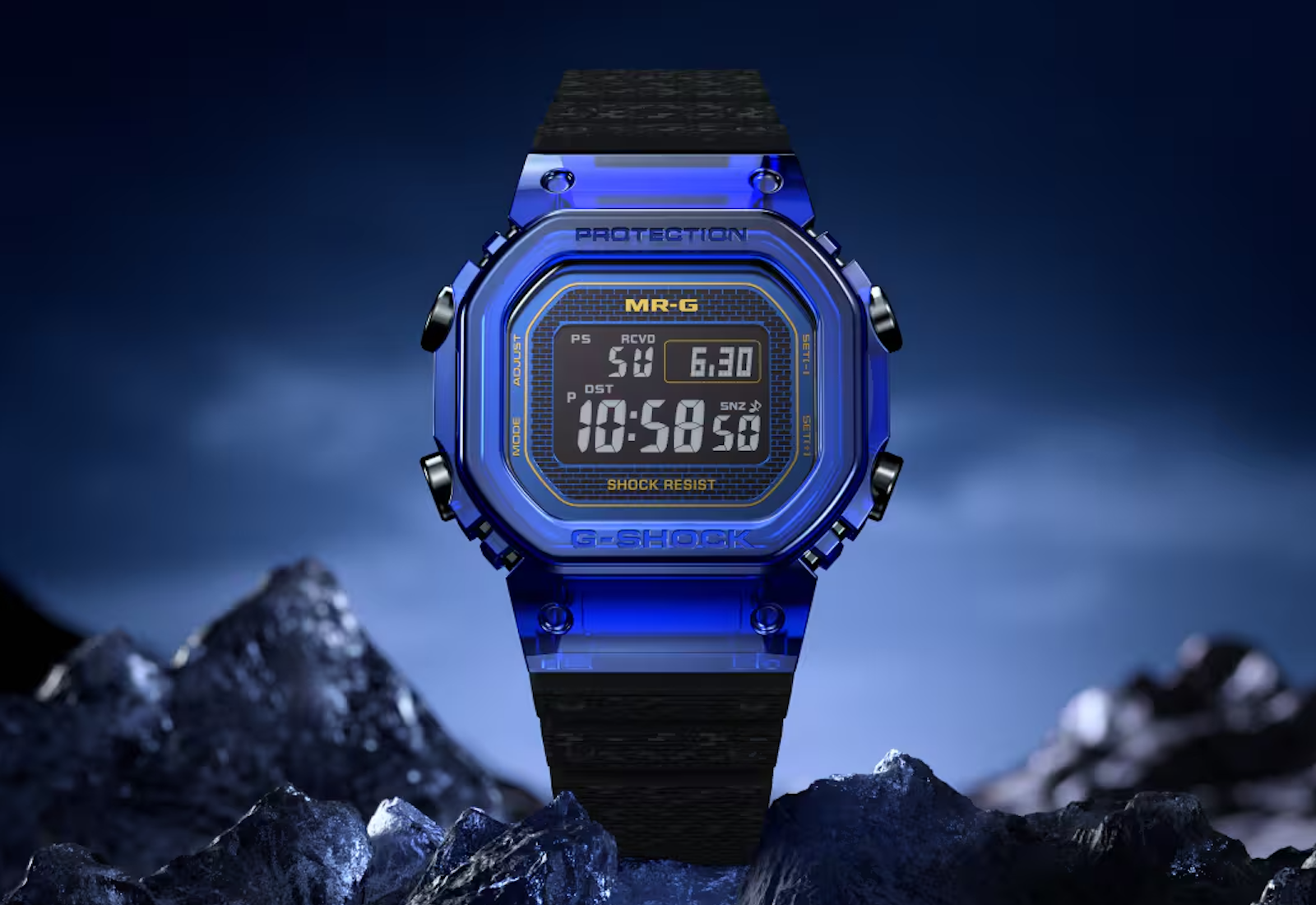
Back in 2017, Kikuo Ibe, the man who invented G-SHOCK, showed a sapphire DW5600 concept and it got people scratching their heads. In essence, it was cool. Who wouldn't want to make a sapphire G-SHOCK? But it doesn't make much sense. While sapphire is great for scratch resistance, it shatters when dropped, which is the opposite of what a G-SHOCK promises. So everyone kind of forgot about it as a quirky concept. Well, no, Casio didn't forget. They built the damn watch. This is the new MRG-D5000 Blue Sapphire.
The case is made out of see-through blue sapphire, assembled from interlocking parts with no screws, a method Casio credits to traditional Japanese joinery. One senior technician at the Yamagata factory puts together every one that will be made. It supposedly keeps full G-SHOCK shock resistance (who's going to test that) and 200 meters of water resistance. It's also a much bigger watch than your regular G-SHOCK. It's 16.45mm thick, more than 3.5mm over the titanium MRG-B5000R-1, with the lug-to-lug stretching from 49.4mm to 51mm.
The original G-SHOCK's brick motif appears on this watch as well, and it's done in blue PVF under the top crystal. All the lettering is 24K gold, which is just showing off. The display is negative, light digits on a dark ground. Wish it were the other way around.
Inside is the MR-G digital module: solar powered, Multi Band 6 radio sync, world time, alarms, a stopwatch and a countdown timer. The caseback is DLC-coated Grade 5 titanium with a window of blue sapphire and the edition number engraved on its rim. The sapphire bracelet from the 2017 concept didn't survive into production. Instead you get a rubber strap with a new brick texture, cut to length, on a milled deployant clasp with micro-adjustment holes.
The G-SHOCK MRG-D5000 Blue Sapphire is limited to 20 pieces, priced at $80,000 (JPY 11 million), with a handful allocated per region. Two companion models carry the sapphire theme at lower prices: the MRG-B5000SA-2 sets a pair of 2-carat blue sapphires into the titanium MR-G's lug shrouds ($6,600, 500 numbered examples), and the GMW-B5000SB-1A2 puts sapphires in the steel 5000's four bezel dimples for $770. See more photos here and the watch on the Casio website.
I write this newsletter on my own, and paid subscribers are what keep it running. If you'd like to support it, you'll also get The Caseback, a weekend magazine with longer writing, every Sunday.
The paid subscription is discounted for just a few more days, so get it now.
⚙️Watch Worthy
⏲️End links
- The beloved video game Tetris has a fascinating, complicated history. While the Tetris Company (TTC) claims exclusive rights to the geometric pieces at the heart of the game, known as tetrominoes, history shows that the Russian engineer and game designer duo behind TTC did not, in fact, own them. In this excerpt of Soviet Blocks: The Bizarre Puzzle of How Tetris Embraced Western Values, Julien Mailland traces Tetris’s journey from the Soviet Union to the West, and shows how the game is a lens through which to view two very different systems.
- Steve Rose investigates a catastrophic pollution incident at Furnace Brook, a fishing lake in East Sussex, where thousands of fish suddenly died and the local ecosystem collapsed. Neighbours suspect pollution from nearby Morgans Farm, and Rose examines whether their concerns are justified. In doing so, he uncovers broader national problems with water pollution, illegal waste dumping, and the limited power and resources councils and regulators have to tackle them.
- When Eric Leas, a public-health scientist, discovered packages of “magic mushroom” gummies for sale in a smoke shop, he wondered: Were these candies even legal? Had they been properly tested, and did anyone actually know what constituted a safe dose? This Aeon piece follows Leas down a rabbit hole as he investigates whether the Amanita muscaria products currently on store shelves are as safe as their candy-like packaging suggests.
👀Watch this
Did I think I would watch a review of a Super Star Destroyer Lego set? No? But did I watch it? You're damn right I did
Thanks for reading
Vuk
P.S. If you have any questions, suggestions, gripes or anything else, just reply to this email. It comes straight to me and I try responding to everyone.
Subscribe to It's About Time to get daily